admin
admin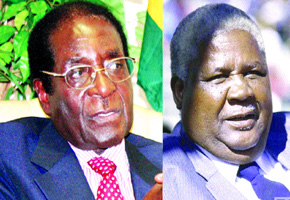
The fallen and living heroes waged a bloody, arduous and protracted struggle which finally yielded independence in 1980, leading to black majority rule.
The chief causes of the armed struggle were the discriminatory land policies, brutal white labour practices, and unjust social and economic policies which were enacted to promote white interests.
Clearly in a bid to correct the land imbalances, hundreds of thousands of land-hungry peasants marched into former white-owned commercial farms which were later parcelled out into A1 and A2 pieces of villagised, self-contained and commercial resettlement land a decade ago under the Third Chimurenga or fast-track land reform programme.
Accounting on the pre-independence land ownership imbalances, two prominent Zimbabwean historians, Henry Moyana and Misheck Sibanda wrote:
“Each member of the settler invading force was promised large tracts of land.” The massive land grab by the white settlers after the invasion in 1890, was to be a seed of the bitter armed struggles that followed.
The criminal land seizures by whites were later camouflaged under the Land Apportionment Act. The consequence of this Act was the consignment of blacks to a state of permanent serfdom. The Act further incapacitated the economic development of the country through prevention of the majority of citizens from accessing and taking part in the exploitation of natural resources such as land, minerals such as gold, silver and bronze, which were all forfeited to the British South Africa Company (BSAC) on the decree of Cecil John Rhodes.
The fallen and living heroes watched while fellow Africans were evicted from the alienated European land and settled in unproductive reserves where there was congestion and severe soil and land denudation owing to increased human and animal population and use.
The black sons and daughters also agonisingly watched in despair the coercive instruments of the settlers through which they forced blacks to take up cheap labour on white farms, industries and mines in exchange for continued residence in the white-owned properties, especially farms. In addition to the fact that blacks had been dispossessed of their land, they endured strenuous inhumane, dehumanising and squalid conditions that prevailed in the white-owned farms where the blacks were derogatorily referred to as “kaffirs”.
The colonial Native Affairs Committee was to come up with a horde of very unpopular recommendations — it raised taxation on polygamous families and introduced hut, dog, poll and cattle taxes on blacks.
Equally oppressive was the Private Location Act compelling Africans to pay rent to landowners. In tandem with the Act, was the Labour Act which outlawed the movement of black labourers to South Africa. Africans over the age of 14 were compelled to register and carry a pass called chitupa/isithupha wherever they went.
The Registration of Labourers Act was an amendment of the Labour Act seeking to secure and keep fingerprints of all the black workers.
Equally evil was the segregatory Industrial Conciliation Act which criminalised collective bargaining for better salaries and working conditions by the blacks. The Compulsory Labour Act later came to force Africans to work for the settler economy at rates, conditions and places determined by the white masters.
The colonial education policy deliberately ensured that the possibility of economic competition between blacks and whites was eliminated in order to subdue Africans and perpetuate a feeling of inferiority and dependence. The school curriculum glorified white heroes such as Napoleon Bonaparte, while African heroes such as Tshaka, Queen Nzinga, Mansa Musa, Mbuya Nehanda, Mukwati, Siginyamatshe and Sekuru Kaguvi were vilified. Commending the then government for its education policy, a committee of inquiry into African education affairs noted that it was necessary to retain that biased education which, it was felt, was “directed along approved paths”.
The leaders of early nationalism such as Abraham Thwala, Charles Mzingeli, Masotsha Ndlovu and Benjamin Burombo laid the cradle for black nationalism. Armed political movements such as Zanu-PF (with its Zanla military wing) and PF-Zapu (and its Zipra military wing) formed the pinnacle of the liberation struggle.
Both Zanu-PF led by Cde Mugabe and PF-Zapu led by the late Vice-President Joshua Mqabuko Nkomo mobilised and trained thousands of guerillas who fought the liberation war. Other luminaries of the struggle are Herbert Chitepo, Jason Ziyaphapha Moyo, Lookout Masuku, Alfred Nikita Mangena, Maurice Nyagumbo, George Silundika, Chief Rekayi Tangwena and Josiah Tongogara.
Heroes that became prominent in post-independence Zimbabwe include Amai Sally Mugabe, Ernest Kadungure, William Musarurwa, Herbert Ushewokunze, Moven Mahachi, Border Gezi, Eddison Zvobgo, Joseph Msika and Solomon Mujuru.
Other heroes are buried at district and provincial heroes’ acres. There has, however, been heightened concerns on the neglect of some provincial and district shrines. The derelict state of some graves at some shrines needs urgent attention in order to confer upon these fallen heroes, a true hero status that they earned in their quest to liberate the country.
The economic policies that the country is implementing today and the prevailing peace and tranquility, are a result of the dedicated and selfless struggle fought by the fallen and living heroes.


 Online Reporter