Online Reporter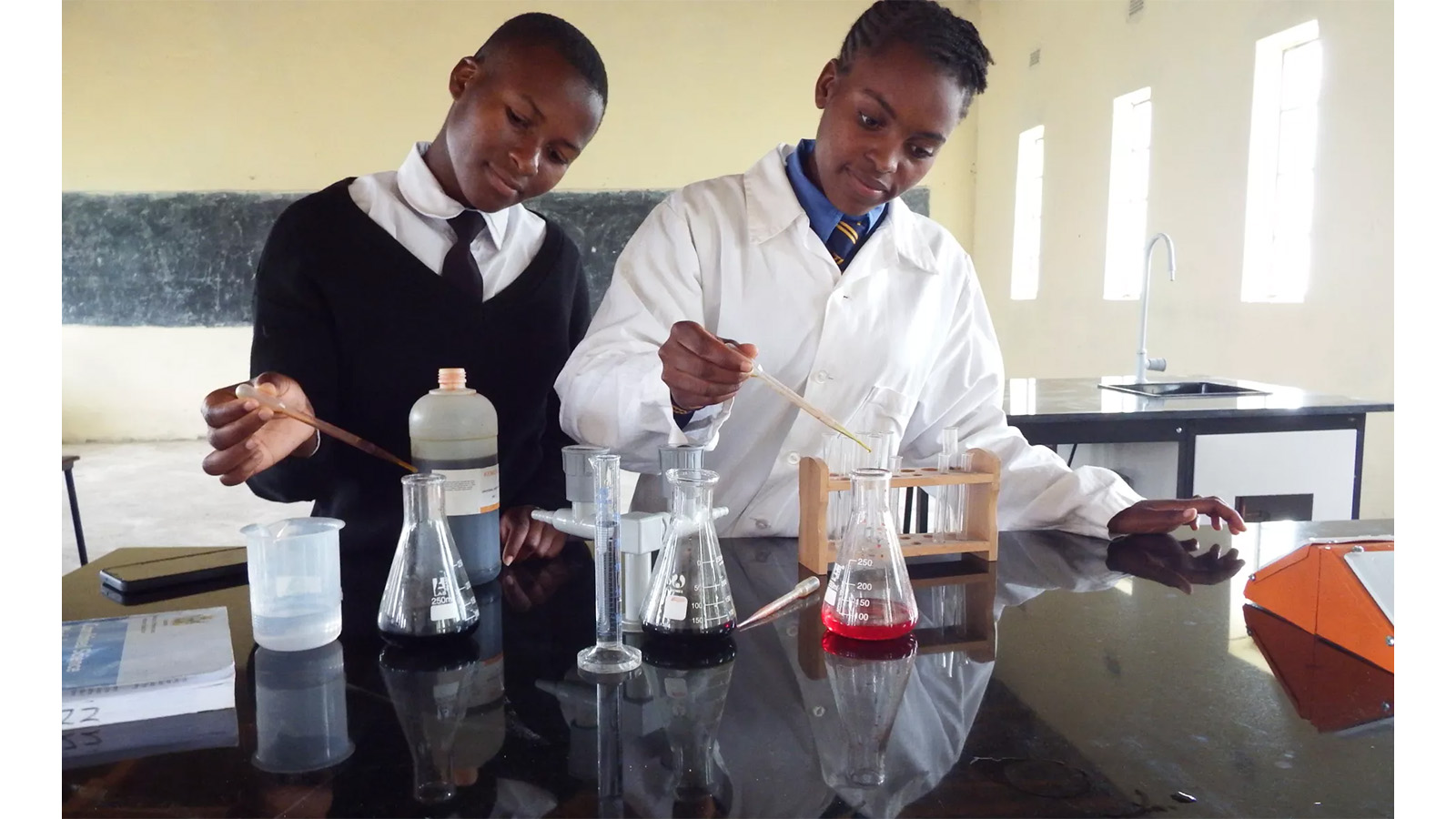
Fungai Lupande-Mashonaland Central Bureau
When Mrs Tafadzwa Magadzire walked into a crowded interview room at Harare Polytechnic in 2003, she froze.
There were 300 young men in the room and she was the only woman.
“I remember asking my uncle, ‘Why did you bring me here? Am I going to learn with all these boys?’” she laughs now, recalling the moment that changed her life.
Back then, the idea of a woman studying civil engineering was almost unheard of.
“I didn’t even know what civil engineering was,” she admits.
“For three weeks, we were chased out of class because we didn’t understand anything. But we didn’t have Google or smartphones to help us. We just had determination.”
Today, that once uncertain young woman holds a Master’s degree and serves as a human capital development officer in the Ministry of Higher and Tertiary Education, Innovation, Science and Technology Development.
Two decades later, Mrs Magadzire’s journey reflects a quiet revolution in Zimbabwe’s education landscape.
“When I joined, I was the only female among 300 males. Today, we have thousands of girls studying STEM,” she said.
Using her story as proof that opportunity and persistence can transform lives, Mrs Magadzire shared her experience with hundreds of young girls at Bindura University of Science Education during the International Day of the Girl Child commemorations.
The event was funded by the Forum for Women Educationalists (FAWE) and the MasterCard Foundation, under the theme “The girl I am, the change I lead: Girls on the frontline of crisis.”
Mrs Magadzire said Zimbabwe currently has 20 446 males and 15 453 females enrolled in STEM (Science, Technology, Engineering, and Mathematics) programmes, a gap of about 5 000 students.
“That gap shows progress. We are getting there,” she said.
Even more encouraging are the recent graduation figures.
In 2025, 5 318 males and 4 385 females graduated in STEM disciplines, a difference of just over 700 students.
“From being the only girl in the room to seeing thousands of women graduate, this is something to celebrate,” she said.
She attributed the progress to deliberate Government policies promoting gender equality in education.
“We now have the National Gender Policy, which mandates a 50-50 balance in opportunities,” she explained.
“This means if there’s a scholarship fund, like the Presidential Scholarship, we take 50 girls and 50 boys. We’re saying to girls: let’s compete equally and show the world what we’re made of.”
Beyond scholarships, the Ministry is implementing several initiatives to make STEM education more accessible, especially in rural areas.
One such programme is the Work-for-Fees initiative, which allows students to work within institutions and have their earnings directed toward tuition and books.
“This programme was recently boosted with new funding to support more students. We don’t want finances to be a barrier to education,” Mrs Magadzire said.
Recognising that the love for science begins early, the Ministry is also prioritising teacher training in STEM subjects.
“Colleges such as Mkoba, Masvingo, UCE, Madziwa, and Joshua Nkomo Teachers’ Colleges are now focusing on training teachers in STEM,” she said.
“We want ECD and primary school children to see science as fun, not frightening.”
For schools without laboratories, the Government has introduced mobile science laboratories.
A truck equipped with science kits travels from school to school, allowing learners to perform practical experiments.
“A truck arrives, stays for a week or two, and students get real lab exposure before it moves to the next school,” she explained.
Another programme close to Mrs Magadzire’s heart is the Integrated Skills Outreach (ISO) initiative.
Through it, polytechnics travel to remote areas such as Binga to teach practical construction and technical skills.
“For example, Lupane Polytechnic sends lecturers to train villagers to build classrooms or community structures. Once they complete the work, they receive certified qualifications,” she said.
“This empowers people who never reached ‘A’ level, giving them employable skills and dignity.”
Mrs Magadzire emphasised that education is the backbone of development, but progress cannot be inclusive or sustainable if young women are left behind.
“To every girl in this room and every girl listening: you are not just the future of STEM, you are the present. Your ideas matter, your dreams are valid, and your place in laboratories, lecture halls, innovation hubs, and boardrooms is not just welcome, it is essential,” she said.
While Zimbabwe celebrates gains in women’s participation in science and technology, concerns remain about the urban-rural gap, particularly for girls.
Speaking at the same event, Mrs Munyaradzi Chibvudze from Campaign for Female Education (CamFED) said most young women currently enrolled in STEM-related courses come from well-resourced boarding schools, while rural learners remain disadvantaged due to a lack of facilities and mentorship.
“We need collaboration between the Government, NGOs, and universities to build the infrastructure that allows every child to dream of becoming a scientist or engineer,” she said.
She added that many students complete their O-Levels without proper career guidance.
“There are many young people who grow up in communities that don’t value education or have no exposure to career options. As university students, we must go back and mentor those learners, to show them what is possible,” Chibvudze said.
She urged shared responsibility among universities, NGOs, and Government departments to ensure that even those in remote areas receive adequate career counselling and encouragement to pursue STEM subjects.
The discussion also turned to the need for better coordination among organisations supporting education.
Mrs Chibvudze noted that NGOs such as CAMFED, FAWEZI, the Higherlife Foundation, and the Joshua Nkomo Scholarship are doing remarkable work but often operate in isolation.
She recommended a shared referral system between NGOs and Government education offices to ensure continuity of support for learners from disadvantaged backgrounds.
“NGOs are there to complement Government efforts, not replace them,” she said.
“If we coordinate our work, we can reach more children and bridge the gap that continues to hold back rural communities.”
For students like Glenda Kudzai Chisenwa from BUSE, STEM education is not just about science, it’s about opportunity.
“Girls in STEM are not asking for special treatment,” she said.
“We just want equal tools to learn, compete, and succeed. Every child, whether from a city or a remote village, deserves a fair chance to build the future through innovation and knowledge.”



 Bongani Ndlovu