

 admin
admin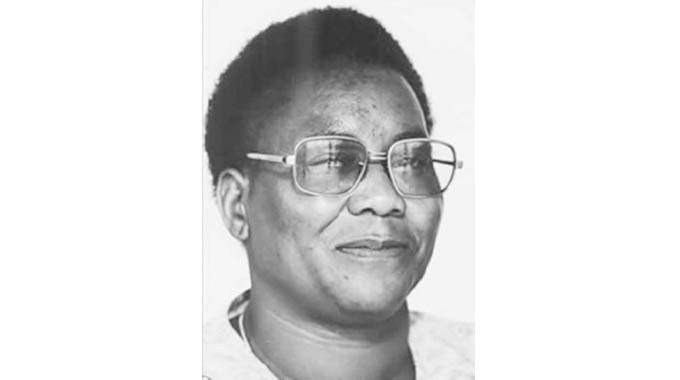
Grace Mahora and Lesego Valela
Soon after the attainment of independence in 1980, Harare Street replaced Salisbury Street, as the black majority Government sought to break with the painful past where thousands of sons and daughters died in a brutal war to reclaim their motherland from the clutches of colonialism.
Indeed, many streets in the capital were renamed to reflect a change of guard, where once superior white-settlers’ names stood.
This shows that Zimbabwe had its rightful owners, who could chart a new course, a new path to glory, severing ties with a past that was unpleasant for its atrocities, time and space demanded such a divorce.
Affixing signage that spoke to the rich history of Zimbabwe took centre stage as Pioneer Street morphed into Kaguvi Street, named after the legendary Sekuru Kaguvi who was among the heroes of the First Chimurenga, in an exercise that scholars described as removing signs of conquest.
The name Pioneer Street celebrated the history of the Pioneer Column that was couched in the discourse of openness, emptiness, namelessness, and “historylessness” of the colonised spaces.
It was a discursive attempt at clearing the colonised spaces of any contesting claims to ownership by any indigenous group.
Victoria Street was changed to Mbuya Nehanda Street. Mbuya Nehanda was a freedom fighter who led the war of resistance in northern Zimbabwe in 1896, which became known as the First Chimurenga.
She was arrested, tried and hanged in 1898. Before she died, the legend’s last words were said to be: “my bones shall rise again”.
Some 70 years later another generation drew inspiration from these words and took up arms to dislodge the white oppressive system.
Now, Zimbabweans were in charge and names like Baker Avenue had to give in to names like Nelson Mandela Street; a South African anti-apartheid revolutionary and political leader who served as the first president of South Africa from 1994 to 1999.
Nelson Mandela was a figure with whom Zimbabwe could identify with, and whose heroism through selfless and dedicated acts, by fighting to bring liberty and justice for his people, and risking his life for the equality of all is celebrated not only by Africans, but worldwide.
Forbes Avenue was renamed Robson Manyika Street, a Zimbabwean soldier, politician and national hero who contributed in the liberation struggle.
Cde Manyika was once a committee member of the African National Congress (ANC) in 1959.
When the National Democratic Party (NDP) was formed he became the organising secretary for youth from 1960-61.
At independence, he became ZANU-PF Member of Parliament for Mashonaland West (1980).
He received a Cabinet position as Deputy Minister of Labour and Social Welfare in the new Cabinet at independence.
These were some of the few names that were changed to fit into the modern Zimbabwe, but some names from the colonial past lingered, only to be removed from the face of Harare with the advent of the Second Republic.
Below are a few streets whose names were changed to reflect Zimbabwe’s Pan-Africanism and embrace of efforts of progressive forces who stood up for its independence.
Enterprise Road changed to Emmerson Dambudzo Mnangagwa, the current President of Zimbabwe.
At independence, President Mnangagwa was given the delicate and onerous responsibility to integrate the disparate armies, namely: ZANLA, ZIPRA and the Rhodesian Army, into one national army – a task he accomplished with distinction.
This was followed by stints as Minister of State for National Security; Justice, Legal and Parliamentary Affairs; Rural Housing and Social Amenities; Speaker of Parliament; Minister of Defence; Vice President and other Government and Party assignments and deployments that prepared him for the eventual position of President of Zimbabwe.
Speke Avenue, changed to Agostinho Neto Avenue, the name of a former Angolan President well-known for his anti-colonial zeal, incisive, yet inspirational writing, clear vision and love for freedom.
He left an indelible mark on the liberation history of Zimbabwe and Africa in general.
Agostinho Neto belongs to the restrict pantheon of Africa’s original liberation heroes, leaders who fought for and dedicated their lives to the self-determination and freedom of their people.
Angwa Street was renamed to Sir Seretse Khama Street. Khama, a former President of Botswana, was also concerned with the fate of neighbouring countries that were still under colonial rule.
Accordingly, he was a key player in the processes which eventually led to the independence of Zimbabwe and Namibia, including the liberation struggles in these two countries.
Khama was also a founder member of the Southern African Development Community.
Third Street was renamed to Patrice Lumumba Street. Patrice Lumumba was an African nationalist leader who served as the first prime minister of the newly independent Democratic Republic of the Congo, then known as Zaire before being assassinated in early 1961 by rebels backed by Western powers.
Rezende Street was renamed to Julia Zvobgo Street.
Cde Zvobgo bore the brunt of suppressive racist colonial rule which peaked under the Rhodesian Front, both as a liberation fighter herself and as wife to liberation war icon Cde Eddison Zvobgo.
Selous Avenue was renamed to John Landa Nkomo Avenue. Cde Nkomo served as Vice President of Zimbabwe from 2009 to 2013 after years as a minister in Government.
He was the Speaker of Parliament from 2005 to 2008. Cameron Street was renamed Joseph Msika Street.
Cde Joseph Wilfred Msika served as Second Vice President of Zimbabwe from 1999 to 2009.
He was a fearless founding nationalist who stood firm and strong in the defence of Zimbabwe until his last breath.
The stretch from Robert Gabriel Mugabe International Airport to Manyame Air Base is now called Josiah Tungamirai Drive, which was named after the Zimbabwean military officer and politician who was commander of the Air Force of Zimbabwe and later served as Minister of State for Indigenisation and Empowerment before his death in 2005.
Kirkman Drive is now known as Solomon Mujuru Drive. The late Cde Mujuru was a military officer, politician and one of the leaders of liberation war fighters.
In post-independence Zimbabwe, he went on to become army chief before leaving service in 1995.
Dieppe Road is now called Vitalis Zvinavashe Road, another liberation war military leader who went on to become the Zimbabwe Defence Forces commander.
Charter Road was changed to Fidel Castro Road, the Cuban revolutionary and politician who was the leader of Cuba from 1959 to 2008, serving as the prime minister of Cuba from 1959 to 1976 and president from 1976 to 2008.
Innez Terrace was changed to Mayor Urimbo Terrace.
Mayor Urimbo was the liberation war nom de guerre for Cde Samuel Mamutse, a veteran freedom fighter and pioneer of the Zimbabwe African National Liberation Army (Zanla).
He was among the first four ZANLA guerrillas sent to join FRELIMO in the Tete Province in mid-July 1970.
Cde Urimbo and his team attacked Altena Farm on Christmas Day in 1972, which stoked the flames of a protracted liberation struggle that ended with the country’s independence.
Quendon Drive was changed to Eddison Zvobgo Drive, one of the founders of ZANU. He was the Patriotic Front’s spokesman at the Lancaster House in late 1979.
Cde Zvobgo was a Harvard-trained lawyer, a hotelier and a poet.



 Online Reporter