Hunt For Greatness-Milton Kamwendo
ONE of the greatest thinkers, Albert Einstein, said: “The important thing is not to stop questioning.”
Simple answers to complex problems lead to more complications. Engage critical thinking.
Pedestrian unprocessed answers may be impressive, but they do not move anything.
We are living in an age of information abundance and wisdom scarcity. Every day, we are exposed to headlines, opinions, statistics, arguments, robotic narratives and wild stories. They are all competing for our attention and belief.
The challenge is no longer access to information. The challenge is discernment, contextualisation and sense-making.
What is true? What is misleading? What is incomplete? What is relevant? What is needed in this context? This is where critical thinking becomes essential.
Strengthen your critical thinking by developing the ability to analyse, evaluate and interpret information with clarity and discipline.
It is the difference between being informed and being influenced. It is the difference between reacting and reasoning. It is the difference between mere words being pushed along and words intentionally weighed.
In a noisy world that is sometimes chaotic and ridden with shocks, clear thinking is a competitive advantage.
One may ask: What is critical thinking and why does it matter?
Critical thinking is not criticism or recreational criticism. Critical thinking is disciplined thinking. It involves questioning assumptions, evaluating evidence and recognising bias.
Critical thinking allows you to draw reasoned conclusions. It is processing information and not just knee-jerk chorus-singing.
Critical thinking is the ability to pause and ask: Is this true? What supports it? What is missing?
Critical thinkers do not accept information at face value. They engage with it thoughtfully.
Critical thinking matters. It turns information into meaning.
Poor thinking leads to poor decisions. Poor decisions lead to poor outcomes. Critical thinking strengthens decision-making, problem-solving, leadership and communication.
Critical thinking helps you avoid manipulation, misinformation and impulsive reactions.
In leadership, critical thinking separates those who follow trends from those who shape direction. Critical thinking helps you avoid mindlessly following the crowd.
First answer
The first answer is not always the best one. In fast-paced environments, people often settle for quick conclusions.
Mindless speed without accuracy creates risk.
Critical thinkers ask: What else could be true? What alternative explanations exist? What assumptions am I making? How will this look 10 or 20 years from now? This deeper inquiry leads to better understanding.
Facts and opinions
Opinions are not facts, just as smoke is not fire. An important skill in critical thinking is distinguishing between fact and interpretation. Facts can be verified. Opinions are interpretations of facts.
For example, “Sales declined by 10 percent” is a fact, while “The business is failing” is an interpretation.
Confusing the two leads to poor judgement. Critical thinkers identify what is known and what is assumed.
Recognise bias
Everyone has biases. These are mental shortcuts shaped by experience, culture, history, pain and belief.
While biases are useful at times, they can distort judgement.
There are several common biases. These include:
Confirmation bias (seeking information that supports existing beliefs)
Anchoring bias (relying too heavily on initial information)
Emotional bias (letting feelings override facts)
Critical thinking requires self-awareness. It asks: Am I being objective? What might I be overlooking? Could I have some blind spots? Strong thinkers challenge their own thinking.
Evidence quality
Not all information is equal. Critical thinkers examine the quality of information that is presented.
They check the source of information, the credibility of the data and the context in which it is presented.
Critical thinkers ask: Who is saying this? By what authority? What is their interest? Is this evidence reliable? In a world of misinformation and disinformation, source evaluation is essential.
Systems thinking
Many problems cannot be understood in isolation. Think in systems and not isolated events.
Critical thinking involves seeing the linkages and connecting the dots. Critical thinking involves seeing connections and patterns: How does this issue relate to others? What are the underlying causes? What are the long-term consequences?
This broader perspective leads to better solutions. It shifts thinking from reactive to strategic.
Slowing down
Speed is valuable in the right context. Thoughtful decisions require taking strategic pauses. Critical thinking benefits from reflection, analysis and consideration. Sometimes shortcuts slow you down even further. Taking time to think may look like you are slowing progress, but it in fact improves direction and sustainability. Rushed thinking creates errors. Deliberate thinking creates clarity and generates the momentum of intentionality.
Ask better
The quality of your thinking is shaped by the quality of your questions. Better questions lead to better insights.
Instead of asking: “Is this right?”
Ask: “What evidence supports this?”
“What is the counterargument?”
“What are the implications?”
Emotional supercharge
Emotion is powerful. Unchecked emotion weakens thinking. Critical thinking balances and sobers emotion.
What is committed in moments of intense emotion may not always be easy to change. Apologies do not erase responsibility and consequences. What is said in moments of emotional madness cannot be unsaid.
When faced with strong reactions, pause and ask: What is the situation objectively? What are the facts? What would be the benefit of an emotional storm? This prevents impulsive decisions. Calm thinking leads to better outcomes.
Thinking daily
Critical thinking is a skill that can be developed. You can strengthen it through some intentional actions. Read widely.
Engage in thoughtful discussions. Journal and map solutions on paper. Challenge your assumptions.
Reflect on decisions. Seek out other perspectives. Hear the silent voices. Practice builds precision.
Leadership challenge
As a leader, information, decisions and opinions are thrown at you by the dozen every day.
Leaders face complex decisions with significant consequences. The challenge for any leader is taking “no-regret” decisions and making big bets with the information and resources you have.
Critical thinking enables leaders to improve the quality and timing of decisions.
Through critical thinking, you analyse situations thoroughly. You anticipate risks. You make informed choices.
You communicate clearly. Leaders who think critically inspire confidence. They bring clarity in uncertainty.
Strengthen your critical thinking muscle. Take time to think critically. Think clearly to act and speak wisely. The ability to think clearly is your superpower.
Strengthen your critical thinking. Take control of your decisions. Train your perspective. Build better pathways to the future. Do not accept everything you hear. Do not react to everything you see. Pause. Question. Analyse. Decide. Act.
It is not the amount of information you consume that matters, but the quality of thinking you apply. Strengthen your critical thinking. Tools are not a substitute for critical thinking. Clarity is strength. Clear thinkers build better futures.
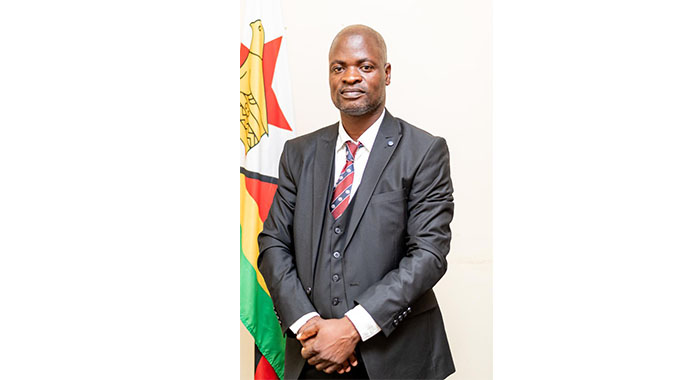
Milton Kamwendo is a leading international transformational and motivational speaker, author and accomplished workshop facilitator. He can be reached at: [email protected], WhatsApp: +263772422634.