


 Andrew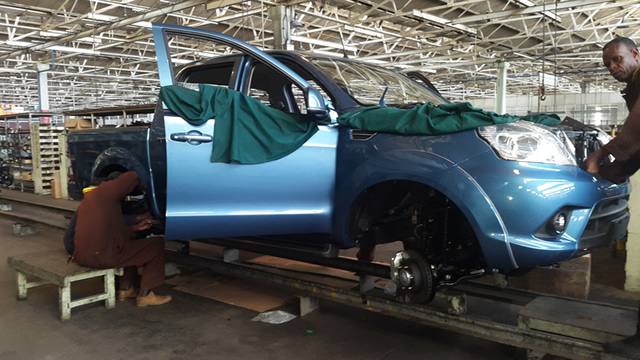
Business Reporter
Subdued demand for new vehicles has negatively affected investments in the local car industry, as the market continues to be dominated by pre-owned car imports, according to experts in the sector.
Zimbabwe already has assembly plants owned by Quest Motors in Mutare and Willowvale Motor Industry (WMI) in Harare, but the two companies continue to struggle owing to low demand and foreign currency shortages.
Amtec Motors managing director Mr Lucas Taruvinga told journalists in the capital that with average annual new car sales at 4 000 against imports at more than 60 000 units, it was difficult to attract investments in new facilities.
He said muted demand for new vehicles and policy laxity on pre-owned vehicle imports would remain a major impediment to the development of a vibrant local motor industry, which has the potential to support upstream and downstream industries.
It is understood that disproportionate imports are coming at a heavy cost to local companies.
The glass and tyre including glass and tyre manufacturing sectors could potentially benefit from improved activity.
“We used to produce glass in Mutare and Dunlop was a resident (company) at Willowvale,” said Mr Taruvinga, who was also representing other official Nissan dealers during the event.
In 2018, the Government proposed raising import levies on pre-owned cars to curtail grey imports and create a market for new vehicles.
The proposal entailed gradually hiking duties to narrow the cost between new and used cars.
Between 2009 and 2016, when Zimbabwe was using a multi-currency system, Zimbabweans spent as much as US$4,5 billion on second-hand cars, which translates to an average US$566 million per year, according to the Zimbabwe National Statistics Agency (ZimStat).
Nissan’s Sub-Saharan regional manager Mr Linda Mazimaka said while the company enjoyed 30 percent of the local truck market in Zimbabwe, the environment was not “conducive” to establish a new plant.
“We always have the intention to set up a manufacturing plant not only in Zimbabwe, but in other Sub-Saharan markets,” he said.
“But this requires a huge capital injection. The environment at the moment is actually not conducive, (but) we leave the door open should things improve.”
The world over, countries with established motor industries have restricted second-hand car imports.
In South Africa, pre-owned car imports are not allowed.
The country also makes it tough for returning residents to bring back home their vehicles.
Market watchers say while it was desirable to have a well-developed domestic car assembling industry, local business fundamentals were not supportive.
Low-income levels and prohibitive terms on credit from local banks are some of the key impediments.
Established more than 50 years ago, the local motor industry has historically been strategic in meeting local demand.
For instance, Quest Motors had the capacity to produce 10 000 units per year.
WMI used to produce 20 000 units per year of brands such as Mazda, Nissan, Mitsubishi and Toyota.
The Government, however, understands the challenges the local car assemblers are facing.
In November last year, it announced that it was considering reintroducing a policy that compels line ministries, departments and State institutions to procure certain types of vehicles only from local producers to aid industrial recovery and growth.
A similar policy position was introduced through Cabinet Circular Number 16 of 2011 issued by the Office of the President and Cabinet (OPC).
In an interview with ZTN, Finance and Economic Development Minister Professor Mthuli Ncube said the new thrust was aimed at supporting industry under the National Development Strategy (NDS1) 2021-2025.
The new policy framework has an effective implementation matrix already in place, while the OPC will be responsible for monitoring and evaluation of policy prescriptions to ensure targets are achieved on time and to budget.
The policy blueprint intends to roll out strategies to increase local production of buses and delivery trucks, which will benefit upstream industries that produce inputs such as bolts, batteries, steel sheets, tyres, upholstery, paints and carpets, among others.
Apart from helping drive domestic industrial recovery and growth, the policy initiatives will align the country with requirements of the African Continental Free Trade Areas (AfCFTA) of a threshold of 35 percent local content for products from members of the trade bloc.



 Online Reporter