Chronicle Editor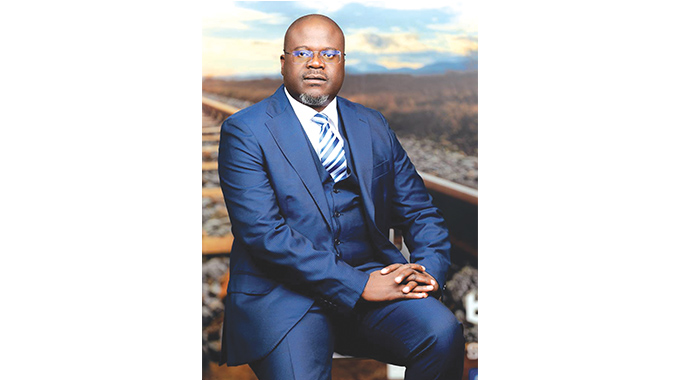
Thupeyo Muleya, Beitbridge Bureau
EVERY man has his own from rags to riches story to tell. For Zimbabwe-born businessman who is founder and chief executive officer of South Africa-based Big-time Strategic Group, Mr Justice Maphosa, success is hinged on faith and perseverance. In this conversation, our Beitbridge Bureau Chief, Thupeyo Muleya (TM) speaks to the business mogul (JM) on a number of issues abroad and at home.
TM: May you give a brief background of yourself, where were you born, and where did you grow up?
JM: I am a son of the soil from Zimbabwe. I was born and raised in the small mining town of Gwanda, in Matabeleland South Province. After attending both primary and secondary classes, I went to further my studies in South Africa. This is where I encountered a number of challenges. That experience transformed me into the person I am today.
TM: How did you get to where you are (in life) today?
JM: I am product of many obstacles that were turned into fortunes by God’s undying love and grace. Many good Samaritans assisted me to grow during my hour of need. They gave me their old shoes, old blazer jackets, socks, and food, taught me business and gave me my first break in life. It is important to note that none ascends the ladder without those holding it for him. In fact, no man is an island. This also applies to me. Communities build leaders and break leaders. This is why they are very close to me when it comes to their well-being and it’s an issue close to my heart. Our company’s corporate social investment is about Community Social Responsibility. This includes healing those that are wounded, helping those that need help. In short, I was moulded by the community and I will forever be grateful.
TM: Which other renowned people did you grow up with?
JM: It’s been a long time. I have been gone so long. My generation is scattered all over the globe and I don’t have any recollection of any of my peers or former fellow students who are still around Zimbabwe. They all left. I left in the early 90s. We are economic migrants and most of my peers are based in far-away places. I bump into many of them at organisational meetings, business imbizos and so on.
TM: How did you find yourself in South Africa?
JM: I left to further my studies (early 90s) and to pursue a dream that had manifested on me for years. I believed in that dream. The times in South Africa were hard for everybody. However, most migrants remained hopeful. I grew up quickly, from a boy to a fully-grown man in no time. Pain is necessary for growth. Without pain and suffering, many take a long time to mature. To a child coming from a well-to-do family, this is a tale, told at gatherings or a narration that will never hit home. Though the body develops, the mind remains protected, guarded by the family hierarchy, wealth and comfort. My generation was very poor. We came from parents who were house maids, domestic workers, farm labourers, mine labourers. They didn’t earn much. Yet they gave us everything and this was our driving force.
TM: Besides South Africa where else have you invested?
JM: As a company we are cautious, though we have invested far left and far right of the geographical spaces from our traditional base (South Africa). Our focus is on banking, insurance, agriculture and food processing, and in some instances we burnt our fingers. For now, we are keeping it safe in the sectors where we have been successful in, within the parent company in South Africa. Presently the markets are volatile and unpredictable. No one can tell which way they will go and how they will react. So, it’s a game of cat and mouse. Many companies are sitting on cash piles, out of this fear and impulsiveness of the business times we live in.
TM: What dreams do you have for people in your rural home and what do you wish to change there, considering your experience as you grew up?
JM: There are many challenges. My dream is that children may receive the Lord Jesus at a tender age. This will become their moral compass and guide in life. We have no power to finish the ills and evils of this world. When you fix this, another emerges on the other side. However, I wish to see the old people living well and dying with dignity. The people need sufficiently equipped hospitals. In addition, the youths need empowerment to excel and realise their dreams.
TM: What challenges are people in your rural area facing?
JM: My home area is ravaged by social ills, mainly; HIV/Aids pandemic, tuberculosis, cancer, poverty and so on. Having a sizeable industry that drives commerce, would go a long way into changing their lives both socially and economically.
TM: Many stories have been written about your works and not much has been said about your family life. Who is your wife, where did you meet, what does she do and how many children do you have?
JM: I have many children. So many. Every poor child that I take care of and send to school becomes my child. It’s not really important to always talk about yourself as if you are seeking approvals from people. I have stayed far away from this. It goes against my grain and convictions. One’s work must speak for him or her. I believe in that.
TM: In the past few years you have done a lot of charity. How much have you spent in the last two to five years and what inspires you to do this?
JM: I am always amazed as to why people ask about money. It is not about the money or the price tag attached to what we do. No price can be justifiable for any kind of help to any human being. Only those who do not understand such matters dare speak and attach prices to any form of charity work or giving in general. Giving is giving. It’s that simple. I will speak of how much I spent at the launch of a product that I will sell. Because it is the right platform to do that. Not when you are helping your fellow human beings. That is not right. It’s not who we are and definitely not a practice of any God-fearing man.
TM: Are you a Christian and what are your views on African beliefs?
JM: Yes, I am a Christian. I have seen God’s love and His work in me. I decided to follow Him throughout the days of my life. I remain thankful daily and that is what I believe in.
TM: Do you have any political ambitions and if given an opportunity in what capacity would you want to serve?
JM: I am a businessman. I love business. I do not understand politics. We are different people. There are businesspeople, then there are politicians. The two cannot be confused. It’s two different gifts. Yet they live together and need one another. Anyway, it’s God who appoints the leaders. This is why we are obliged to respect and follow them. It’s a Biblical principle. Just like paying taxes is.
TM: What do you think about the current Zimbabwean economic climate and what do you think needs to be done to promote investment?
JM: I do not live in Zimbabwe at the moment and haven’t lived in Zimbabwe for decades. I do not think I can answer this correctly. I do not know much of the prevailing situation in Zimbabwe, other than that which is given as journalism on our TV screens and print or online media. However, I know there are some challenges. As a person in the diaspora, I wish Zimbabwe could appeal more to this constituency in the diaspora. Zimbabwe can find solutions through its children, most of whom hold powerful positions outside the country. They are influential, educated and given this power through their education by the very same Zimbabwe. This has always been my opinion whenever such a question comes up. Secondly, to some people it’s hard to find your way in business in Zimbabwe. There remains some red tape, though efforts have been made to make things work. In addition, there is the currency issue. All these are difficult issues that require Zimbabweans to fix working together.
TM: How difficult or easy is it to own a business in foreign land as a migrant?
JM: It is hard. It will get worse after this Covid-19 pandemic. You are classified, judged and accused to be taking this or that away from the locals. It’s not easy. But hardships are our learning colleges as people in the diaspora.
TM: There are many people who wish to build a business empire like you especially back home. What advice can you give to them?
JM: They need to pray and seek God’s guidance daily. Study hard, follow your dreams no matter what. Learn all that you can when given an opportunity to do so. You may never have that opportunity to learn. Be the best you can be at whatever you do. Keep on trying, even though you fall. Keep on knocking. Remember, prayer changes things.
TM: As an accomplished businessman what do you think Zimbabwe should do or learn from other countries on economic development policies?
JM: This is a matter that requires an economic Indaba by Zimbabweans. I believe each country needs solutions from her own children. It’s long overdue and none will do it for us. The children of Zimbabwe, especially those in the diaspora must find a voice within their country. A voice that resonates with the local and diaspora constituencies. This must be done under the trust premise and the rest will fall into place.
TM: What is the current number of your employees?
JM: We have had a number of retrenchments in the last year (2019). Certain departments, units, and operations were closed with the economic meltdown before Covid-19. This needs to be checked. But the figure is in the hundreds.
TM: Zimbabwe was once the breadbasket of Africa. How can it regain that status?
JM: Yes, I believe in that (it can be a breadbasket again). But something is about to happen. Something so big that will change the course of this earth. The earth will never be the same after that. Coronavirus is just a warning to the nations, for the nations across the world to repent. Repent while the time is still there. Turn to God and be washed by the blood of the Lamb. All knees shall bow and all tongues shall confess that Jesus Christ is the Lord, to the Glory of the Father in Heaven. This raises yet another question, who are we as black people. Why has all the sins of children of Israel fallen on black people? We cannot deny that. What do we need to do? Where do we go? Who is our God? This is a season for a black nation.


 Online Reporter