admin
admin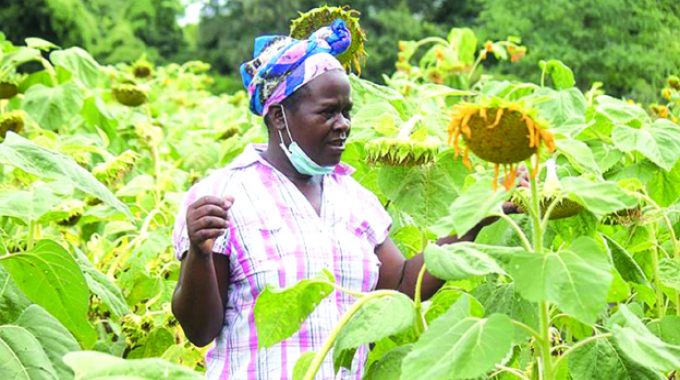
Obert Chifamba-Agri-Insight
A POPULAR summer prime view for outdoor photo shoots, whether planted as a crop or a roadside attraction, sunflowers boast an impressive stature and eye-catching golden petals that make cropped fields must-see destinations.
This aesthetic bit aside, sunflowers can be a valuable asset to both the farmer and the nation. They can be used in the manufacturing of edible oil, livestock feed and confectionery products.
Sunflower cooking oil is of greater quality compared to oil from soya and cotton with the crop also ranking as one of the easiest to produce.
It is, however, sad that there seems to be an inherent lack of appetite from local farmers to produce the crop, which places it at the bottom of the list of their preferred oil seeds.
Results from a survey instituted by the Agricultural Marketing Authority (AMA) seem to have unearthed a general sense of trepidation towards the crop by farmers with many not too sure of where they can sell the crop or what to do with it after harvesting.
The crop’s highly informalised value has also not helped the situation, which has contributed to depressed production levels.
As a result of this lethargic attitude by farmers towards the crop, the country has perennially recorded edible oil shortages even though producing the crop can easily open up opportunities for farmers to increase incomes and upgrade their livelihoods.
Farmers can even earn more if they do value addition.
Industry on the other end is estimated to require between 50 000 and 70 000 tonnes of the oilseed annually, which creates huge market gaps for farmers to tap into.
The market price for a tonne of sunflowers is US$90 and $274 392 (local currency), while the international average yield stands at 1,6 tonnes per hectare with good agronomic practices, yet Zimbabwean farmers can even exceed this.
Globally, the largest producers of sunflower are Russia, Argentina, China, India, Turkey, and South Africa.
AMA’s move to strike a partnership deal with Zimgold and the Agriculture Advisory and Rural Development Services (ARDAS) and recruit 69 000 farmers to produce sunflowers under a contract arrangement may mark the turning point in the production history of the crop, especially if the yields at the end of the season and the earnings are impressive.
The good thing is that the market regulator, AMA, is involved, which means the farmers will not have marketing challenges while the prices will obviously meet the expected standards.
This contract arrangement will see 100 000ha being put under sunflowers, as part of efforts to reduce the country’s sunflower oil import bill.
Under the arrangement, each farmer is allocated five kilogrammes of seed for a hectare with a market for the produce also guaranteed.
This means the farmers will not struggle to find a market given that the small-scale bracket under which they fall usually finds it difficult to find buyers or rewarding markets especially for strategic crops for which they have to contend with stiff competition from established commercial farmers.
The contract farming programme is being rolled out in provinces such as Mashonaland West, Mashonaland East, Midlands, Mashonaland central Manicaland, Matabeleland and Masvingo.
Zimbabwe has ideal climatic conditions for sunflower production while the crop is naturally good for the drier parts of the country. It has immense benefits that arise from a low input cost, short growing period and tolerance to dry conditions.
The bulk of this year’s output is, however, expected to come from the Midlands province while regions that receive less rainfall such as Matabeleland can always help drive up local production.
It is also exciting to note that the launch of the programme comes at a time when the Government is calling for businesses to fund 40 percent of raw materials locally, which means there will be a marked improvement in the availability of raw materials to reduce the need to import produce.
The contractor, Zimgold, has since confirmed that farmers are getting seed for free to cut on costs of production and increase farmers’ business viability.
The cost of seed will not be added to their debt and will therefore not be deducted on the farmers’ eventual earnings.
It will be good if the participating farmers can make the most of the contractor’s benevolence and make sure they maximise on production and later repay what they owe.
They must desist from being tempted to side-sell the produce in the event that some unscrupulous buyers chance to offer them more than what Zimgold will be paying.
It is crucial for both parties – Zimgold and the farmers to remember that contract farming is a critical aspect of agriculture business and gives farmers access to markets, capital and other pertinent inputs crucial for intensive production while the contractor is also guaranteed of quality raw materials produced under strict guidelines.
This explains why contractors are expected to include extension services in their package so that farmers do not fail to meet the set expectations at the end of the season.
One interesting observation is that the sunflower crop does not only take care of the farmer’s socio-economic concerns but also makes sure the field on which it is produced benefits from its presence, as it also comes with detoxing benefits to the soil.
Sunflowers are considered ‘phytoremediators’, which essentially translates to remedy.
Through their roots and stems, they can suck up harsh chemicals and other contaminants that are present in the soil, which makes it far easier to grow other crops on the same land or area after sunflowers are removed.
They are, therefore, a good crop to include in a rotation.
On the one hand, once the farmer grows sunflowers, she gets tonnes of free seeds to eat or sell, which is an added benefit.
The other easily recognisable thing is that growing of sunflowers generally aids crops like maize. They create a buffer zone, that holds off birds that would have easily descended on maize where they usually inflict losses in the region of 10 percent.
Sunflowers are also a huge draw card for pollinators such as birds and bees, which also helps to improve the farmer’s harvest.
They belong to the family of plants labelled Aster, and the genus of plants labelled Helianthus.
This genus has almost 70 plants within it but the sunflower is the most widely recognisable. Sunflowers are annual plants, which means they only live for one growing season and will not return or bloom the next year like their perennial counterparts.
They can grow up to 4,6 metres tall with heads that can span up to 30cm in diameter. Sunflowers have very sturdy stems, which gives them the stamina to create a wind barrier against even the strongest winds.
This can also help farmers save a lot of crops over time.



 Online Reporter