Andrew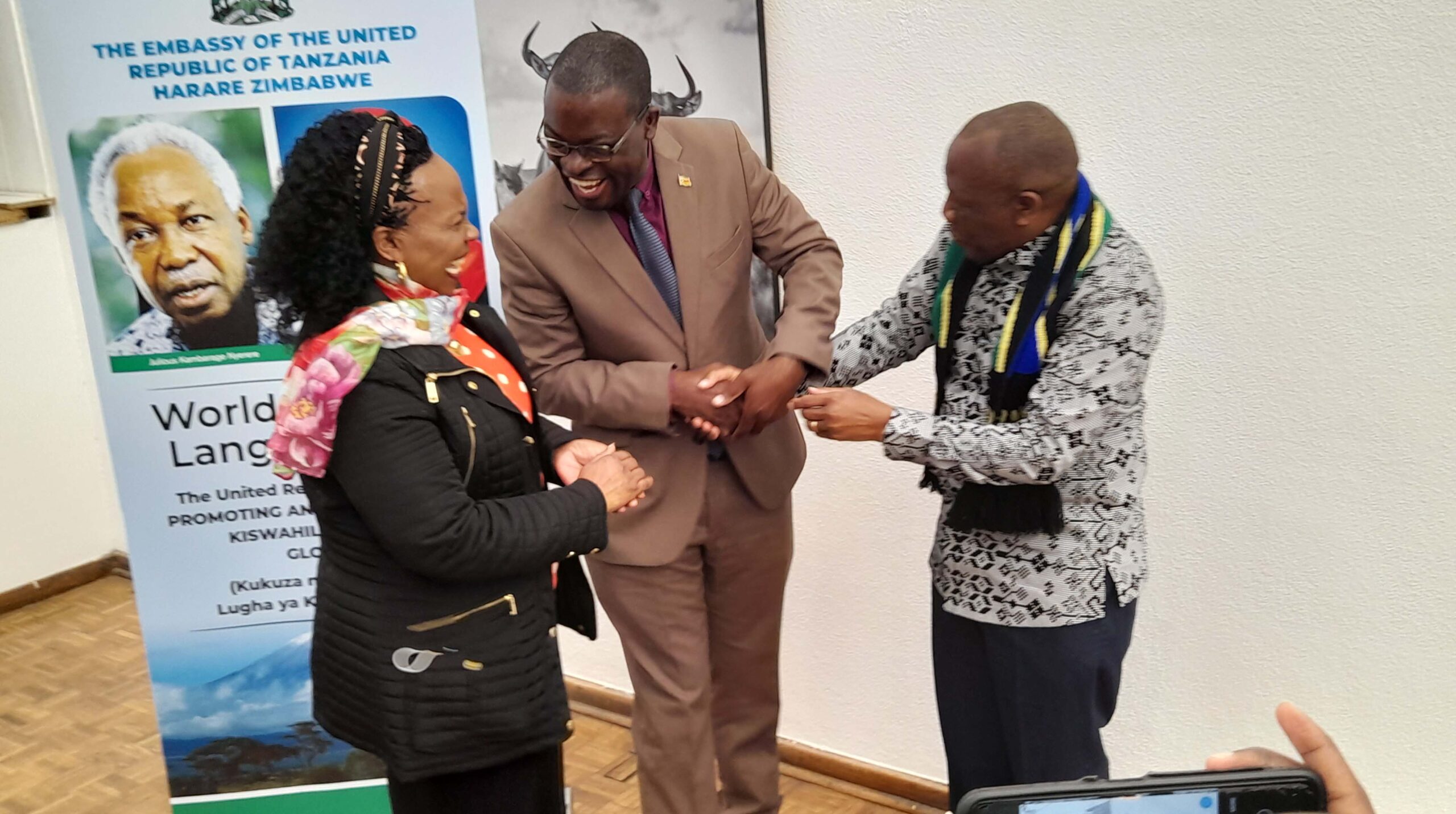
Tawanda Musarurwa
THE further we move away from direct memory of Western colonisation, the greater the general underestimation of its real impact.
It was subjugation.
And, its effects are still felt today.
“The effect of a cultural bomb is to annihilate a people’s belief in their names, in their languages, in their environment, in their heritage of struggle, in their unity, in their capacities and ultimately in themselves,” wrote Ngugi wa Thiong’o in his seminal book, “Decolonising the mind: The Politics of Language in African Literature”.
The book marked Ngugi’s shift from writing in English, to his native languages of Gikuyu and Swahili (also commonly referred to as “Kiswahili”).
It was predictive.
Over three decades later, the need for a monumental shift in language use is gaining traction.
Last November, the United Nations Educational, Scientific and Cultural Organisation (UNESCO) designated July 7 as the World Kiswahili Language Day.
According to UNESCO, Swahili is “among the 10 most widely spoken languages in the world, with more than 200 million speakers”.
Earlier this week, Zimbabwe joined the rest of the world in commemorating World Kiswahili Day, and the commemorations were, if anything, very insightful.
Contemporary education systems point to how deep-rooted colonialism is.
There is almost a sense that most knowledge is a derivative of the English language.
But, of course it’s not.
Does “gravity” exist in any other language?
In Tsonga, it is “matimba ya nkoka-misava”, and in Swahili it is “mvuto”.
Officiating the commemorations on Thursday, Higher and Tertiary Education, Innovation, Science and Technology Development Minister Professor Amon Murwira highlighted this anomaly.
“Why do I have to learn another language to understand a phenomenon that I can see every day? We have operated over the years in Africa, with a language that has disenfranchised the majority of our people from actively contributing to national development,” he said.
“Language identity is one of those vital signs and characteristics of a free people. If we are to have effective communication as a continent, it is imperative that we communicate in a unifying language.”
A unifying language
Swahili has the power to bring African countries together, because its essence transcends country boundaries.
Swahili is originally a Bantu language, and the native language of the Swahili people of Tanzania. But it is also a lingua franca (common language) of other areas in the African Great Lakes region and East and Southern Africa, including some parts of the Democratic Republic of the Congo (DRC), Malawi, Mozambique, the southern tip of Somalia and Zambia.
That is why the move by the African Union (AU), earlier in February, to officially adopt Swahili as an official working language was significant.
The AU’s central objectives are: achieving greater unity, cohesion and solidarity between the African countries and African nations (yes, there is an important difference); defending the sovereignty, territorial integrity and independence of its member states, and accelerating the political and social-economic integration of the continent. But, for far too long the majority of the AU’s working languages were well and truly foreign, namely: English, French, Portuguese and Spanish.
A terrible colonial legacy!
The AU has suffered from being a community of peoples. The adoption of Swahili as a working language is critical for the AU, because it is a language that is identifiable as Afro-centric. But it is also a language that has made strides internationally.
Hakuna matata . . . literally translating to “no worries”, this Swahili phrase went international with the 1994 animated film, “The Lion King”.
An African Language
without borders
Swahili is also an official working language of the Southern African Development Community (SADC) and the East African Community (EAC).
This geographic spread accounts for most of its 200 million users.
The language’s trans-boundary quality is well encapsulated by Harvard University professor, John Mugane, in an edited extract of his book — The Story of Swahili:
“The African Union did not adopt Swahili as Africa’s international language by happen-stance. Swahili has a much longer history of building bridges among peoples across the continent of Africa and into the diaspora. The feeling of unity, the insistence that all of Africa is one, just will not disappear. Languages are elemental to everyone’s sense of belonging, of expressing what’s in one’s heart.”
It is a masterstroke — intentional or not — that organisations such as the AU, SADC, and the EAC have officially adopted Swahili.
The language carries with it the weight of a liberation language.
Professor Mugane adds that in the decades leading up to the independence of Kenya, Uganda and Tanzania in the early 1960s, Swahili was used as an international means of political collaboration.
“It enabled freedom fighters throughout the region to communicate their common aspirations even though their native languages varied widely.”
But also, for Zimbabwe.
“I know very well as a war veteran the importance of Swahili. Many of my colleagues were trained in Tanzania, and they didn’t learn in English. They learnt in Swahili,” said Information, Publicity and Broadcasting Services Minister Monica Mutsvangwa during the commemorations.
“It is Tanzania, which helped a lot of our liberation movements.”
Add to that the fact that the language emerged in a coastal region that functioned as an international crossroads of trade and human movement.
It is, therefore, significant both politically and economically, and necessary for these three institutions to begin to dismantle post-colonialism.
Perhaps better than any other native language on the continent, the history and scope of Swahili allows it to create an African nation with “greater unity, cohesion and solidarity”.
Swahili in Zimbabwe
Zimbabwe is a key player in the Swahili language matrix; after all, Ngugi’s paper on “The Language of African Literature” was tabled at the Zimbabwe International Book Fair in 1983, and read at the University of Zimbabwe (UZ) in August 1984.
In 2016, the UZ adopted Swahili as a mandatory native language course.
And there are more initiatives to promote the uptake of Swahili in the country.
Said Tanzanian Ambassador to Zimbabwe, Professor Emmanuel Mbennah: “We hope to provide an opportunity for learning Swahili by launching a Swahili Learning Centre here in Harare.
“We will continue to encourage and support the relevant authorities in introducing Swahili in the Zimbabwean curriculum.”
Mr Aaron Mukandabvute, a Swahili lecturer at the UZ’s Department of Languages, Literature and Culture, says there are a wide range of benefits for Zimbabweans who take up Swahili.
“Our knowledge of the language will increase participation of Zimbabwe in regional and pan-African cultural, economic and political cooperation and integration, international trade and regional organisations and beyond,” he said.



 Online Reporter