Online Reporter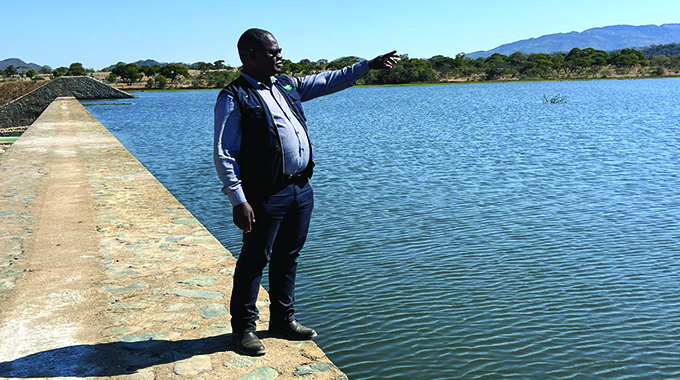
Sukulwenkosi Dube-Matutu, [email protected]
GOVERNMENT is working closely with development partners to unlock wider economic opportunities from dams in rural areas through establishing vibrant irrigation, fisheries, water reticulation and power generation projects.
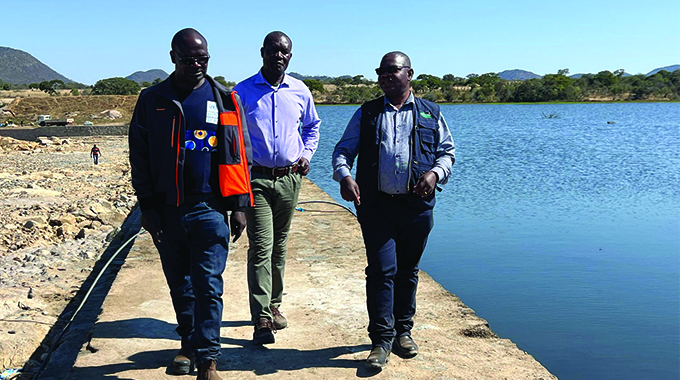
Speaking during a tour of projects supported by the recently rehabilitated Wanezi Dam Ministry of Lands, Agriculture, Fisheries, Water and Rural Development Permanent Secretary, Professor Obert Jiri, said Zimbabwe has over 10 600 water bodies with a majority of them remaining underutilised.
He said the water bodies can irrigate two million hectares of land thereby ensuring food sufficiency in the country.
Prof Jiri said the Government working with partners continues to climate proof the agricultural sector through investing in irrigation infrastructure with construction of dams remaining key.
The rehabilitation of Wanezi Dam has seen the establishment of a 35-hectare irrigation scheme. The community has also benefitted under Government’s Presidential Community Fisheries Scheme with 10 000 tilapia fingerlings having been stocked at Wanezi Dam. The dam is also supplying two schools and will supply a seven hectare irrigation scheme in the school.
A piped water scheme benefitting about 100 households has been set up.
“What we are seeing here in the form of this dam isn’t just water but an economy, which we call the dam economy,” he said.
“The dam economy has six components with first being establishment of the dam itself so that water isn’t lost. Having a dam unlocks an economy that we should have in our rural areas,” said Prof Jiri.
“Out of the potential of two million hectares that we can irrigate with the available water bodies in the country we only have 223 000 hectares under irrigation.
“Of the 223 000ha, we have more than 100 000ha under sugar cane and other plantations, leaving the remainder for cereal production for our food security. It means that we need to convert more dams to irrigation,” he added.
Prof Jiri said the country is producing 30 000 metric tonnes of fish out of a required 60 000 metric tonnes and urged farmers to practice sustainable fish farming.
He also said every dam should have irrigated land for the economy of the dam to be complete, adding that the irrigation scheme has to further operate as a business unit.
According to Prof Jiri, each dam is also expected to have a fisheries project while communities around the dam are expected to benefit from the water for both domestic and livestock use with institutions also benefitting from the water.
“Under the fisheries component we expect farmers to practice sustainable fish farming. There are fish in the dam, which we don’t want villagers to harvest using nets to ensure their sustainability,” said Prof Jiri.
“We also urge farmers to venture into cage fishing through the assistance of our agriculture business advisors. Come together as co-operatives and engage in cage fishing.
“There is a huge market when it comes to fish farming. In Zimbabwe, we require 60 000 metric tonnes of fish. We are importing fish from countries like Zambia and Mozambique because we don’t have enough fish as we are producing only 20 000 metric tonnes. “We still have a huge gap in terms of fisheries. I urge youngsters to take up this lucrative business opportunity,” he said.
Prof Jiri said big dams should also contribute to power generation while for small dams, the energy source, which is used to draw water from dams should also benefit surrounding communities.
UNDP Cawep project manager, Mr Solomon Mutambara, said works at the irrigation scheme are expected to be completed in September. The project of rehabilitating the dam, piped water scheme and establishing the irrigation scheme among other works is valued at US$3,3 million.
“This Wanezi Dam rehabilitation project is impacting over 12 000 people from this community. The irrigation scheme is directly benefitting 74 farmers,” he said.
“We expect all the works at the irrigation scheme to be completed by end of September. We have taken deliberate steps to capacitate farmers in farming as a business. We have also brokered contract farming arrangements with the farmers.
“We have also facilitated some trainings and establishment of biogas digesters. Community members have been trained in biogas training,” he said.
Constructed in 1952, Wanezi Dam, which was a major source of livelihood for farmers, was damaged by Cyclone Dineo in 2016, leaving villagers in despair.
In 2024, the dam was rehabilitated under the Community Climate Adaptation Water and Energy Project (Cawep) funded by the British Embassy and implemented by the United Nations Development Programme (UNDP) working with Government departments. — @DubeMatutu