Online Reporter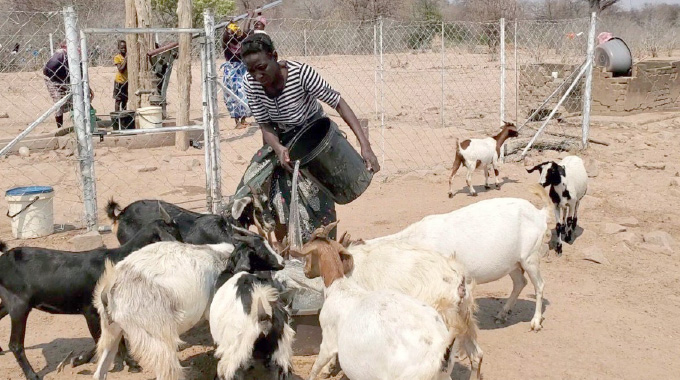
Theseus Shambare in Binga
AT the heart of Simwenge Village in Binga, an old borehole gushes out steaming hot water — so hot that one could make tea from it!
Not only is this water searing hot, but it is also salty and unpalatable.
Villagers speak luridly about a time when they drank this salty water, takwepe, twaliminina amenshi atunyante (when there was no choice, we would just drink salty water), as it was all they had.
But the taste tells another story.
It burns the tongue. It dries the throat. It leaves behind a metallic tang that clings to the mouth.
For years, this was the only source of water the community had. Day after day, women lined up with buckets balanced on their heads.
Men pushed wheelbarrows down dusty footpaths. Children followed barefoot, their laughter fading under the 38°C heat that bakes this part of Binga.
By midday, the ground scorched feet, but still, they came. They came because there were no alternatives.
Among them was Gogo Ester Mumpande,74, who still remembers those long, punishing walks. Each morning, she tied a worn scarf around her head, steadied her bucket and began her five-kilometre trek to the borehole. Her back ached, her legs trembled, but she pushed on.
“I walked slowly,” she said, her voice trembling. “I had no choice. We needed water.”
The water was hot, salty and harsh on the stomach. Livestock refused to drink it. Cattle coughed, goats lost weight and gardens wilted under its sting.
But there was no alternative. Even the clinic staff complained of high salinity in samples taken from the borehole. Health workers reported cases of stomach cramps, dehydration and fatigue linked to the water’s mineral content.
“People were falling sick, but what could we do?” said one villager, Mr Vusa Njame, shrugging. “It was either salty water or takwepe (nothing at all).”
Then came a glimmer of hope.
In 2024, the Zimbabwe Red Cross Society (ZRCS), working with the Finnish and Danish Red Cross, stepped in under the Climate Smart Resilience (CSR) project. They listened, they planned and they acted.
The community proposed an ambitious idea — to connect their village to the Mlibizi Zinwa water pipeline, which carries treated water from the Mlibizi River.
“We mobilised ourselves first,” said Mr Jacob Mumpande, chairperson of the Simwenge Pipeline Committee. “We sourced sand, dug trenches and bought pipe materials we could. We didn’t wait for handouts.”
Villagers managed to extend the pipeline by one and a half kilometres. Then the Red Cross came in with support, adding another two and a half kilometres to complete a four-kilometre lifeline to Simwenge.
When clean, cool water finally gushed from the initial one tap, some cried. Some clapped. Others just stood there in disbelief.
“It felt like a miracle,” said Mr Mumpande. “We never thought we would see clear, safe water right here in our village.”
But this soon became both a blessing and a burden. People from as far as Siansundu and Sinamagonde started coming with buckets.
Livestock followed. Goats bleated. Cattle pushed against the fence, desperate for a sip. Sometimes there were stampedes as people and animals fought for access.
To prevent chaos, villagers introduced a rationing plan. Each section of the community is assigned a day. Zone A fetches water on Mondays. Zone B comes on Wednesdays. Zone C on Fridays. The elderly and people with disabilities fetch early in the morning.
This system restored order — but the queues remain long. By sunrise, rows of yellow, blue and white buckets line the water point like beads on a necklace. Their owners sit nearby, chatting softly, waiting their turn.
The heat presses down. Dust swirls. The tap hisses and gurgles. A splash of clear water spills into a bucket and laughter breaks out.
It is the sound of relief.
“This water changed everything,” said Ms Pauline Mudenda from Siansundu West. “Before, we fought over turns. Now, we are organised. The water is clean. My children drink it with no complaints.”
The old borehole still runs — still hot and salty — but it now serves only for washing and watering animals. The new treated water is strictly for drinking and cooking.
Takwepe, twaliminina amenshi atunyante.
The memory lingers — of days when children played under the scorching sun, thirsty and weary and villagers had no choice but to drink water that stung their tongues and dried their throats.
According to the 2025 ZimLAC Rural Livelihoods Assessment Report, 81 percent of rural households in Zimbabwe now have access to improved water sources. Yet nearly 27 percent still walk more than 30 minutes to fetch water.
And in Binga District, about 30 percent of households still rely on unsafe or unprotected sources. That makes Simwenge’s achievement remarkable — a small community taking ownership of its own survival.
Globally, the World Health Organisation says over 2.2 billion people lack access to safe drinking water. The United Nations Food and Agriculture Organisation (FAO) warns that saline or brackish water can damage soils, stunt crops and harm livestock productivity.
In Binga, that was not theory — it was daily life. Now, green gardens sprout beside homes. Tomatoes glow red under the sun. Cabbages unfurl in perfect heads. Chickens scratch around the new fowl runs and children play near the water point without fear.
“Clean water has given us energy,” said Mr Njame. “Our gardens are alive again. Even our spirits are alive.”
ZRCS field officer Ms Spiwe Sibanda calls the project a model of climate-smart resilience.
“Water is not just for drinking,” she said. “It supports gardens, livestock, sanitation and health. It builds dignity. It builds resilience.”
The project also constructed disability-friendly latrines nearby — fitted with ramps and handrails. It trained local maintenance committees. It supported hygiene campaigns and sexual reproductive health education for youths.
“Resilience is not only about infrastructure,” added Ms Sibanda. “It is about people, knowledge and opportunity.”
The Simwenge story captures that vision perfectly. The community is now waiting for Zinwa to complete connections for four additional water points closer to households. Once complete, no villager will walk more than 500 metres for water.
That will be historic for Binga.
Yet the people remain patient — and proud. They know they built this dream with their own hands. They protected pipes, carried sand and guarded materials at night. They worked as one.
As the sun dips over the Zambezi hills, buckets glisten in the fading light.
Children chase each other around puddles. Goats bleat nearby. And Gogo Mumpande lifts her full bucket once more.
Her steps are slow, but her heart is light. She smiles as she begins her long walk home.
“This water is cool,” she said. “It tastes like life.”
For Simwenge, takwepe — nothing at all — is now a memory.
There is something. There is water. There is hope.