Online Reporter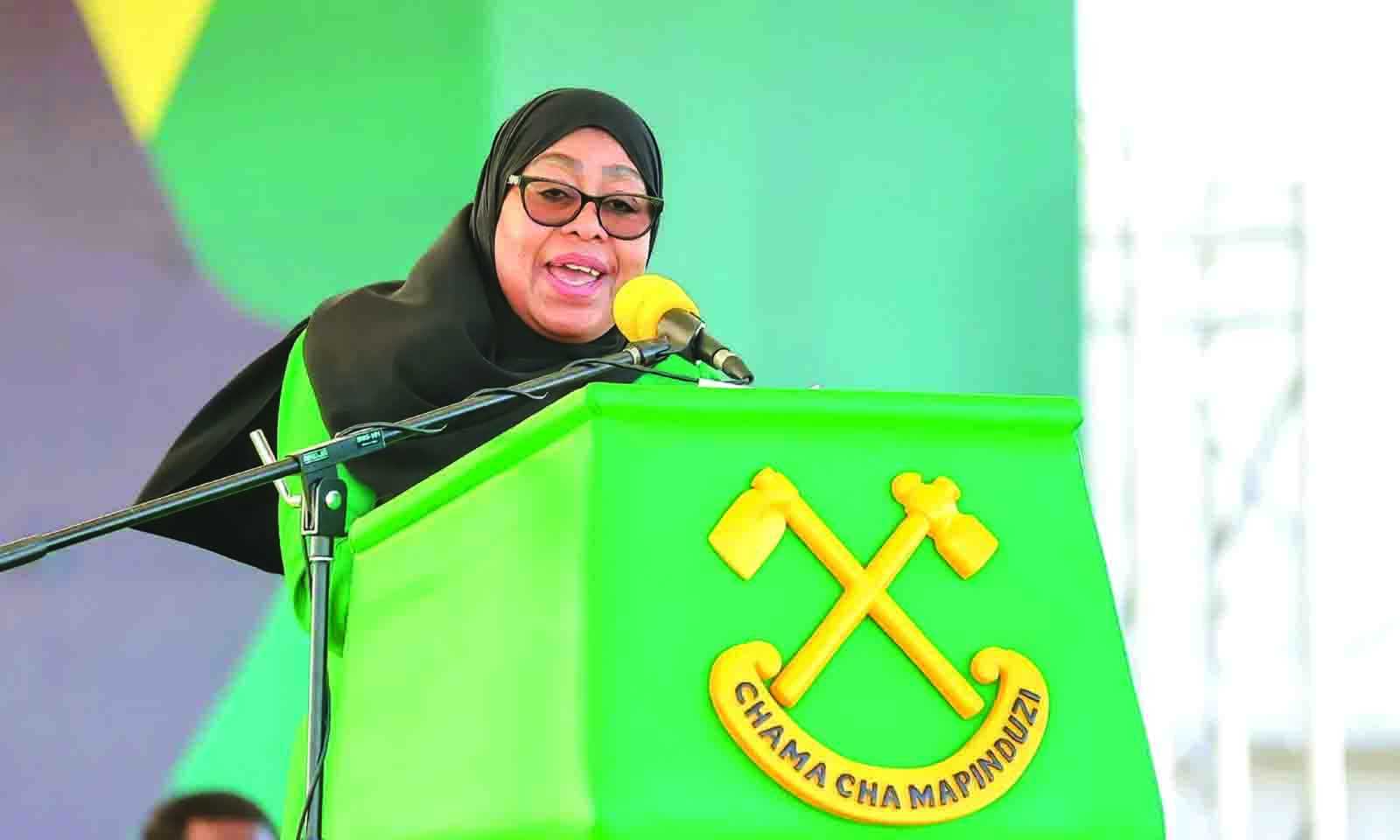
Zimpapers Politics Hub
TANZANIA has once again demonstrated its political maturity and institutional resilience under the leadership of President Samia Suluhu Hassan.
Her inauguration marked not only the consolidation of peace but the triumph of stability over chaos.
Despite the turbulence caused by externally sponsored violence that sought to destabilise the nation during the election period, Tanzania has emerged united, secure, and ready to welcome the world, from tourists heading to the majestic Serengeti to business travellers seeking opportunities through its growing ports and transport corridors.
The inauguration, held at the Tanzania People’s Defence Force parade grounds in Dodoma, signified a new chapter of order and sovereignty.
President Hassan’s swearing-in, a dignified, tightly controlled ceremony, was both symbolic and strategic, sending a powerful message to those who underestimated the resolve of Tanzanians to preserve their peace and independence.
Her resounding victory, with 97.66 percent of the vote, was a clear endorsement of the ruling Chama Cha Mapinduzi (CCM) and its long-standing vision of unity and progress.
Defeating Neo-Colonial Interference
In recent years, neo-colonial forces have increasingly targeted Africa’s former liberation movements through the manipulation of social media, the funding of opposition groups, and the orchestration of civil unrest.
Tanzania’s election was no exception. The violence witnessed in some regions bore the unmistakable fingerprints of foreign interference, an attempt to discredit the election and impose externally sponsored political puppets.
President Hassan’s words during her inauguration captured the essence of the crisis and the leadership required to overcome it.
“What happened is not Tanzanian and not part of our culture. Some of the young men who were arrested were foreigners from outside our country, and our security forces are investigating this matter,” President Hassan said.
Her calm but firm tone reaffirmed national sovereignty.
The President further called for collective healing and stability, urging citizens and the world alike to support peace and dialogue.
“As the Presidents of Burundi and Zambia said, unrest in a country brings no benefit. I am calling for peace, unity, and calm in our nation of Tanzania… Dialogue is what brings development,” said President Hassan.
These words reflected both her statesmanship and her understanding of Africa’s broader geopolitical struggle—a struggle between self-determination and continued economic manipulation by former colonial powers.
Stability restored — Tanzania ready for the world
Following the disturbances, the Government swiftly restored peace.
The Ministry of Natural Resources and Tourism reaffirmed that “all social, economic, and tourism activities are now proceeding normally following the swift resolution of recent post-election incidents.”
Ministry spokesperson, Mr Nteghenjwa Hosseah, reassured visitors that: “All entry and exit points, by air, land, sea, and rail, are fully operational, and tourism services across the country continue without interruption.”
He further assured the global community that, “Tanzania remains a peaceful, stable, and inviting destination for tourism, business, and investment.”
This reassurance comes at a critical moment as Tanzania seeks to strengthen its tourism, one of the pillars of its post-pandemic recovery.
With peace restored, travellers can once again marvel at the Serengeti, explore the beaches of Zanzibar, and traverse through to Kenya’s Maasai Mara, all under the banner of East African unity and cooperation.
Victory for the Liberation Movements of Southern Africa
Tanzania’s triumph under President Hassan has resonated deeply across the Southern African region. It is a victory not just for the CCM, but for all Former Liberation Movements of Southern Africa (FLMSA), the regional alliance of ruling parties born out of Africa’s struggle against colonial domination.
In recent years, these movements—from ZANU PF in Zimbabwe, FRELIMO in Mozambique, ANC in South Africa, MPLA in Angola, SWAPO in Namibia, and CCM in Tanzania have faced growing pressure from Western powers seeking regime change under the guise of democracy and human rights.
The goal has often been to weaken African sovereignty, disrupt regional unity, and open the door for renewed exploitation of Africa’s natural resources.
Countries like Zimbabwe, Mozambique, and South Africa have all faced similar neo-colonial onslaughts during election cycles.
Zimbabwe, for example, has weathered decades of illegal sanctions designed to cripple its economy and discredit its liberation leadership.
Mozambique’s elections have similarly been clouded with violence and discredit by Western forces, while in South Africa, liberation ideals have been challenged by a surge of externally influenced narratives aimed at weakening the ANC’s historical mandate.
Tanzania’s defiance and electoral triumph now serve as a beacon, proof that liberation movements remain relevant and resilient in the modern democratic age.
The youth of Tanzania, many of whom were born after independence, rallied behind the CCM, proving they understand the value of stability and the dangers of external manipulation.
Their vote was a powerful rejection of chaos and an affirmation of continuity.
The Youth as guardians of the liberation legacy
Perhaps the most inspiring message from Tanzania’s election is the political awakening of the youth. For years, Western agents have sought to exploit Africa’s youthful population by sponsoring unrest and social media misinformation campaigns.
But in Tanzania, the opposite occurred; while the opposition sponsored violence erupted, young people came out to defend their national legacy.
The youth demonstrated political consciousness, realising that peace and progress cannot coexist with anarchy.
Their support for the CCM was a resounding declaration that they would not allow their country to become a playground for foreign interests.
They chose stability over turmoil, continuity over experimentation, and African solutions over imported ideologies.
Lessons for the FLMSA
Former Liberation Movements of Southern Africa must draw key lessons from Tanzania’s experience. First, unity and vigilance are vital.
Many liberation parties had grown complacent, lulled into a sense of comfort after decades in power. Neo-colonial forces exploited this by infiltrating civil society, media, and youth movements to sow seeds of dissent.
Tanzania’s success should serve as a wake-up call: the liberation struggle is not over; it has simply evolved. The battlefield is now ideological and economic rather than military.
The FLMSA must therefore invest in political education for the youth, emphasising history, patriotism, and self-reliance.
Secondly, liberation movements must adapt to modern communication strategies to counter misinformation and foreign propaganda.
They must celebrate achievements, modernise governance structures and stay connected to the aspirations of the people.
Recent elections in Mozambique (FRELIMO) and Zimbabwe (ZANU PF) demonstrated that when liberation movements stay united and responsive, they can still command overwhelming support.
However, defeats in some areas, such as the ANC’s declining performance in South Africa’s local elections, are reminders that liberation credentials alone cannot sustain power without tangible service delivery and youth engagement.
Guarding the gains of liberation
The re-election of President Hassan and the stability restored in Tanzania mark a significant milestone for Africa’s liberation heritage.
It is proof that despite the persistent schemes of neo-colonial agents, Africa’s sovereign nations can chart their destiny with dignity and peace.
The FLMSA must not rest on its laurels. It must collaborate, share experiences, and strengthen intra-African solidarity.
Only through unity and vigilance can the region protect the hard-won gains of independence and continue the journey toward total economic liberation.
President Hassan’s call rings true for all liberation movements and citizens of Africa.
“Unrest in a country brings no benefit… Dialogue is what brings development.” In those simple words lies the essence of Africa’s renaissance: peace, unity, and progress built by Africans for Africa.