Chronicle Editor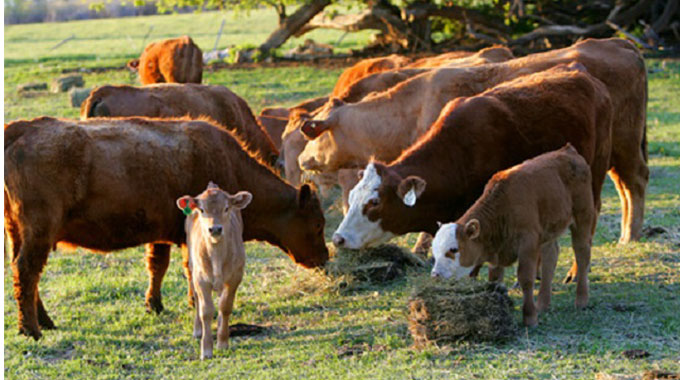
THIS past week, various social media platforms were abuzz with the issue of the gazetting of Statutory Instrument (SI) 248 of 2023 which saw the introduction of 15 percent VAT on all meat products among other provisions.
As expected, the market was screaming with major movers of such products flighting notices to inform customers of price increases of their products and of course pointing a finger on the new SI.
As is always the case, the market will respond by simply shifting until a new equilibrium is found and it settles there. I am no economist and therefore quite far from home and well out of depth with respect to issuing an authoritative comment regarding the subject. Perhaps I should have done more than Principles of Economics 101!
However, my real interest on this issue, is what this means to the livestock farmer, the producer whose product is now attracting the 15 percent VAT at the consumer end of the market. Livestock markets tend to have a life of their own which barely conforms to the basic tenants of economics such as supply and demand.
Readers and farmers alike have protested endlessly over the years to the simple but true observation that the supply and demand curve fluctuations only tend to hold true at the producer end of the value chain but not at the market end, with prices remaining relatively firm throughout the year in butcheries and retail outlets, despite the traditional price drop of such months as January to March.
It is a no-brainer that meat retailers will simply push down the price increase to the consumer and they remain unscathed cost wise except perhaps for the decrease in demand as some people are pushed out of the bracket of those who can afford to buy.
Butcheries will now sell less carcases than they used to do for the same period and this means abattoirs will be slaughtering much less animals than they used to and effectively fewer animals will be bought from the producer as the market responds to the drop in demand.
A reduced purchasing power from the traditional livestock buyers will result in supply exceeding demand and an inevitable drop in producer prices.
Therefore, the net effect of the 15 percent VAT on meat products is likely to see a drop in producer prices until the market establishes the equilibrium. The other unintended outcome of this tax is likely to be the proliferation of black market meat outlets.
These are informal outlets which will obviously not administer the 15 percent VAT but profit from people shunning formal outlets because of increased prices. Unfortunately, these black market meat outlets have no ethics and they are the drivers of stock theft.
Livestock producers are currently struggling with stock theft cases where animals are slaughtered and the meat sold to these outlets. We will therefore see a spike in stock theft as the black market meat outlets proliferates in direct response to increase in customer base.
Law enforcement authorities are therefore called to ensure that they suppress the growth of black market meat outlets so that they support the Government revenue collection efforts at the same time protect livestock farmers from marauding stock thieves.
Sadly, it seems like livestock producers will again get the shorter end of the stick as players at the apex end of the value chain incur no real effect. Most livestock markets under rural district councils ceased operating a long time ago as these apex livestock market players shunned them because of levies that have to be paid to the rural district council.
Instead they started using agents that buy directly from farmers, aggregate and call for a truck to pick the animals and evade the levies. Uyabonga umntakaMaKhumalo.
Mhlupheki Dube is a livestock specialist and farmer. He writes in his own capacity. Feedback [email protected] cell 0772851275


 Online Reporter