Online Reporter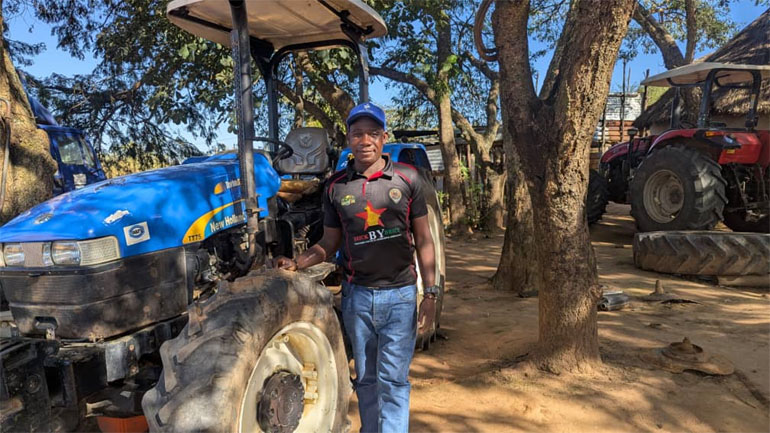
Lovemore Kadzura
Post Reporter
A GROWING number of tech-savvy youths are abandoning conventional career paths to take up farming full-time, achieving notable success and reshaping agriculture’s image from a last resort into a viable and profitable business.
Across Manicaland, young entrepreneurs are venturing into agribusiness – from horticulture, tobacco and livestock to poultry and climate-smart crop production – a shift driven by a combination of economic necessity, Government support and adoption of new technology that is modernising the sector.
A recent tour of the Headlands farming community by The Manica Post has shown that youth-led agribusinesses are now at the centre of the constituency’s agricultural transformation, with the sector shifting towards innovation and modern production systems.
The trend marks a significant turnaround from previous years, when many young people shunned farming in favour of urban employment or migration.
Today, agriculture is emerging as a key employer, with an estimated 37 percent of the youth already engaged in the sector.
One such farmer is Mr Fungai Tsikwa (39), who moved onto a 60-hectare farm in 2017.
He said farming is no longer just about working the land, but about building a future – part of a broader generational shift taking root across the country’s fields.
Starting with little capital, Mr Tsikwa has built standard tobacco curing barns, installed irrigation infrastructure, acquired two brand-new tractors and constructed a farm compound that accommodates 32 full-time employees.
He now leads a stable lifestyle and runs the farm as a professional business.
“I moved here in 2017 and started from scratch with savings from my previous employment. It was not easy, but I was determined to succeed. I made many sacrifices, including staying on the farm for months without going into town while I nurtured the project. Starting small allowed me to learn, make mistakes and correct them without incurring major losses. I began with tobacco and, over the past five years, it has been rewarding. We reinvested the profits in mechanising the farm, building proper infrastructure and acquiring vital machinery for a modern commercial operation.
“In addition to tobacco, we now grow winter wheat, potatoes, maize and beans. We also have a small livestock section where we rear cattle, goats and chickens. When I moved here, I was the only permanent employee. Now we employ 32 full-time workers, and during busy periods we hire additional labour.
Farming is not a walk in the park. It requires meticulous planning and execution. There are no shortcuts or luck in agriculture. You need to study the market before choosing a crop to grow. Diversification is also key, as relying on a single crop can lead to losses when prices fluctuate, as is happening with tobacco this year,” said Mr Tsikwa.
Another emerging farmer, Mr Antony Manyika (42), specialises in cattle breeding on his father’s farm.
A trained agronomist, he left a stable job as a farm manager three years ago to partner with his father on the 60-hectare property, where production is now thriving.
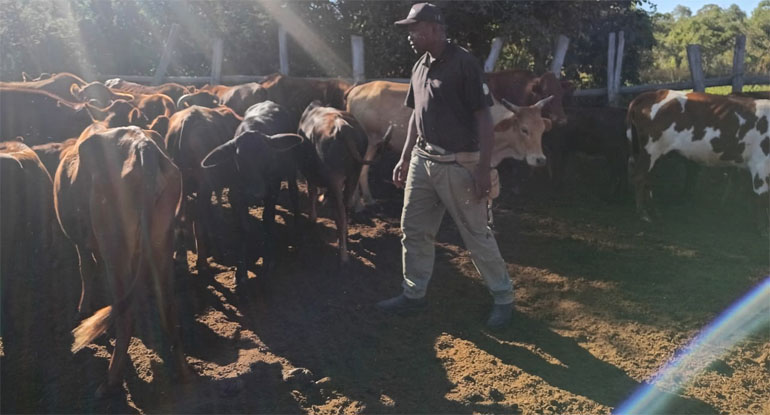
“Here we focus mainly on livestock — rearing cattle, specialising in the fat-line Mashona breed, as well as goats, pigs and fish. On crops, we grow tobacco and maize. I worked on several farms as an agronomist and discovered that farming is a very lucrative enterprise. I made the bold decision to leave my job as a farm manager and start my own venture on my father’s land. At our peak, we had a herd of 120 cattle before we destocked to fund other activities and support diversification.
“We grow both white and yellow maize to make stock feed, which helps to cut production costs, as buying commercial feed is expensive. Farming requires a hands-on approach. You need to be on the ground most of the time. Make your hands dirty to enjoy clean money,” said Mr Manyika.
His father, a war veteran and retired soldier, Mr Nhamo Manyika, said Antony’s arrival had transformed the farm and boosted production.
“We went to war fighting for the return of land to indigenous people. I am happy that I was one of the beneficiaries of the land reform programme. My first-born, Anthony, is very much interested in agriculture, and I am proud of that. I am happy because we are leaving a legacy for my children. In the event that I am no longer here, he will continue running the farm. We chose the fat-line Mashona breed because it is resistant to disease and easy to maintain. Before Antony joined me, I was practising small-scale agriculture. With his expertise, we are now fully utilising the farm,” Mr Cde Manyika.
Despite the successes registered by young farmers, challenges remain, including access to finance, land tenure security and market volatility.
Nevertheless, the momentum appears to be growing, with agriculture increasingly viewed as a pathway to economic empowerment among Zimbabwe’s youth.