Online Reporter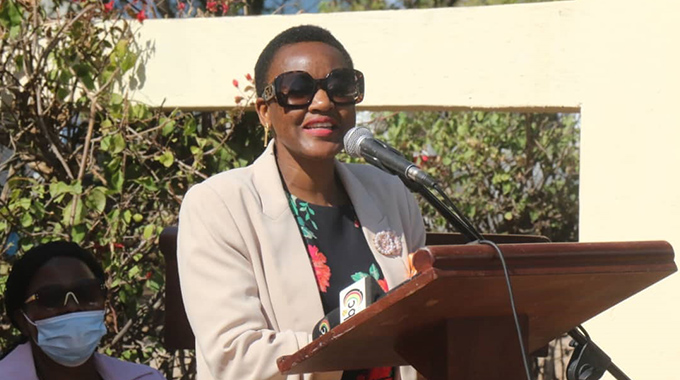
Ray Bande
Senior Reporter
HUMAN life that was lost during the Cyclone Idai of March 19, 2019, can never be recovered.
But what is certainly within our reach as surviving beings is the restoration and reinstatement of infrastructure.
As a matter of fact, disaster recovery, a crucial stage in the disaster management cycle, heals emotional wounds, not merely by repairing physical damage, but by actively restoring a sense of safety, routine and community connection, allowing survivors to process trauma, manage anxiety and rebuild their lives.
This process often involves emotional work – intentionally addressing feelings of grief and fear rather than suppressing them – which helps transform the experience from an overwhelming trauma into a manageable part of one’s life story.
It is beyond reproach that infrastructure reconstruction in disaster recovery heals emotional wounds by transforming trauma into tangible hope, restoring a sense of safety and fostering community solidarity.
The physical rebuilding of homes, schools and health infrastructure, among others, provides, in essence, a rebuilding of lives, replacing the chaos and loss of a disaster with order, stability and future-oriented action.
A living example of such soul-soothing recovery interventions is unfolding down in Mutema-Musikavanhu Constituency in Chipinge District.
At the height of Cyclone Idai, the Mutema-Musikavanhu Constituency in the Lowveld watched in agony as livelihoods were destroyed — including irrigation schemes, boreholes, community gardens and other sources of income.
Fast forward seven years, and 143 beneficiaries are now excited that a local 90-hectare irrigation scheme has been fully refurbished and is functional after years of dilapidation spurred by Cyclone Idai’s wave of destruction.
The busy Chibuwe-Kondo Road is now trafficable.
The refurbishment and equipping of Chibuwe Clinic, the restoration of community gardens, welding training projects for youths and poultry projects are some of the developmental initiatives that are now up and running in all the wards in this constituency.
If this is not development and comprehensive disaster recovery, then nothing is!
“We came here, to the irrigation scheme, about four times with officials from the agriculture ministry and Africa Development Bank as we sought to find solutions to the predicament. Today, I am excited that we have fulfilled our promise and ensured that citizens here have their livelihoods restored. My plea is that we should ensure that the infrastructure we have put in place is safeguarded. As we are guided by His Excellency, President Emmerson Mnangagwa, we will continue to implement projects that seek to improve the quality of life for people in Mutema-Musikavanhu Constituency,” said the constituency legislator, Honourable Angeline Gata.
Local Agricultural Business Advisory Officer, Ms Naume Makayakaya, said: “Let us learn to appreciate other people’s children for what they do for us and our communities. I really want to show my appreciation for what is happening here through Honourable Gata. Her efforts have made our work easier and the whole place more productive. We really want to thank her and encourage her to continue along this path.”
Apart from the visible use of the Constituency Development Fund, Chipinge Rural District Council, Ward 21 representative, Councillor Lucas Muchinani said Honourable Gata made huge sacrifices from her personal resources to bring development to the area.
“The people of Mutema-Musikavanhu have every reason to thank the Lord for giving us this lady, Honourable Gata. In the ward I represent in the local authority, there is no village that has been left without a chicken-rearing project. Let us be honest, not to anyone, but ourselves — when was the last time we witnessed such progressive interventions in this area? We have had several MPs here, but we can see for ourselves that this lady is working overtime to bring development, and going the extra mile to use her own resources to develop the constituency,” he said.
After disasters, people often feel powerless and deeply anxious.
Rebuilding provides tangible, visible progress, giving people a sense that they are regaining control over their lives.
Efforts by leaders such as Honourable Gata re-establish normalcy.
The restoration of roads, utilities and homes acts as a physical marker that life is returning to normal, which helps reduce the psychological distress of displacement or instability. Indeed, it creates community cohesion and the “we” feeling, fostering solidarity.
Reconstruction efforts, particularly those using local labour or collective action, strengthen social ties, building a “we” feeling that combats the isolation and grief often felt in the aftermath of disasters such as Cyclone Idai. Through such developmental initiatives, there is shared purpose.
Rebuilding spaces like community centres, community halls and markets brings people together, allowing them to rebuild relationships alongside physical structures. It is a case of shared vulnerability and shared healing.
The recovery process often includes opportunities for survivors to help others, which serves as a powerful therapeutic tool for managing personal depression and anxiety, as highlighted in reports on how to heal emotional wounds after disaster.
It fosters hope and future vision, moving from survival to renewal.
While immediate recovery often involves replacing what was lost, the process shifts over time to building a new normal, representing a transition from mourning the past to embracing the future.
In fact, the reconstruction of iconic community landmarks or essential public services serves as a powerful symbol of resilience, indicating that the community has survived and is thriving.
It has a therapeutic impact of spatial transformation, of reclaiming space. Turning a landscape of debris back into a usable, organised space helps individuals psychologically process the traumatic event and move past it.
Re-establishing health and social services, such as Honourable Gata’s efforts in refurbishing Chibuwe Clinic, is emotional therapy for the community.
The reconstruction of health facilities is, not only for medical treatment, but also essential for re-establishing community confidence in their ability to handle future threats.
What is also of paramount importance is the concept of Building Back Stronger (BBB), spearheaded by the Second Republic in its approach to the Cyclone Idai restoration process.
Implementing resilient, improved infrastructure reduces fear of future catastrophes, providing lasting peace of mind.