admin
admin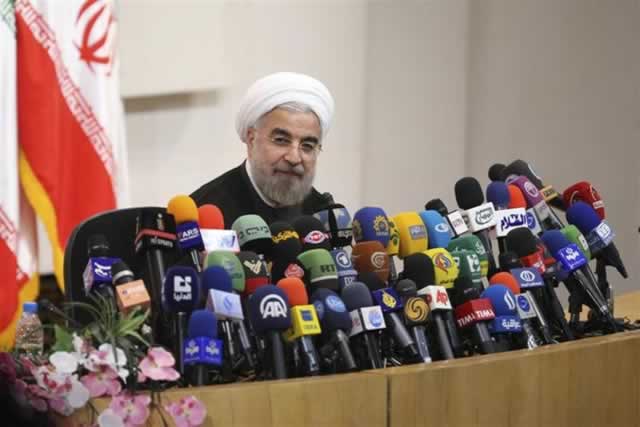
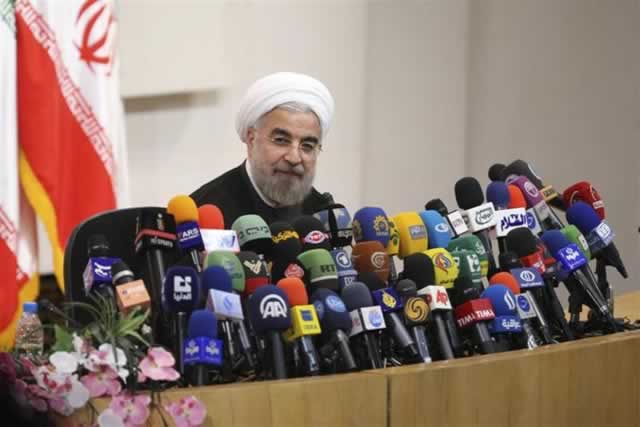
President-elect Hassan Rowhani is expected to announce a cabinet of experienced technocrats seen as close to his mentor, former Iranian head of state Akbar Hashemi Rafsanjani. Rowhani (64) officially assumes power as Iran’s highest elected office at a ceremony on Saturday. He will receive the formal endorsement of the country’s supreme leader Ayatollah Ali Khamenei following his surprise election triumph in June.
A former chief nuclear negotiator, Rowhani defeated his conservative rivals after gaining the key backing of both Rafsanjani and another ex-president, the reformist Mohammad Khatami. He succeeds Mahmoud Ahmadinejad, whose eight-year presidency was marked by showdowns with Western powers over Iran’s nuclear ambitions and severe economic pain at home, due to harsh international sanctions but also mismanagement.
Rowhani has vowed to engage constructively with the international community and increase transparency in Iran’s nuclear activities – which the West suspect are aimed at military objectives, despite repeated denials by Tehran.
He also aims to seek to shore up the ailing economy by lifting the sanctions aimed at forcing the Islamic republic to curb its atomic drive.
After his swearing-in ceremony in parliament on Sunday, Rowhani will officially have two weeks to name a cabinet. But media reports, quoting sources close to him, say the mid-ranking Shiite cleric plans to reveal his proposed ministerial line-up the same day.
The conservative-dominated parliament will have 10 days to review the list and vote on the nominees.
Multiple lists of nominees have appeared, with many figures included in all of them. Mohammad Javad Zarif, Iran’s former ambassador to the United Nations, is reportedly set to be named foreign minister.
With a PhD in international law and policy from the University of Denver, Zarif is a retired career diplomat who was also a member of Iran’s nuclear negotiating team from 2003 to 2005, when Rowhani himself was chief nuclear negotiator.
Zarif’s reported nomination is attracting attention with speculation rife in Iranian media that Rowhani wants to transfer responsibility for nuclear negotiations with the so-called P5+1 group – the United States, Britain, France, China and Russia plus Germany – to the foreign ministry. Until now, the Supreme National Security Council has been in charge of steering those negotiations, while final decisions rest with Khamenei, the ultimate authority in Iran.
Reports say Mohammad Forouzandeh, a former defence minister and current head of a powerful charity foundation, will be named as secretary of that council, replacing the incumbent and current top nuclear negotiator Saeed Jalili – who suffered a heavy defeat in the June 14 presidential election. Bijan Namdar Zanganeh, a technocrat who was oil minister for the eight years under Khatami, is tipped to return to the post.
Seen as an ally of Rafsanjani, Zanganeh is regarded highly in Iran for having developed good ties with Iran’s partners in the OPEC oil cartel and built up the energy sector.
“If the lists reported by the media are confirmed, the cabinet will be filled with technocrats close to president Rafsanjani,” a Tehran-based analyst told AFP on condition of anonymity.
This is also the case for Es’hagh Jahangiri, reportedly tapped for first vice president, and Ali Janati. — Xinhua.



 Online Reporter