admin
admin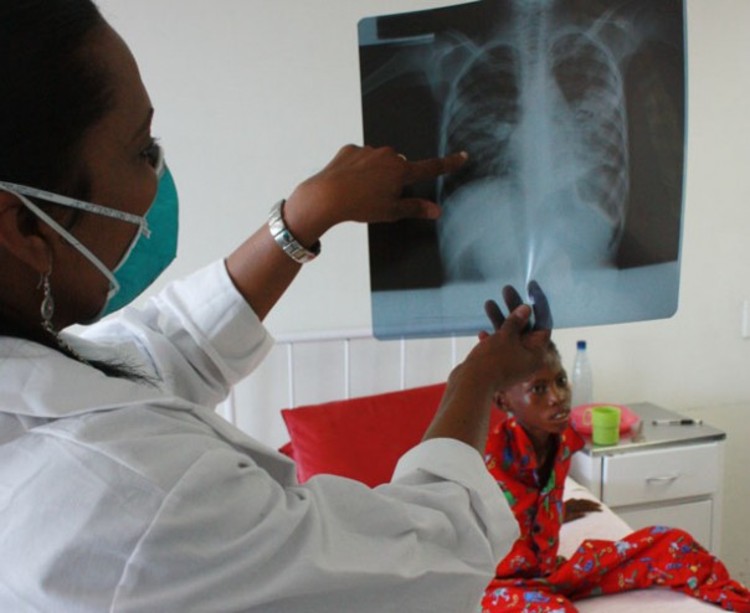
Sharleen Mohammed Correspondent
There comes a time when someone on medication for a chronic condition suffers fatigue from daily doses and feels like giving up. For anyone with a chronic condition like hypertension, diabetes, HIV positive or kidney ailment, someone must be close by to remind them to take their medication. As fatigue sets in, a chronic patient if not properly handled can end up desperate and seek alternative to daily medication.
With the spread of faith-based healing schools and migration, more people are defaulting on chronic medication with dire consequences. Thirty-year old Newman Marange from Goromonzi District left the country for “greener pastures” as he did menial work within the SADC region.
Newly returned, he told sad tales of losing his wife while hunting together in foreign lands.
He lies on a torn mat spread on the verandah, facing the roof with his legs crossed.
He sheds tears, while struggling to breath, occasionally coughing and displaying signs of severe agony.
Despite being diagnosed of multidrug-resistant tuberculosis (MDR-TB), he attributes his ailments to witchcraft.
“I am convinced that people from this neighbourhood bewitched me and my wife since we built an eight-roomed house and bought a brand new Honda Fit within a space of eight months,” whispers Newman as he coughs.
Still in denial, Newman like any other migrants scattered within the SADC region, is unaware of the fact that TB spreads quickly, with globalised travel possibly aiding its propagation.
Tuberculosis becomes multi-drug resistant (MDR-TB), when there is inconsistent or partial treatment, when patients do not take all the medicines regularly for the required period because they are starting to feel better, when doctors and health workers prescribe the wrong drugs or the wrong combination of drugs or the drug supply is unreliable.
MDR-TB is more difficult and more expensive to treat and more likely to be fatal. However, migrants face higher exposure to TB infection due to overcrowded living and working conditions and increased vulnerability to HIV, malnutrition and substance use induced by marginalisation and social exclusion.
Delays in TB diagnosis among migrants are commonly associated with difficulty in healthcare access, lack of education, poor health seeking behaviours, cultural beliefs, stigma and marginalisation.
According to the World Health Organisation (WHO), TB is the largest single infectious cause of death among young people and adults today and accounts for more than one-quarter of all preventable adult deaths in developing countries.
“The economic impact is high owing to the size of the problem and the fact that, in the poorest countries, the majority of those affected are economically active reads easily and quickly and thus the increased travel generated by globalisation may aid its spread,” reads the (WHO) report.
It further explains that TB is the largest single infectious cause of death among young people and adults today and accounts for more than one-quarter of all preventable adult deaths in developing countries.
However, there is growing evidence and understanding that social and economic inequalities sustain migrants’ vulnerability to TB, as do discriminatory policies in non-health sectors such as immigration, labour and social protection.
The absence of targeted TB prevention and control strategies for migrants create significant barriers in reaching TB elimination targets in several countries of origin, transit and destination for migrants.
A International Organisation for Migration (IOM) report says the risk factors that migrants face are higher exposure to TB infection due to overcrowded living and working conditions and increased vulnerability to HIV, malnutrition and substance use induced by marginalisation and social exclusion.
“Delays in TB diagnosis among migrants are commonly associated with difficulty in healthcare access, lack of education, poor health seeking behaviours, cultural beliefs, stigma and marginalisation,” says the IOM report.
“There are also social barriers as migrants often do not have access to correct TB-related information on prevention, transmission and latent infections due to language barriers as well as cultural beliefs.
“Stigma-related fear, lack of awareness of entitlement to health services and low health-related. Spending capacity as proportion of household income, as well as migrant unfriendly health services, all lead to reluctance in seeking care or adhering to treatment,” adds the report.
Migrant workers in the mining industry are at a high risk for TB due to poorly ventilated, overcrowded living and working conditions and occupational hazards like silicosis.
In Southern Africa, where a majority of mine workers are migrants from neighbouring countries, nearly one third of the TB infections are estimated to be linked to mining activities.
The average annual cost of the TB epidemic in the South African mining sector alone is more than $880 million, whereas the implementation of targeted active TB detection, treatment and occupational health measures would cost $570 million a third less.
According to the Stop TB Partnership, the world is losing its battle with TB, which is now the biggest infectious killer globally, causing $1,5 million deaths each year.
Without a clear investment plan and a complete overhaul in how this disease is tackled, TB is unlikely to be eliminated until the end of 22nd century, and the world will miss the recently announced Sustainable Development Goal to end TB by 2030.
This will require $56 billion investment package from 2016-2020, which will see 29 million people with TB receive treatment, save more than 10 million lives and prevent 45 million people from getting ill with TB.
According to the WHO’s 2015 global TB report, there were 9,6 million incident cases of TB globally in 2015, 5,4 million were men, 3,2 million women and one million children.
Of the 1,5 million people who died of TB in 2014, 480 000 were women, 890 000 were men and 140 000 were children.
Charles Sandy, the deputy director of the Aids and TB Unit in the Ministry of Health and Child Care, said Zimbabwe is one of the 22 TB high burden countries in the world.
He said HIV drives TB and there was a 70 recent co-infection rate.
Sandy said the TB National Strategic Policy (NSP 2015 – 2017) was meant to increase case notification rate of all forms of tuberculosis from 267 /100 000 (35 566 patients) in 2013 to 371 /100 000 (52 060 patients) by 2017.
Among the other key objectives of the strategy are increasing treatment success rate for all forms of tuberculosis from 81 percent in 2012 to 90 percent by 2017; to increase the number of drug-resistant TB cases detected annually from 393 in 2013 to 743 in 2017, and to increase treatment success rate of drug-resistant TB from 59 percent in 2011 to 75 percent in 2017.


 Online Reporter