Vusumuzi Dube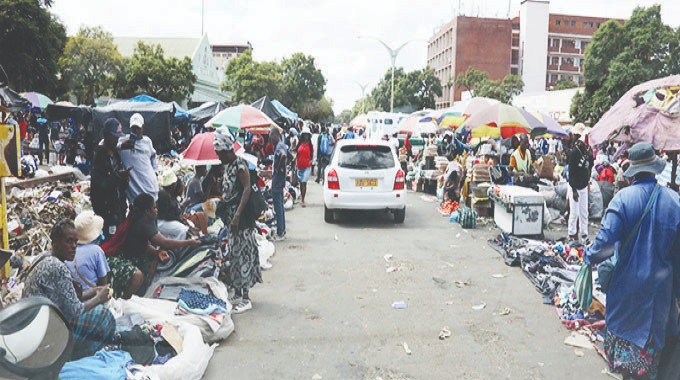
Bruce Ndlovu, Sunday Life Reporter
WHEN Espin Patrick Fletcher began the job of pegging what would become Bulawayo’s famously broad streets, he would not have known that over a century later, his work would perhaps be best appreciated by the city’s ever-growing class of vendors.
At the end of 1893, Fletcher found himself before Leander Starr Jameson, who had been in desperate search of a surveyor as he sought the birth of a new Bulawayo.
Fletcher was to be the midwife who would help deliver this new metropolis at the tip of the Southern African continent.
Whether it was from an instruction from Cecil Rhodes or not is disputed, but Fletcher decided that the avenues and roads would measure 120 Cape Feet for the streets and 90 Cape Feet for the avenues. Those specifications would become the basis for the Bulawayo Central District’s organised, grid-like and wide street layout, which was designed to accommodate turning oxen and ox wagons.
This design has given Bulawayo its trademark look, which makes negotiating traffic or giving and taking directions easy. The design is an antidote to the congestion that is found in similar-sized cities around the globe and has become an enduring feature of the city.
The width of the city’s streets is felt in particular on 5th Avenue, which, because of its broadness, made it a natural and spacious home for the city’s bustling vegetable market. One hundred and thirty-one years after Fletcher started pegging Bulawayo’s streets with assegai heads, 5th Avenue now means different things to different people.
To the thousands of vendors who line its pavements every night and day with their wares, 5th Avenue represents rent paid and bills settled. It is an indispensable source of income which puts food on the table and in other cases, has built houses and taken children to posh private schools.
To city fathers, 5th Avenue has become a logistical headache, as the city struggles to come to terms with the growing numbers that operate in and around it daily.
With its disorganisation, poor hygiene standards and outright chaos, 5th Avenue has been taken by some as a symptom of a city in poor health.
A love-hate affair
When Sunday Life visited 5th Avenue this week, a stench rose from almost a block away from the vending zone on Fife Street. The mixture of rain, rotting produce and almost non-existent ablution facilities has given a place that some regard as the “armpit” of the city an unmistakable odour.
Citizens of Bulawayo who frequent this part of the city have a love-hate relationship with it. The fresh produce, which includes delicacies found mostly in rural areas, is tantalising and affordably priced.
Making the trek to the market, instead of being fleeced by more expensive retailers, thus seems to be well worth it.
“If you look at the prices here, even for something like Mazoe Orange Crush, it is well below that offered by our retailers,” said one resident, Wayne Ncube.
“In such tough times, why should I willingly go and pay for something at a higher price when I can simply get it from here cheaper?”
However, while the prices and range of fresh produce on offer are enticing, the health standards at the market are a turn-off, even for those who operate there.
According to Bonginkosi Ndlovu, a vendor, the lack of ablution facilities to accommodate the people who work and shop at the market is a serious concern, with general health standards leaving a lot to be desired. The market, she said, felt like a fine example of a city that is losing its reputation and identity.
“I make my money here, but that does not mean that I don’t see what is going on. There’s rubbish everywhere because the city does not collect it frequently enough and as a woman, the lack of clean toilets is a serious danger to us,” she said.
Concerned city fathers
As the number of people occupying 5th Avenue continues to increase, the concerns by some citizens that 5th Avenue is leading the assault on the city’s long-treasured standards of organisation and cleanliness have been echoed by city fathers.
Earlier this month, the City of Bulawayo’s Director of Health Services, Dr Edwin Sibanda-Mzingwane, said the council is increasingly overwhelmed by solid waste management challenges at the site.
“Whenever we clean the place, vendors dump piles of garbage immediately after, which makes it difficult for our efforts to yield lasting results. Within three days of cleaning and collecting refuse, garbage is already piling up again, largely due to littering that occurs at night and sometimes during the day,” he said. While the vegetable market was always a hive of activity, authorities are concerned that nowadays its buzz goes well into the night, with vendors and those offering other services operating late into the night. Suppliers from Mutare, Chipinge, Nyanga and Honde Valley, Gokwe, Beitbridge and even Mutoko have made the market their second home, with those looking to maximise their profits sometimes preferring to spend their nights on the pavements.
While profit might be the ultimate motivation, health concerns are increasing.
“We currently have only one sanitary facility along 5th Avenue, which is clearly inadequate to cater for the large number of vendors operating there. Relocating them to identified, properly serviced vending sites is the most viable solution to prevent disease outbreaks and curb heavy littering,” said Dr Sibanda-Mzingwane.
False dawns
Over the years, the City of Bulawayo has tried to solve its 5th Avenue headache to no avail. In 2020, at the onset of the Covid-19 pandemic, the council shut down the open-air market as part of measures to curb the virus’s spread. However, vendors defied the order, expanded their operations and effectively took over the road, blocking vehicular access.
In February 2023, the council reversed its decision to close the site, yielding to pressure from traders who continued to operate despite the ban. Attempts to regulate the area by introducing proper vending bays were also ignored by informal traders.
In February 2024, the city announced that it was temporarily closing a section of 5th Avenue to prepare 500 trading bays to accommodate informal traders.
Prior to that, local authorities had been engaged in running battles with vendors operating along the road without licences at undesignated sites. After council resolved to permanently shut down the market in February and relocate vendors to alternative workspaces, the measure did not move the needle, as vendors continued operating.
In March last year, the City of Bulawayo announced the relocation of informal traders to the Bhaktas 2 Site, located along Lobengula Street and 2nd Avenue. While such measures have been announced, for residents the dream of seeing 5th Avenue free of rubbish or an uncontrollable mass of people remains a pipe dream, as it is still business as usual at the place popularly known as “eMarket”.



 Online Reporter