admin
admin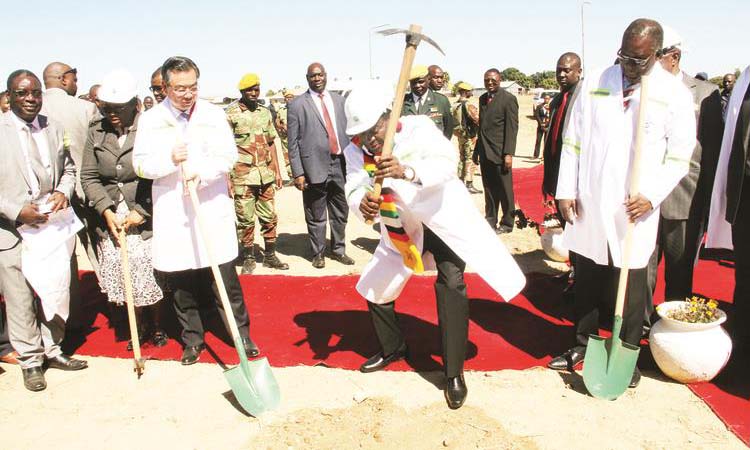
Takunda Maodza News Editor
As we grew up in rural Nyajena in Masvingo South, Guwa to be precise – that area sandwiched by Tugwi-Mukosi to the south-west, Mutirikwi River to the east and the mighty mountains of Morgenster Mission to the north, my buddies developed a habit of manufacturing nicknames for me.
Even when I later joined my father at that dusty cement manufacturing company at Colleen Bawn – 27km from Gwanda town and a stone’s throw away from West Nicholson – that place where some sumptuous beef used to be canned in Matabeleland South Province, my new accomplices would still birth nicknames for me as if mocking the womb from which I descended for failing to aptly apportion a befitting name.
Scream, shout and threaten murder, I would in anger at derision. Decades later, the answer is right on the wall.
Crafters of nicknames do so after careful thought. A nickname notoriously captures one’s deeds at a particular point in life. If you are a philanderer, nickname crafters will christen you Cde Casanova or worse still Cde Reza! If a thief, the name Gudo comes your way and sticks like tick to beast.
This week gave birth to “Mr Groundbreaking”. “Mr Groundbreaking” has been breaking the ground almost daily since November last year when he assumed office. This was after he briefly skipped the border at the height of insults and threats from a “Dr Stop It” and her hubby.
Yes, in the later days of her 94-year husband’s 37-year rule, “Dr Stop It” raged like the Greek wildfires, which besides consuming 74 lives so far, now threaten the mighty Athens.
She would shout at rallies specifically mobilised to undress her nemesis: “Who is Mnangagwa? Akatopinzwa basa nemurume wangu” before her piercing voice shrieked “Stop it, Mnangagwa stop it!” She was eventually nicknamed “Dr Stop It” before she was stopped last November, courtesy of Operation Restore Legacy, which seven months down the line has seen the birth of “Mr Groundbreaking” in President Mnangagwa.
In short, every nickname captures some moments in the days of our lives in a manner so satirical, yet telling.
“Mr Groundbreaking’s” story tells itself. It is one full of toiling for the motherland. It is one pregnant with economic activity that has set Zimbabwe on a trajectory that will see thousands of youths employed, infrastructure revamped to match world standards, food crowding the table and hunger finally fleeing our homes.
On March 28, President Mnangagwa hit the ground running by commissioning and switching on the $533 million Kariba South Power Station project, which added 300 megawatts to the national grid.
Completion of the Kariba South Power Station Extension project is testimony to Government’s commitment to addressing Zimbabwe’s energy requirements, while boosting economic productivity.
The project created 900 jobs, reduced the energy import bill and ensured access to power for a broader section of the population.
Still on power, fast forward to June 27, President Mnangagwa officiated at the groundbreaking ceremony for the $1,5 billion expansion of Hwange Thermal Power Station.
The project is expected to feed an additional 600MW into the national grid. It only started moving after President Mnangagwa visited China in April at the invitation of President Xi Jinping. The Hwange project will spur massive economic metamorphosis through increased supply of power to critical sectors like mining, agriculture and the manufacturing sector. It will create 7 000 jobs directly and indirectly at its peak.
In a move meant to grow the national herd, on June 22 in Gwanda, President Mnangagwa launched the Command Livestock Programme. He handed over 660 heifers to 151 beneficiaries, a majority of them poor in society who never dreamt of owning a beast.
The heifers comprised mostly Brahman, Brano and cross Brahman breeds and are part of the 1 660 head allocated to the province under the scheme. Still in Matabeleland South Province, on July 11, President Mnangagwa broke the ground for the $241 million Beitbridge expansion project.
The massive project will create employment and on completion, change the face of sub-Saharan Africa’s busiest port of entry. The major highlights of the project entail the construction of more commercial customs offices, paving and expansion of sewer and water reticulation facilities, separation of traffic into buses, light vehicles, tourists, commercial vehicles, and construction of a commercial bridge to link with South Africa, and the upgrading of Beitbridge Municipality’s key infrastructure.
The project creates thousands of jobs and lays the foundation for the modernisation of Beitbridge into a world-class commercial hub.
Away from the border project, on July 23, “Mr Groundbreaking” broke new ground when he commissioned the $153 million upgrading and rehabilitation of Robert Gabriel Mugabe International Airport in Harare. The project includes expansion of the international terminal building and aprons, installation of four new air bridges, a secondary radar system, construction of a VVIP pavilion, an airfield ground lighting system and communication systems.
The three-year project, besides being a catalyst for economic development, brings with it employment opportunities. It also supports the broader national aspirations towards transport and infrastructure network in the country and provides enablers to fully industrialise and modernise the economy. The project facilitates movement of cargo, tourists and investors.
Its other benefits were captured by President Mnangagwa when he commissioned the project this week.
“Upon completion, this project is expected to boost the current positive growth and transformation trends in trade and tourism. Further, it will facilitate trade in agricultural produce, minerals and other products with China, the Far East and Europe through enhanced air connectivity in line with existing air service agreements and the envisaged growth of every sector of our economy,” he said.
Attending to the old RGM International Airport also complements ongoing Government efforts at refurbishing and retooling the National Railways of Zimbabwe (NRZ).
Talking of the NRZ, on February 21 this year, President Mnangagwa commissioned the $400 million coaches, wagons and locomotives in Bulawayo – Zimbabwe’s industrial hub. The revitalisation of the NRZ capacitates the parastatals to move bulk goods and passengers nationally and regionally, reducing the cost of doing business in the country.
Hundreds of NRZ workers, who had been thrown into the poverty pit, have since been recruited and are once again breadwinners courtesy of the new political administration in whose cockpit is Mr Groundbreaking.
The entire capitalisation of the NRZ, which is expected to run to about $2 billion, is already benefiting an industry long yearning for reliable and cheaper mode of bulk transportation.
On June 15, President Mnangagwa toured Cold Storage Commission (CSC) and Mashava Mine in Masvingo. He pledged to resuscitate the CSC and the asbestos mine. At its peak, the CSC plant in the Masvingo employed about 4 000 permanent and contract employees. The plant has been operating way below capacity for over 10 years while Mashava Asbestos Mine, an extension of Shabanie, closed at the turn of the millennium, shedding off thousands of jobs.
Still on the mining sector, President Mnangagwa’s economic revival efforts saw him re-opening Eureka Mine in Guruve, Mashonaland Central Province. Over $60 million was poured into the project by Delta Gold, and it is expected to produce 1,5 tonnes of gold annually when it reaches full capacity.
The mine ceased operations a decade and half ago, but its revival will see 400 people employed. Five days before the July 30 harmonised elections, President Mnangagwa was in Mhondoro for the $4,2 billion Karo Resources groundbreaking ceremony – earning himself the “Mr Groundbreaking” moniker.
The Karo deal comes with 90 000 jobs – 15 000 directly and 75 000 indirectly through secondary and tertiary industries when it matures by 2023.
Besides the jobs, the Karo Resources mining project will generate 300 megawatts of solar energy – part of which will feed into the national grid. The company will build a world-class refinery for beneficiation of platinum. Only yesterday, President Mnangagwa was on the outskirts of Kwekwe in the Midlands Province for the commissioning of the African Chrome Fields – a tech-savvy Aluminothermic chrome processing plant, an investment by the Moti Group – walking the talk on beneficiation of our mineral resources.
In the space of seven months after assuming office, the new administration has made major strides in other sectors of the economy, not forgetting a deal on the dualisation of the Beitbridge-Harare-Chirundu Highway. While Mr Mugabe broke the ground for the rehabilitation of this busiest highway on May 18 last year, nothing beyond the pick hitting the ground happened. President Mnangagwa cancelled the deal Mr Mugabe blindly signed on realisation Geiger International had no cent to fund the gargantuan project.
To ensure the road is rehabilitated and facilitate easy movement of cargo from the south corridor to the north, Government announced early this month it was engaging a new contractor from China, Anhui Foreign Economic Construction Group Limited (AFECC).
Judging by the number of huge projects the Chinese have successfully carried out in Zimbabwe and elsewhere, the nation is certain that rehabilitation of the highway will finally resume and ensure Zimbabwe remains the favourite route for trade by our neighbours and beyond.
So many are the things that the new administration has accomplished for those with eyes to see, including the opening up of empowerment banks for women and youths and Wednesday’s $1,5 billion unveiling of investment in higher and tertiary education by President Mnangagwa in Harare that will change the face of our education for decades to come.
It is clear President Mnangagwa’s administration has, in the shortest period of time, proved its vitality in animating an economy long suffocated by maladministration by his predecessor, who apart from blaming illegal Western sanctions, sought no other alternatives to revive life in a Zimbabwe stuck in the intensive care unit..”


 Online Reporter