Online Reporter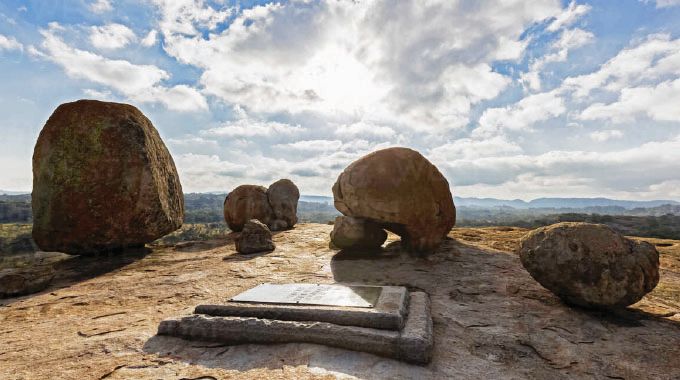
Mzala Tom
Cecil John Rhodes was a British mining magnate born in 1853. Through funding from Rothschild & Co he began to buy out and consolidate diamond mines in Kimberly, South Africa around the 1870.
He played a critical role in enforcing British imperialism in Southern Africa. Through his British South Africa Company, he founded the southern African territory of Rhodesia (now Zimbabwe and Zambia), which the company named after him in 1895.
Rhodes dreamed of building a British Empire that stretched from the Cape to Cairo. In 1880, he founded the De Beers Mining Company that became the flagmanship for his diamond and gold empire.
His political career as Prime Minister of the Cape Colony came to an abrupt end in 1895, after he supported an failed attack on the Transvaal, known as the Jameson Raid, organised in support of a rebellion that would deliver control of the region’s gold mines to him.
Rhodes died in Cape Town 1902 at the age of 48 after suffering from a heart attack. The place in Rhodesia chosen by Rhodes for his burial and that of his friends like Leander Starr Jameson, Allan Wilson and members of the Shangani patrol is called Malindadzimu.
Malindadzimu is a Kalanga name which means : the resting place for our ancestors. It is also known as Mabweadziva and Matojeni. The hill is in the Matobo District of Matabeleland South. It is arguably the largest and most sacred shrine in Southern Africa.
It is said that two years before his death, Rhodes disclosed his intentions to H. Marshall Hole, the Civil Commissioner of Bulawayo that he wanted to be buried there so that he could ‘keep guard over the country he had founded’. Rhodes’ wishes were fulfilled to the letter.
Rhodes sought to lie with the spiritual owners of the land. Some say Rhodes’ decision was premised on his Freemason faith and there was a spiritual dimension to his burial on the holy shrine where Africans believed that God’s voice and the guiding spirits of the land resided.
Rhodes is said to have loved to visit the hill frequently when he was in the country and he would reminisce over his life and go over his business plans. It is said that he confessed that he was immensely inspired whenever he was on the hill as it unlocked great power and glory.
Rhodes’ grave is now part of the national park at Matopo. It attracts international tourists and pilgrims who admire his legacy. However, some pan Africanists argue that the grave is sacrilegious to African spirituality.
There are seven Wills which Cecil Rhodes made between the ages of 24 and 46. The widely publicised Wills are the ones establishing secret societies and the last, which established the Rhodes Scholarships
In one of his Wills he stated : “I admire the grandeur and loneliness of the Matoppos in Rhodesia and therefore I desire to be buried in the Matoppos on the hill which I used to visit and which I called the
“View of the World”…. . in a square to be cut in the rock on the top of the hill covered with a plain brass plate with these words thereon – “Here lie the remains of Cecil John Rhodes”