Online Reporter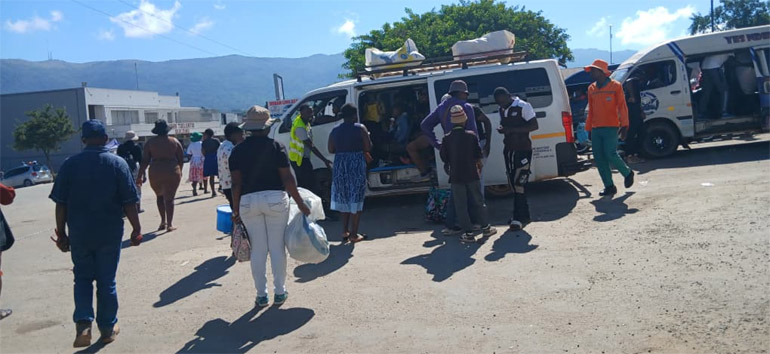
Tendai Gukutikwa
Post Reporter
WHEN fuel prices recently went up, the impact was felt far beyond service stations.
In Mutare, it quickly filtered into kombi ranks, residential suburbs and household budgets as transport operators raised fares that had remained relatively stable for years.
For a long time, many commuters in the eastern border city had grown used to paying US50 cents for most routes.
But overnight, that familiar fare doubled to US$1, instantly changing daily routines for thousands of workers whose salaries had remained stagnant for years.
Even after fuel prices eased slightly last week, fares remained unchanged, deepening frustration among residents already struggling to stretch every dollar. The increase has triggered a silent shift across the city.
Some workers now leave home before dawn to walk long distances. Others skip lunch to afford transport. Many squeeze themselves in overcrowded mushika-shika vehicles to get to work faster, while others simply arrive for duty already exhausted.
At around 5am each day, while much of Mutare is still wrapped in darkness, 32-year-old shop assistant, Mr Nyasha Makusha, will be on the move, walking along the railway line from Hobhouse to the city centre.
Like many workers, Mr Makusha now reserves transport money for emergencies or rainy days.
On ordinary mornings, he walks to work, and only boards a vehicle when he is too tired to continue.
To shorten the journey, he follows the railway line into town, a route now used by many commuters trying to avoid traffic and save both time and money.
“I used to board kombis every day, but now it is one dollar going and one dollar coming back. That is too much for me. I would rather walk and save the money.
“If I use public transport every day, I cannot survive the month. I have children, rent and groceries to think about. Walking is painful, but hunger is worse,” he said, his story reflecting the reality facing many low-income earners in the city.
A worker earning US$150 per month, and working 26 days will spend US$52 on transport alone if paying US$1 each way daily.
If they also spend US$1 on lunch each working day, that is another US$26. Together, transport and lunch will consume US$78, leaving only US$72 for rent, grocery, electricity, school fees, clothing and emergencies.
This makes the burden heavier for those renting in distant suburbs because accommodation near the Central Business District is too expensive.
“It is cheaper to rent in high-density suburbs, but transport costs are now chewing up everything. You save on rent and lose on commuting,” explained Mr Makusha.
Transport operators, however, argue that they are also under pressure.
Kombi driver, Mr Brian Choto, said commuters often do not understand the costs associated with transport operators.
“Fuel goes up, tyres and spare parts are expensive, while vehicle owners want daily targets met. We are blamed, but we are also trying to survive,” he said.
Still, commuters argue that fares rise quickly whenever fuel prices increase, but rarely come down when prices fall.
“They are quick to increase the fares, but very slow to reduce them. That is the painful part,” said Mr Makusha.
The true cost of commuting in Mutare, or anywhere else, goes beyond money.
There is the physical toll of waking before sunrise, walking long distances and starting work already tired.
There is also the emotional strain of worrying about harassment by touts and the fear of thieves.
For many residents, commuting in modern-day Mutare has become more than just travelling between home and work. It is now a daily struggle involving safety and emotional stress, as touts have in recent months been harassing passengers.
Mutare’s public transport system is mainly built around kombis that move thousands of passengers between suburbs such as Dangamvura, Sakubva, Hobhouse and Chikanga and the CBD.
In recent years, another form of transport has rapidly expanded – mushika-shika.
Though built to carry four passengers comfortably, many are packed with between six and 10 people. Commuters continue using them because they are quicker, easier to find and often available where kombis are scarce. But the convenience comes with risks.
“You are squeezed until you cannot move. Sometimes you are forced to carry someone else’s bag on your lap because there is no space. But when you are late for work, you just get in,” said Mrs Lynn Matereke, of Chikanga.
However, overcrowding is not the only danger.
Some commuters were robbed by criminals posing as mushika-shika drivers.
Mr Bradley Runoza, of Natview Park lost his mobile phone and US$400 after boarding one such vehicle.
Another victim, Mr Taurai Kayeruza lost US$200 from another vehicle.
In all cases, the victims were picked up by vehicles pretending to offer transport before being dispossessed of phones and cash.
The other danger commuters face is touts, who continue to dominate some loading points despite repeated police crackdowns.
Commuters complain of touts who grab passengers, pull their bags or insult those who refuse to board certain kombis.
“They treat people badly. If you say you want another kombi, they shout at you or force you to move. Sometimes they even grab your bags and try to force you into their kombi,” said Mrs Matereke.
In light of this, police last week issued a stern warning touts accused of harassing commuters and vendors, saying law enforcement agencies were ready to deal decisively with lawlessness in the city.
Acting Manicaland police spokesperson, Assistant Inspector Wiseman Chinyoka, warned that offenders will face the full wrath of the law.
“We are here to raise awareness on the need to maintain law and order in public spaces, especially at bus termini. Touts have earned notoriety for harassing the commuting and travelling public as well as vendors around the city. Some of them have also been demanding facilitation and protection fees from vendors. We are geared to put a decisive end to all that lawlessness,” he said.
While transport remains an essential link between homes and workplaces, many residents continue to navigate the rising financial, physical and emotional demands and dangers of the daily commute before their working day even begins.
ENDS