admin
adminAfrican continent but also to some of the oppressed nations, Asia and Latin America for example.
Today very little is mentioned of the bravery and sacrifices made by our fathers in the 2nd World War, repeating what had happened in the 1st world war.
They remain nameless and faceless despite the fact that some were, conned to fight for the Empire and some were forced.
In my 2007 exhibition (African Heroes) at the Imperial War Museum North in Manchester in September 2006 – December 2006, a Tanzania 2nd World War veteran Mzee Ally Sykes said, “before we went outside the country we always felt that a Whiteman was superior to an African.
“However, when were the things changed. We have been exposed to the world” In this statement Mzee Ally Sykes was saying we realised that we wanted to rule ourselves’.
After fighting alongside their colonial masters, most of the oppressed continents realised the dream to free themselves from the colonial yoke.
Few years after 1945, they started fighting for political and cultural autonomy and demanding end to Colonial rule in their respective continents.
In Africa the African Nationalist Uprising came into being, lead by Dr Kwame Nkurumah of Ghana, Mzee Jomo Kenyatta of Kenya, Mzee Julius Mwalimu Nyerere of Tanganyika that is now Tanzania, Dr Kenneth Kaunda of Northern Rhodesia, Zambia today, and Mudhala Joshua Nyongolo Nkomo to mention but a few.
It was everyone’s cry that the independence in some colonised nations that the independence will usher new ideologies and new ways of living.
With independence coming in Africa, Latin America and Asia, they felt that the west has not only a political and economic debt with their respective continents, but also a cultural one. They wanted their history back.
All their history that westerners find interesting (such as the mentioned “great civilisations”). This implies restoring cultural heritage to their moral owners but also rewriting history together under a new era.
In Africa, independence brought in literature that was banned during the colonial era for example, ‘Up from Slavery by Booker T Washington.’
Some other ethnic groups who also wanted Cultural representations included, Indians, Aborigines, Maori and Native Americans.
With tension rising in Africa, African Americans were inspired and they formed the Civil Rights movement in 1960 led by Martin Luther King.
After realising that there was too much segregation in the mainstream institutions the Civil Rights, movement challenged most of the public institutions in America.
Museums were not immune to the civil rights movement, as they demanded their rights, right to education and cultural representation.
At this time, other minority groups were also struggling for their rights for example, Mexican Americans and American Indians.
In 1969 the American Indian Civil Rights Council was formed and the National Indian Brotherhood who fought for self-determination, tribal recognition, the land claims and broken treaties.
During 1968 – 1969, the American Indians took over The Alcatraz for over 18months despite electricity cuts, telephone cuts and water cuts by the American authorities.
Three years down the line they revisited The “Trail of Tears” of the 1830s with their own “Trail of Broken Treaties” which led to the occupation of The Berea of Indian Affair which they renamed The Native American Embassy.
After being seen by many ethnic groups as too, white Museums came under constant attack during those years.
Today the situation is different and the challenges are different too; Museums are now open to the masses.
The previously deprived people must claim ownership to their heritage and story telling and not to cry if others tell their history.
Let us all be aware that there are so many various challenges facing Museums in Africa if only bodies like AFRICOM can be active.
Failing to readdress the historical past is a sign of weakness by this Museum body in the continent.
Let us all be reminded that, Africa has contributed immensely in the arts and culture to America and the World. It is unfortunate that it has not been able to harness its contribution enough due to circumstances beyond its control. Africa should take a leaf out of the late Senegalese President Leopold Senghor who started building Museums and Cultural institutions after independence in his own country. His legacy today lives with the only Biennale in Africa.
The Daka’Art lives, as the legacy of Senghor and it still needs support from the rest of the continent to keep going. Yes they are challenges with the Biennale but it has survived for many years.
The Future of Museums in Africa has not been addressed for many years and with the end of apartheid in South Africa 1994, arguably their Museums are still under the old guard.
What are the challenges in African Museums? Nevertheless, these are some of the major challenges facing Museums in the African continent but Western Museums are not immune to the following challenges.
1. Contradictory goals,
2. Not being able to attract other audience (Museums are still regarded as a white thing because in the past black people where not allowed in certain streets, parks, museum and we had separate bus stops with our white counter parts).
3. Lack of funding, Museums in African depends too much on International Foundations and the funding always comes with strings attached to it.
4. No Skilled manpower, (inexperienced Museum personnel running big Museums.
5. Curatorship and Repatriation of Stolen Objects from the Western Museums. Africa has not been able to fight with one voice for the repatriation of the stolen objects housed in the so-called Museums in the West. (I call them Houses of Stolen Goods)
6. Lack of research centres in Africa is an obstacle for Museums researchers because they end up travelling to the West to research about the continent.
7. Curatorship of Human Remains and religious symbolic objects, which are out of context in this so-called Museum abroad.
8. Slavery (The story of Slavery is still being told by the same organisations, which benefited from slave trade and the other voice is still silenced.
How do we address all these burning issues?
I am sure our concern should be focused on these conflicting demands of different interests affecting Museums practice in Africa.
Having said that Western Museums are not immune to some of these challenges faced by African Museums, they also need to address the following issues: Repatriation of stolen objects from colonised nations.
I would like to say there is need for more Western countries to take leaf to the Italian Government, which repatriated an artefact back to Ethiopia.
On The 19th of April 2005, the first part of the 150 tones Ethiopian Obelisk arrived to its audience after having been looted during the colonial era in 1937.
Surely, these objects are significant in promoting education and bringing pride to the African community. It is in my view that denying people their Heritage is an abuse of Human Rights.
Human Rights issues need to include Cultural Rights as part of rights of people – language, heritage, culture and artistic expression valid as developmental goal not luxury but an imperative for national survival for preservation of national identity.
People take pride in their culture and Heritage but why do we have to take pride away from them. The question here is, how many Africans get to see their heritage in the Western Museum?
l Raphael Chikukwa is the Curator of the National Gallery of Zimbabwe.


Online Reporter
- Bmetro , Chronicle , SundayNews
- September 26, 2026
- 2 views
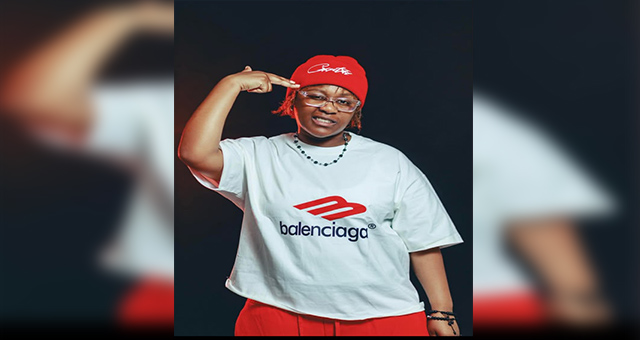
Nisha TS headlines Peace in the Hood
Mthabisi Tshuma [email protected] FRESH from a cutting-edge album launch in her hometown of Chegutu, versatile songstress Nisha TS is set to bring her usual flair to the stage when…