Chronicle Editor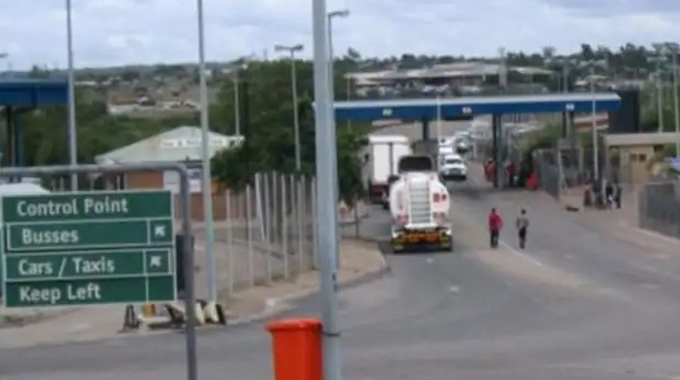
Simba Jemwa, Sunday News Correspondent
IT is the drug route you have never heard of: a multi-million-dollar operation involving cocaine, skunk and methamphetamines being packed into the hulls of new cars, in South Africa and transported to Zimbabwe and beyond via the Beitbridge border post more often thought of as an important link to Central Africa than a narcotics hub.
As the volume of drugs trafficked into Zimbabwe through the port town of Beitbridge increases, via the border and using illegal crossing places, so too does the number of young men employed by criminal gangs to retrieve the drugs from freight arriving in towns and cities. Sunday News has had a rare glimpse into the dangerous work of these so-called “drug collectors” who provide a vital link in the narcotics supply chain.

A dozen shadowy figures run with pseudo-military precision in a line towards a super-link truck in Bulawayo. It is carrying freight of groceries from South Africa which ordinarily should already have been unloaded, but this trailer — 12m long and identical to so many thousands of others that come through Bulawayo everyday — still has cargo on board. Narcotics are hidden inside some of the washing powder packages.
The collectors’ job is to get the drugs off the trailer and away from the truck, from where they will be transported to local retailers.
“Beitbridge is a goldmine. It’s beautiful,” Malvern Ncube (not real name), a young man barely out of his teens, whose face is obscured by a Covid-19 mask and a hood, tells Sunday News.
“The stuff comes in easily and I can make money nice and close to home by just offloading and moving it to retailers. And there is always work,” the youngster reveals to the Sunday News.
These are young men employed by powerful, criminal networks.
“Every job is different. One boss will say, ‘You’ll earn X amount to share between you’. Another will say, ‘You’ll get some of the drugs to sell for yourselves.’”
Collectors make around US$20 for every kilo of drugs they carry off the truck trailers. And this is a business that has exploded.
“We first noticed them about two years ago when Covid-19 lockdowns started,” says a local security guard who has witnessed a few of these trucks being offloaded.
As the volume of drugs imported into Zimbabwe rises exponentially, the methods used by the collectors are becoming more sophisticated too. Sometimes they don’t physically take the drugs off the trucks. Instead, their job is to transfer the drug to another vehicle earmarked by the gang with the help of an insider, which will then be driven to the destination. When this happens, it means the drugs are destined for other towns and cities.
“I know there are three ‘hotel’ trucks,” says the guard.
“The collectors might stay in one for days — they eat, drink, and do their necessities there. I once peeped into one such truck and I found bedding mattresses, empty bottles of water, food wrappers. There was one of them who kept watch and slept in the truck. But in the past six months the groups of collectors have got bigger — 10 or 12 people gathered together, and it happens three or four times a month.”
These collectors are also available when omalayitsha come with contraband and need it offloaded discreetly at chosen points in the city. This invariably happens at night when the risk of detection is minimal.

During this investigation, buses were seen offloading everything else save for the narcotics contraband which the collectors do when passengers and other “unknowns” have left the scene.
A local bus conductor said he and his fellow employees are under pressure because they are in the sights of those working for organised crime.
“When we are in South Africa, we are being approached at home to hide drugs on our buses, for instance. And I’ve actually had colleagues tendering their resignations — they don’t want to work here anymore — they are scared.”
The criminal organisations have become very well organised — they have their CEOs, their human resources, they have staff and recruiters.
“I honestly do not think you’re going to stop drugs coming into the port of Rotterdam,” says the bus conductor.
He’s also worried that upping the penalties and threatening a prison sentence may provoke violence.
“Today, the collectors will leave quietly. But it’s going to be grim when they will use anything to try and get away — weapons, knives . . . You don’t want some sort of television gangster movie going on in the country and I think it’s headed that way.”
For some young men, the threat of a jail term may well make them think twice before donning dark clothes, and breaking the law. But given the big bucks on offer, others will be less easily deterred. They know they are a vital link in Zimbabwe’s drug chain, and that this is a business they think is not going to end any time soon.
In the past five years there has been an explosion in the amount of Class drugs available in Zimbabwe’s urban centres, making the journey across the Limpopo River to feed Zimbabwe’s growing and very lucrative drug habit.
Caught in the middle are urban centres such as Bulawayo, which is part of an investigation into the Beitbridge drug highway. Other cities and towns affected include Gweru, Harare, Mutare and rural centres favoured by illegal gold miners, whose homes both in the high-density and low-density suburbs are being used as storage grounds for various illicit drugs.
Hundreds of kilograms of cocaine are slipping into the country every year, cars laden with drugs have managed to get past border patrol on both sides of the river, and locals have discovered huge caches of drugs hidden in nearby bushes along the river.
The Beitbridge border post has been a transit point in the drug route for the last decade, but law enforcement and security analysts told the Sunday News the use of the route appears to have increased dramatically in the past five years.

Since 2017, Zimbabwean police have been involved in the seizure of various drugs shipped in small vessels such as news cars being shipped to Zimbabwe, among groceries brought in by omalayitsha, on public transporters such as buses, as well as within various other commodities including new tyres, fridges, stoves and other goods being imported into the country across the river and intended for Zimbabwe. Meth, skunk, ecstasy, broncleer, and cocaine are packed into the various modes of trafficking in South Africa and driven to Zimbabwe to feed the country’s now lucrative drug habits, leaving a trail of addiction and violence in the cities and towns they pass through.
Drugs come into Zimbabwe via Beitbridge through a range of means including cargo trucks, new cars and goods. Several truck and bus drivers are suspected to be involved.
“Many of our colleagues who drive either buses or trucks, are known to smuggle drugs. They have come up with ingenious ways to hide the drugs when they get to the border. The car carrier truckers hide them in the new cars which are never searched at the border. Those that ferry goods like tyres hide them inside the new tyres, no one ever thinks about unwrapping them. Sometimes they hide them in fridge panels, stoves, etc. and no one is none the wiser,” revealed Melusi Nyathi a cross-border transporter.
A retired Zimbabwe Revenue Authority senior official who spoke on condition of anonymity, said during his time based in Beitbridge he noticed a “shift in attitudes” toward illicit drugs among locals.


 Online Reporter