tawandamusarurwa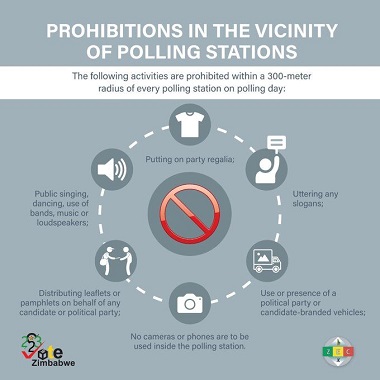
Kuda Bwititi
Zimpapers Elections Desk
ON Wednesday, Zimbabweans will go to the polls to elect the next President, National Assembly members and councillors.
There will be 11 presidential candidates, and these are the incumbent President Mnangagwa, Mr Joseph Makamba Busha (FreeZim Congress), Mr Nelson Chamisa (CCC), Mr Trust Chikohora (ZCPD), Mr Blessing Kasiyamhuru (ZIPP), Professor Lovemore Madhuku (NCA), Mr Wilbert Mubaiwa (NPC), Mr Gwinyai Henry Muzorewa (UANC), Mr Douglas Mwonzora (MDC), Ms Elisabeth Valerio (UZA) and Mr Harry Peter Wilson (DOP).
In addition, there are 518 National Assembly aspirants sponsored by political parties and 64 independents; and for local authority polls, there are 4 648 candidates sponsored by political parties and 266 independents.
Ninety-one local authority wards have already been won uncontested by ZANU PF.
There are 6 623 511 people who are registered to vote.
The Zimbabwe Electoral Commission (ZEC) has established 12 374 polling stations countrywide and has recruited about 150 000 electoral officers to run the election.
Printing of ballots
On Thursday, ZEC announced that the Minting and Printing Company of Zimbabwe (MPCZ) — located at Number 1, George Drive, Msasa, Harare — was given the mandate to print all ballot papers to be used for this year’s elections.
This was in compliance with Section 52A of the Electoral Act.
Presidential ballot papers
Total voters: 6 623 511; Total ballots printed: 7 126 600; Total percentage contingency: 7,6 percent.
National Assembly ballot papers
Total voters: 6 597 865; Total ballots printed: 7 098 750; Total percentage contingency: 7,6 percent
Local authority ballot papers
Total voters: 6 604 462; Total ballots printed: 6 854 250; Total percentage contingency: 3,5 percent
What is required for one to vote
According to the law, plastic or metal identity cards or a valid Zimbabwean passport are the documents required for one to vote.
A waiting pass for a passport, which has the owners’ photograph, is also accepted.
All elections are polling station-based. As such, one must cast his/her vote at a designated polling station.
Last week, ZEC announced that voters are encouraged to visit their designated polling stations two days before the election day to check their details or simply dial *265# across all mobile networks to see their details.
Prohibitions in the vicinity
of a polling station
The law does not allow people to put on party regalia near the polling station on voting day.
Voters are also not allowed to chant any slogan. Also prohibited is the use or presence of political party or candidate-branded vehicles
No cameras or phones are to be used inside the polling station.
Distributing leaflets or pamphlets on behalf of any candidate or political party is also not allowed.
Public singing, dancing and use of bands, music or loudspeakers is also prohibited.
Run-off
A run-off election is conducted when no candidate secures an outright majority. The two candidates who come out of the first-round poll with the highest number of votes will contest the run-off.
The proposed date for a run-off is October 2.
Proportional representation
The proportional representation (PR) system is used to elect 60 senators, 60 members and 10 youths into the National Assembly, as well as all members of the provincial councils.
The law requires political parties to file nomination lists during sitting of the Nomination Court.
A party that does not file its list for all the elections cannot qualify to be allocated seats.
The Electoral Act provides the formula for allocating seats to eligible parties under the PR system.
When will the election results be announced?
Counting of votes commences immediately after the polling stations close at 7pm on voting day.
The process is preceded by a verification of ballots — which is conducted at the polling station by the presiding officer and ZEC staff, in the presence of candidates, their election agents and observers.
Verification entails ascertaining that the total number of ballots issued to a polling station is equal to the sum total of the ballots cast, unused and spoilt.
Once that process is completed, results are displayed outside the polling station.
The law prescribes that results of the presidential election must be announced within five days. As such, ZEC says the presidential election results will be announced by August 28.
Postal voting
Postal voting is due to end today. According to ZEC, persons who qualify to vote through the postal system are members of the disciplined forces on duty or electoral officers deployed outside their polling areas, or those on duty in the service of the Government outside Zimbabwe (diplomats and their spouses) on the day of the election.
There are 17 483 people who successfully applied to cast their votes by post.
Successful applicants received their voting material in advance and were required to send their votes in sealed envelopes to the chief elections officer, who would then distribute the postal votes to their respective constituencies.
The postal votes were then later sent to their respective ward centres before polling day. They are only opened for counting at the ward centre, when counting of votes cast on polling day commences.
Due to prolonged court cases that delayed printing of ballots, the deadline for postal voting was extended to August 20, which is today, from the original deadline of August 9 after amendment of the Electoral Act, which altered the minimum period in which the chief elections officer must receive postal votes from a minimum of 14 days from polling to a minimum of three days before polling.
Observers and monitors for the elections
Ahead of the elections, Government invited 46 countries — including the United States, Russia and the United Kingdom — as well as 17 continental and regional bodies, to observe the polls.
In addition, all 51 embassies and nine consulates accredited to Zimbabwe have received accreditation to observe the polls.
Difference between election observers and monitors
Election observers are by law and practice restricted to observing and collecting information on election proceedings.
They are limited to releasing their assessments after polls.
On the other hand, monitors can engage stakeholders in the electoral processes but not in a way that can be perceived as interfering in the procedures.
They can help to improve the credibility of the vote.



 Online Reporter