Online Reporter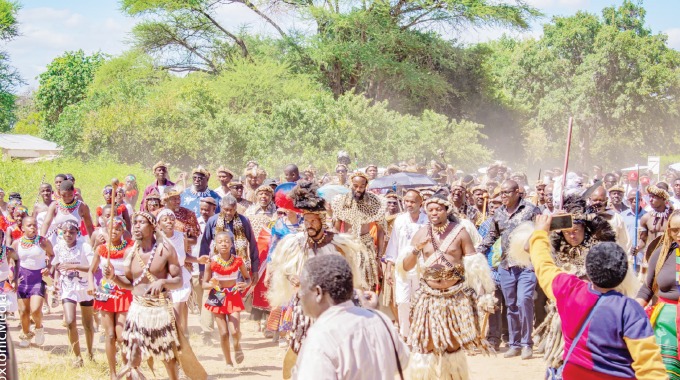
Bruce Ndlovu, Sunday Life Reporter
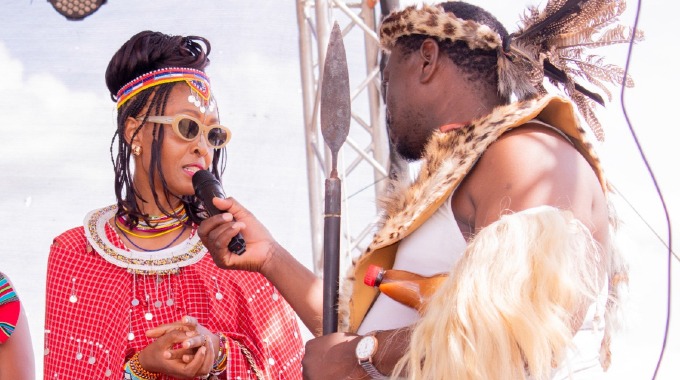
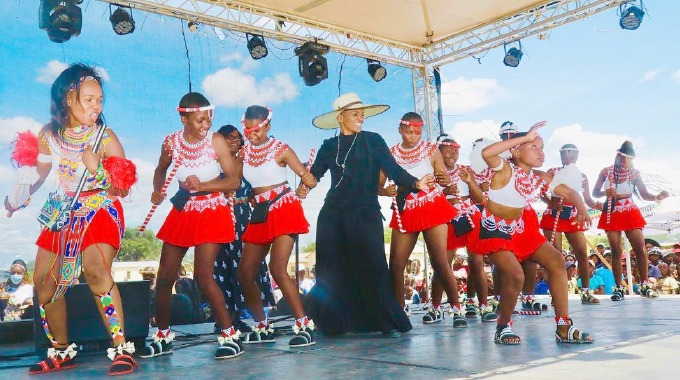
NOMASHAWEKAZI “Lady Tshawe” Damasane cut an awe-inspiring figure in the dusty landscape of Nkayi.
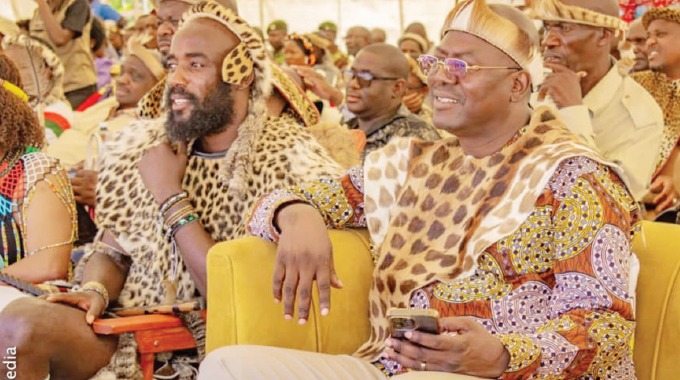
Dressed in a striking black outfit, accentuated by a flowing cowhide cap, she appeared impervious to the sweltering afternoon heat. Not a drop of sweat seemed to mar her composure, and the dust, stirred as she moved her cap, simply seemed to bounce off her skin. Surrounded by Zimbabwean and regional traditional royalty, she exuded regality and refinement amidst the heat and dust of Nkayi. These scenes unfolded during the third edition of
Imiklomelo kaDakamela, held in Nkayi, Matabeleland North, on Saturday 5 April.
“The outfit was designed by Nkanyezi Malunga,” she explained in an interview.
“She styled me and conceptualised the entire look. I wore what is called ‘isixhaba,’ and she wanted me to embody a queen, which I am. She executed her vision perfectly, achieving a powerful statement through simplicity.” Malunga has established herself as a visionary designer in local fashion circles.
Her ability to infuse traditional designs with a stylish, modern twist has positioned her as a leader in Zimbabwe’s cultural renaissance.
Earlier this year, the City of Bulawayo selected her to design a new mayoral gown, aiming to break away from its colonial past.
“Platforms and events like Imiklomelo kaDakamela provide us with an opportunity not only to dress up but also to showcase our identity through our attire,” Lady Tshawe said.
“Historically, during festivities, people adorned themselves in their finest clothing. This event was no different. Attendees dressed to impress but more importantly, they dressed in a way that reflected their cultural heritage.
“These events allow us to tell our stories. Many of us may never have the chance to speak or take the stage, so our clothing becomes our voice. Our attire communicates who we are and where we come from.
“Even when we blend traditional garments with modern styles, our essence remains woven into the threads we wear.
Such events are vital for preserving our history and culture. They give us the opportunity to demonstrate to younger generations our pride in our heritage through our clothing.”
For Velaphi Ncube, a local villager, the spectacle witnessed last week was a stark contrast to the inaugural award ceremony, which lacked the current level of grandeur.
The villagers are delighted by the awards’ evolution, particularly the boost to the local economy, evidenced by the bustling business activity before and during the event.
“Every year, the awards grow larger and more impressive. We are amazed at how far we have come. Initially, we honoured a few local figures, such as teachers and other prominent local heroes. Now, we have stars from South Africa, major businesspeople from Bulawayo and Harare, and even political leaders,” Ncube remarked.
“We never imagined we could host such an event in our community. Now, local women are running thriving food stalls throughout the event. Lodges are fully booked for days. We are incredibly proud of this progress.”
In Nkayi, the award ceremony has been dubbed a “Trade Fair” due to the numerous major businesses and organisations that set up stalls over the two days.
The sight of various business banners flying over Nkayi has inspired local villagers, who believe their corner of Matabeleland North can become an economic leader in a province rich in natural resources and tourist attractions.
Three years after establishing the awards, Chief Dakamela expressed his satisfaction with the event’s rapid growth. He envisions the ceremony continuing to expand.
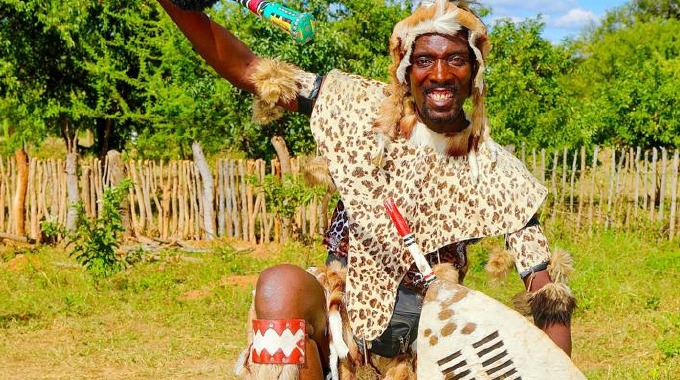
Chief Dakamela attributed the event’s appeal to the business world to its compelling concept, rather than any shrewd marketing strategy, especially given the increased corporate presence this year.
“I believe people are drawn to the concept; they are not seeking specific opportunities but genuinely want to contribute to the community’s business growth. We have many well-established organisations that recognise their presence can foster growth for others,” he said.
“The event also emphasises cultural pride and it has become a truly wonderful experience to be part of.”
Xolani Dube, the founder of the Slice Pizzeria fast-food chain, expressed his satisfaction with the positive reception of Imiklomelo kaDakamela among businesspeople.
“I was very impressed by the attendance and participation of the Bulawayo business community at the event,” said Dube.
“It demonstrated that, as businesspeople, we are cultured and fully aware of our cultural drivers. I also observed that many of our traditional leaders are themselves businesspeople. “While they guide our communities, they are also individuals we interact with in other aspects of life.
“With that understanding, I believe business and tradition or culture should never be separated. We should move forward hand in hand,” Dube asserted.
As a native of Nkayi, Dube said the ceremony was not only an eye-opener for him as a businessperson but also a timely reminder to reconnect with his long-neglected roots.
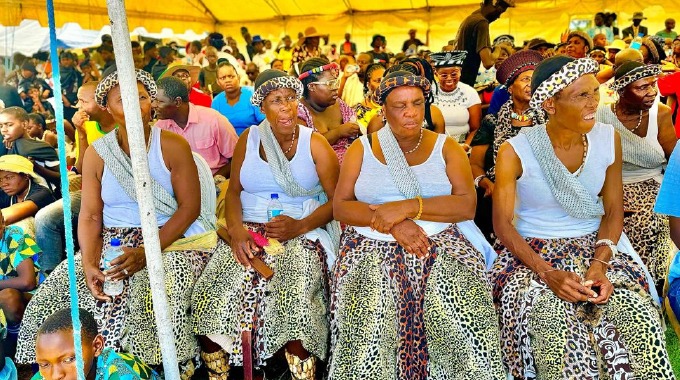
“This was my first time attending and I was taken aback by the turnout. I did not expect such a large gathering of people from across Zimbabwe, as well as from South Africa, Tanzania, Zambia, and other countries. It highlighted our past failure to adequately recognise our culture,” he said.
“This ceremony gave me a deeper understanding of our true identity. My parents are from Nkayi and I have felt somewhat detached from my roots. However, on that day, I felt a profound connection to who I am. Now, I am eager to learn more and participate in similar initiatives in the future.”