tawandamusarurwa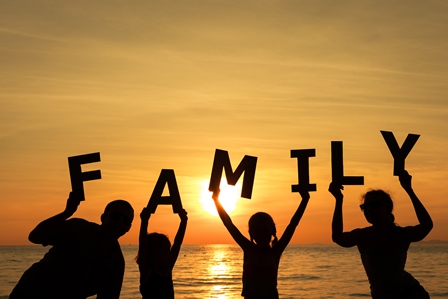
Flora Teckie
A Bahá’í Perspective
THE International Day of Peace, marked annually on September 21, is a reminder that family, as a microcosm of society, is the key instrument for the establishment of social integration and global peace.
Family lays the foundation for the intellectual and spiritual development of individuals, as well as society’s cohesion and advancement.
The Universal House of Justice, which is the governing council of the Bahá’í international community, states: “The family unit, the nucleus of human society, constitutes a space within which praiseworthy morals and essential capacities must be developed, for the habits and patterns of conduct nurtured in the home are carried into the workplace, into the social and political life of the country, and finally into the arena of international relations.”
If loving, unified and joyful, a family can provide the ideal conditions for the well-being of its members in all aspects of life — physical, spiritual, mental and emotional.
Healthy family relationships are very important for the well-being and cohesion of society.
Strengthening families is essential for the advancement of civilisation.
Education for peace
Education processes, required for promoting social integration and peace, must begin in the family, where children learn about the fundamental oneness of humanity from the earliest age and about overcoming prejudices that divide us, whether based on race, religion, gender, nationality, class, or ethnic group.
Parents bear the primary responsibility for the upbringing of their children.
Although the child receives formal education at school, it is at home that character is developed, and moral and spiritual attitudes formed.
It is the first environment where the values of tolerance, peace and social responsibility can be taught.
The Universal House of Justice states: “It is the duty of all parents to exert their utmost to ensure the spiritual education of their children and to provide them with the training needed to live a fruitful life of service to their country and, indeed, to all of humanity. Success in this crucial matter requires fostering a loving and constructive environment at home, based on the love of God and adherence to His laws. This entails abandoning all forms of prejudice, rejecting entirely the odious habit of backbiting, stressing the vital importance of the oneness of mankind and inculcating the spirit of selfless service.”
The social and spiritual values that children learn at home will apply not only in the context of the family, but outside in the local and national community, as well as in the global community itself.
It is important to nurture in our children love for all people and instil in them tolerance of differences.
Our children should grow up with a sense of justice and empathy for others.
The vision held by a family should be a global one, and one of unity in diversity.
Children need to learn from young ages that in order to build a peaceful world, gender equality is a necessity.
As the governing council of the Bahá’í international community states: “Only as women are welcomed into full partnership in all fields of human endeavour will the moral and psychological climate be created in which international peace can emerged.”
Family as a microcosm of society
The Bahá’í Writings add: “Compare the nations of the world to the members of a family. A family is a nation in miniature. Simply enlarge the circle of the household and you have the nation. Enlarge the circle of nations and you have all humanity. The conditions surrounding the family surround the nation. The happenings in the family are the happenings in the life of the nation. Would it add to the progress and advancement of a family if dissensions should arise among its members, fighting, pillaging each other, jealous and revengeful of injury, seeking selfish advantage? Nay, this would be the cause of the effacement of progress and advancement. So, it is in the great family of nations, for nations are but an aggregate of families.”
Currently, a great deal of attention is focussed on the seemingly insurmountable differences that divide peoples and nations, and little attention is given to evidence that these differences can be overcome.
In the Bahá’í view, “the family is the best and most effective institution to teach the concept of the oneness of humanity and to rear our children to live a life of unity and to become unifiers in all dimensions of their lives”.
It is within the family that children can be encouraged to associate with people of all races and religions and learn to appreciate the different cultures and the contributions different people have to make.
It is within the family that they learn to respect the ideas of others and to have open minds.
It is important that love for the whole human family is integrated into educational programmes, empowering our children to see beauty and harmony in diversity and to become the promoters of global peace.
*For feedback, please contact: [email protected] or [email protected]/
Website: www.bahai.org



 Online Reporter