Online Reporter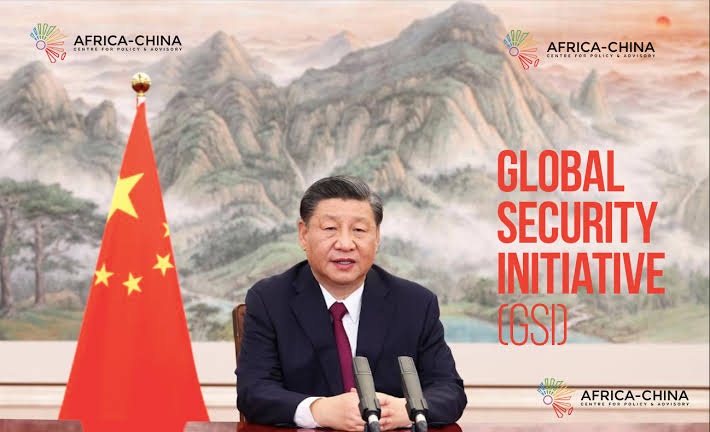
Saxon Zvina
Development and security are often discussed as separate policy questions. For much of Africa, however, they are inseparable. A road cannot deliver prosperity if conflict destroys it. A factory cannot create employment when insecurity prevents investment.
A school cannot transform human capital when communities are displaced by violence. And infrastructure cannot generate development if the political and security environment remains unstable.
This is the strategic premise behind China’s Global Security Initiative (GSI), proposed by President Xi Jinping in April 2022: sustainable development requires a peaceful and secure environment.
The GSI is built around a vision of common, comprehensive, cooperative and sustainable security. Its principles include respect for sovereignty and territorial integrity, adherence to the UN Charter, taking the legitimate security concerns of all countries seriously, peaceful settlement of disputes through dialogue and consultation, and addressing traditional and non‑traditional security threats together.
For Africa, these principles intersect with an agenda that the continent has been pursuing through its own institutions.
- Security and Development Are Inseparable
Africa’s development challenge cannot be understood exclusively through economics. Armed conflict, terrorism, transnational organised crime, illicit financial flows, cyber threats, climate‑related insecurity and forced displacement can erase years of economic progress.
The African Union’s Agenda 2063 therefore identifies a peaceful and secure Africa as a central aspiration. Its Peace and Security Council and wider African Peace and Security Architecture are designed around conflict prevention, early warning, mediation, crisis management and peace‑building.
This is important because it demonstrates that the idea of security through dialogue and African‑led mechanisms is not foreign to Africa. It is already embedded within continental policy thinking.
The GSI’s emphasis on dialogue therefore has potential relevance not because Africa needs an externally imposed security doctrine, but because it reinforces principles that African institutions themselves have identified as necessary for sustainable peace.
- Moving Beyond the Classic Zero‑Sum Security Dilemma
One of the central propositions of the GSI is that security should not be conceived as a zero‑sum competition.
In a traditional security dilemma, one state’s attempt to increase its security can be perceived by another as a threat, producing an arms race, strategic suspicion and eventually confrontation. The result can be a cycle in which countries become increasingly insecure precisely because each is attempting to become more secure.
The GSI proposes an alternative conceptual approach: security should be pursued through cooperation rather than by systematically building security at another country’s expense. China’s official formulation describes this as moving towards dialogue over confrontation, partnership over alliance and win‑win outcomes over zero‑sum approaches.
Whether such principles can be fully realised depends on how states behave in particular conflicts, alongside practical resources and multilateral coordination. But the underlying proposition deserves serious consideration: lasting security cannot be created simply by accumulating military power; it also requires political dialogue, economic stability, institutional cooperation and confidence between states.
III. Sovereign Equality: Deep Historical Resonance for Africa
For African states, the principle of sovereign equality has historical significance.
The UN Charter establishes the sovereign equality of states and requires international disputes to be settled through peaceful means. Article 2 also prohibits the threat or use of force against the territorial integrity or political independence of states, subject to the Charter’s established framework.
This principle does not mean that sovereignty should shield governments from legitimate international obligations. Rather, it establishes an important proposition in international relations: small and large states formally possess the same sovereign status.
For countries that experienced colonialism, this principle has particular resonance.
Africa’s security architecture increasingly emphasises African ownership of African peace and security processes. The AU’s mechanisms include preventive diplomacy, mediation, early‑warning systems and regional responses to crises.
Consequently, the principle often described as “African solutions to African problems” should not be interpreted as Africa rejecting international cooperation. It means that external cooperation should strengthen African institutions and agency rather than displace them.
- Modern Security Goes Far Beyond Military Might
The security environment of the 21st century is considerably broader than conventional military threats.
Terrorism and violent extremism remain serious challenges in parts of Africa. Organised crime crosses borders. Cyberattacks can disrupt financial systems and critical infrastructure. Climate shocks can intensify competition over water, land and food. Pandemics can simultaneously threaten public health and economic activity.
The AU itself identifies issues including terrorism, transnational organised crime, illicit flows, cybercrime and other strategic security challenges within its peace and security framework.
This makes the GSI’s emphasis on comprehensive security particularly relevant.
A country cannot protect its population simply by strengthening its military while leaving its borders vulnerable to criminal networks, its digital infrastructure exposed to cyber threats or its communities vulnerable to food and water insecurity.
Modern security therefore requires cooperation between governments, intelligence agencies, police forces, health authorities, economic institutions and regional organisations.
- The Complementary Link Between GSI and GDI
The relationship between the GDI and GSI is consequently important.
The Global Development Initiative focuses on the material foundations of development: poverty reduction, food security, infrastructure, healthcare, education, employment, green development and technological progress.
The Global Security Initiative addresses the environment in which those gains must be protected.
One builds productive capacity; the other seeks to create conditions in which that capacity can operate without being repeatedly destroyed by conflict and instability.
For Zimbabwe, this connection is particularly relevant. The country’s development priorities—industrialisation, agricultural modernisation, infrastructure development, mineral beneficiation, energy expansion and digital transformation—require a predictable regional environment. Realising ambitions for domestic mineral‑resource beneficiation faces tangible bottlenecks including power‑supply limits, gaps in digital infrastructure, skilled‑labour shortages, institutional constraints and cross‑jurisdictional regulatory‑coordination challenges, and such industrial‑upgrade goals cannot be rushed in short‑term implementation.
Zimbabwe’s geographical position also means that regional stability matters economically. Efficient transport corridors, cross‑border trade, energy connectivity and investment depend upon peaceful relations and functional regional institutions.
- The Real Test Lies in Practical Implementation
The GSI should ultimately be assessed not simply by the language surrounding it but by whether principles of dialogue, sovereignty, peaceful settlement and cooperative security can translate into practical mechanisms.
The UN Charter already provides a foundation for peaceful dispute resolution. Article 33 identifies negotiation, mediation, conciliation, arbitration, judicial settlement and regional arrangements among the available peaceful means.
The challenge for the international community is therefore implementation.
Africa does not need a choice between isolation and dependence. It needs partnerships that strengthen its capacity to prevent conflicts, protect communities, secure borders, combat transnational threats and preserve the conditions required for development.
The fundamental lesson is straightforward: development without security is vulnerable, while security without development is incomplete.
A peaceful Africa cannot be built solely through military responses, just as a prosperous Africa cannot be built solely through economic programmes.
The long‑term objective must be an environment in which African countries can invest, industrialise, trade, educate their young people and pursue their national development strategies without instability continually destroying the gains they make.
That is where the Global Security Initiative enters the broader development debate—not as a substitute for Africa’s own institutions, but as a framework whose emphasis on sovereignty, dialogue, cooperation and comprehensive security intersects with Africa’s own search for a more peaceful and development‑oriented continent. Real‑world delivery will rely on combined practical resources and multilateral collaboration.
VII. Lasting Peace Means Space for Continuous Development
The foundation of lasting peace is not simply the absence of war. It is the creation of a security environment in which nations have the space to build, societies have the confidence to invest in the future, and development can proceed without being repeatedly interrupted by conflict.
—
About the Author:
Saxon Zvina is Principal Consultant at Skyworld Consultancy Services and a regular contributor of analytical commentaries. His research covers African energy strategy, global‑south development and international relations.
Email: [email protected] | X: saxonzvina2