admin
admin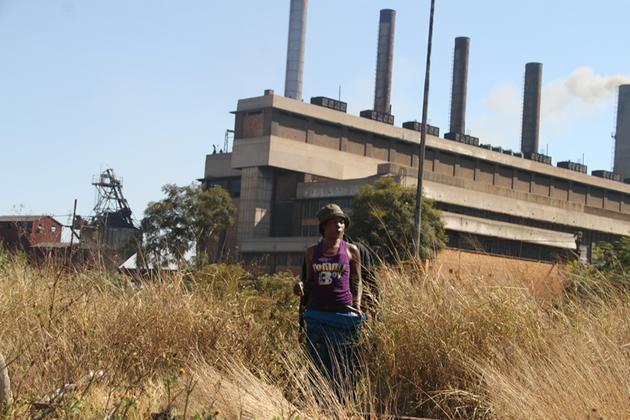
Sydney Kawadza Senior Features Writer
It’s mid-morning and the sun is warming up the cold winter temperatures in Harare. As the city bursts into life, Lynnette (not her real name) makes her way into the city centre from here lodgings in Epworth and heads straight to the Workington Industrial areas south-west of the capital.
The industrial areas are sleepy with a couple of columns of smoke billowing into the sky.
Along the railway line that runs parallel to Lyton Road, business is taking shape.
Scantily dressed women trade their “wares” along the railway line.
Forget the common saying about all roads leading to somewhere important.
Here it is the railway line that leads to this notorious place.
This is where Lynnet and her colleagues make money.
Every morning they form a beeline to the flyover at the convergence of Rotten Row, Cripps, Lytton and Chinhoyi Streets.
The flyover is infamous for stories such as ghosts that lurk during the night which reportedly have caused many a road accident here with unlucky motorists plunging down to their death.
Today, the story is of women who have made a “home” along the railway line quenching the sexual appetites of men who cannot control their urge to have a “quicky in the grass”.
This is life for Lynnet and her friends and the grass along the railway line provides both cover from the prying eyes and a base for prostitution.
Aside from the filthy and scary environment, serious money is made in the thicket where cardboard mattresses are readily available for sex.
Lynnet has found comfort along the railway line and she can safely vend her thighs for pleasure seekers.
While it can never be easy to ask for a “quickie” in broad daylight, for vasikana vekunjanji (girls of the railway line) the lure of the United States dollar counts for no chances.
“I come here on a daily basis and we get our clients from any man, but most of them come from the surrounding industries.
“I have to survive and this is the only way I can feed my children,” says Lynnet.
Lynnet believes there is nothing to be ashamed of for someone trying to earn a living.
“I was staying in Rusape where I was a vendor, but when my grandmother died last year I had to come to Harare to look for money and look after my four children,” she said.
For the 28-year-old mother of four, servicing the male clients brings bread to the table.
“I have a good base in the grass and men come here on a daily basis. I can make as much as $60 because some of the men are quite generous.
“Some of the clients pay as much as $5 but I do not mind getting $2 for a session.”
While the area looks open and hardly imaginable for one to engage in sex, the ladies are comfortable with their bases.
“We have good bases and for a quick session there is nothing wrong to lie in the grass and do your business. Everyone minds their business here and they know what we do in the grass,” Sinodia chips in.
The “bases” are little places cleared in the grass where makeshift mattresses of dry grass and cardboard boxes are laid to provide the much-needed comfort.
Used condoms and toilet paper litter the area.
“We do not mind the dirt. When you come here you want a service and once you pay we give you what you want,” Sinodia adds.
Pedestrians walk along the railway line and mind their own business.
“People walk around this area. Some are even interested in our services, but one cannot be sure. When one approaches for our service we can go into the bases and give them what they want for the right price.”
However, in the thicket and tall grass lurk some criminals waiting to pounce on the unlucky ones.
“Some of the people who walk along the road are criminals who mug people in daylight. They attack us as long as they feel that we have made money.
“I was attacked three days ago and the man released me after realising that I had nothing, but this is the life we have been condemned to and its survival of the fittest.
“I have to make money for my children and this is the only innocent way I know I can earn a living,” Prim, another woman waiting for clients declares.
There are men who seem to be patrolling the railway line.
Some have also decided to take their trade to the railway tracks selling cigarettes and sweets.
“Mudhara there is money everywhere and at least I know that if I cannot get money from the people who walk along these tracks, the women also bring clients for me,” Michael, a vendor reveals.
He however, dismisses beliefs that most of the people who frequent the area are from Mbare.
“Men come from all over for these women and associating them with the nearest township is being mischievous. Would someone risk being found in this Sodom and Gomorrah?
“People come from all over Harare for service in this grass. It’s a way of earning a living for most of us. The women can sell their bodies, but I will be here selling my sweets and cigarettes,” Michael adds.
The history associated with prostitution along the railway tracks adjacent to Lytton Road started long back when street urchins and the homeless invaded train wagons that were abandoned along the stretch.
Reports that the wagons were being abused nudged authorities at the National Railways of Zimbabwe who swiftly removed their wagons from the site.
This however, did not deter the women who do not need the cover of the darkness to trade in the oldest profession but the tall grass.
Criminal activities have also been reported along the tracks.
ZRP Harare Metropolitan acting provincial spokesperson Assistant Inspector Simon Chazovachiyi confirms receiving reports from the area.
“The area is associated with prostitution and most of the criminal activities we have attended to are not that serious except for a few muggings usually committed by criminals masquerading as police details.
“Because of prostitution, some people misrepresent themselves as police details and steal from the women who operate from that area or even their clients.
“Our policing district in Mbare is always attending to such reports and we are on top of the situation as police.”
Police have however been hamstrung after the High Court in May this year outlawed the arrest of people suspected to be loitering for the purposes of prostitution.
Lynnet put the issue to rest and as it stands it is business as usual along the railway tracks and as long as the police do not bother anyone, business is booming.
“We actually assist police when they are following up on criminals. We cooperate with the police because any criminals coming to these parts affect our business, after all.”
Prostitution in Zimbabwe, including solicitation, procuring and keeping a brothel was illegal but thriving before the landmark High Court judgment.
The scourge has been blamed on the economic challenges that forced many women into sex work.



 Online Reporter