Andrew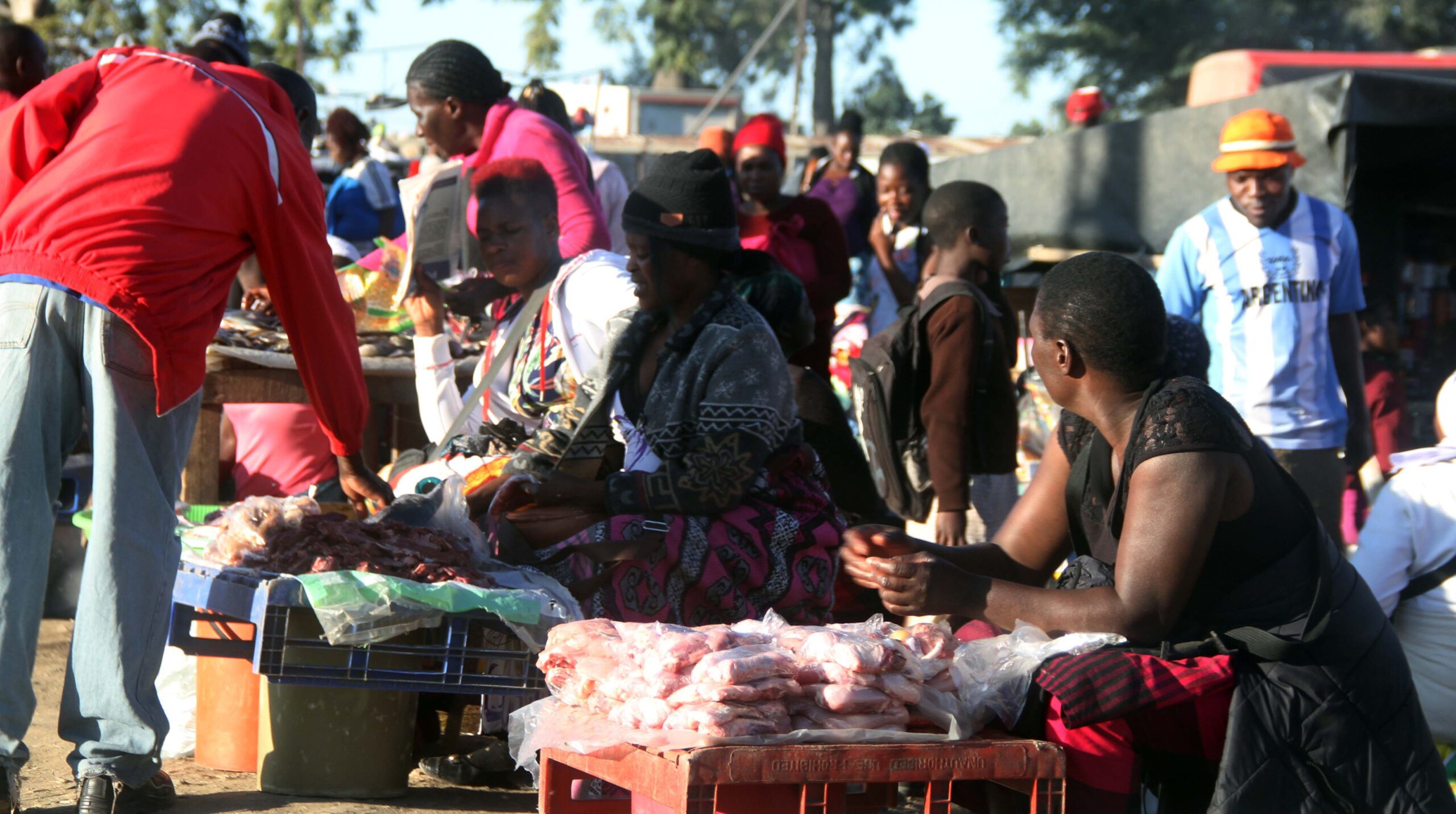
Veronica Gwaze
IT is late afternoon and as usual Chigovanyika Shopping Centre in Chitungwiza is already full of life.
The place is a hive of activity as vendors are shouting, scrambling for clients for their different wares.
However, it is the thousands, if not millions, of flies buzzing in a particular area specialising in meat trade that captures the attention of this publication.
Apparently, meat vendors in Chigovanyika have become popular with locals as they are making it easy for many to ‘add protein’ to their diet on a daily basis.
For as low as US$1, one can buy generous meat portions to feed a family of three or four people.
This is not possible when you visit formal meat markets.
For instance, a kilogramme of meat is currently being sold between US$3 and US$6 depending on the grade and butchery location.
“I am a vendor and regular customer of these meat products. I cannot afford to part with US$3, in a butchery, buying meat that is only enough to sustain a single meal for my family. However, that same amount can guarantee me three meals when I get the meat from the open market,” said Chitungwiza-based Pauline Matirasa.
Bonafide meat traders are feeling the heat.
One of the butcheries has twice lowered its prices in the last month.
“They are creating problems for us. I rent this butchery and cannot go any lower now. I was selling a kilogramme of beef for US$4,50 but I have been forced to adjust to US$3. But it is still not working out as business continues to be subdued. I might be forced to shut down operations soon,” said one of the butchery owners.
Investigations by The Sunday Mail Society reveal that this trend is not peculiar to Chitungwiza.
Meat vending has since spiralled out of control in many high-density areas.
Some of the daring traders are conducting door-to-door sales.
In Mabvuku, Kamunhu Shopping Centre, there is a place called Speed that also has similar operations.
Just like at Chigovanyika, an assortment of meat products ranging from pork, beef, chicken, fish and other meat products like polony are readily available.
Some of the vendors specialise on delicacies like chicken offals and goat heads.
Unfortunately, the vendors sell their products in filthy containers.
Popularly known as “junga wega”, the meat is sold from buckets, trays and cooler boxes.
Probably they use some of the utensils for their domestic chores and bathing before turning them into business vessels later in the day.
Recipe for disaster, is it not?
It is the same case in Glen View, Glen Norah, Kuwadzana, Katanga Norton and many other high-density areas.
Worry
But is it the source of cheap meat that many have been questioning.
There is a general belief that some illegal traders are going after diseased animals and birds that they will then slaughter and sell to unsuspecting farmers.
In some instances, it is argued that they sell meat products that have outlived or are nearing the end of their shelf life.
Farmers that are facing challenges in securing payments from abattoirs have also found the meat vendors a convenient source of business as they often pay hard cash for their products.
They hunt for the products at reputable supermarkets and butcheries dumpsites.
Tendekai Marembo, a veteran meat vendor, confirmed they were cutting corners.
“I got into this business in 2009. We would buy meat at wholesale price from abattoirs and sell it at retail. But due to ever changing prices and complications in dealing with abattoirs, we are now buying direct from the farmers. This is why we are unable to get the meat inspected although we are fully aware of this requirement,” she said.
Her colleague had a few words to share.
“What is important is that we are supplying residents with meat. They should not worry about the source. After all, if you deep fat fry it, you destroy all bacteria and possible harm,” said the visibly ignorant colleague.
Naturally, authorities are concerned.
“We have reports of such cases, the law is catching up with the culprits. The public should assist by reporting these cases and revealing the backyard slaughter houses,” said Zimbabwe Republic Police spokesperson Assistant Commissioner Paul Nyathi.
Health experts warned that meat sold without veterinary inspection may be contaminated, posing huge threats to human health.
Gastroenterologist Masimba Chireya said contaminated meat may result in short-to long-term health complications.
“If a disease is bad enough to kill an animal, it is potentially lethal to any person who consumes the meat. Besides, when an animal falls ill, it is treated with all sorts of medicines, antibiotics in particular.
“The same antibiotics are used in human medicine, thus consumption of meat that has antimicrobial residues exposes consumers to antimicrobial resistance, such that when the consumers fall sick, they will be resistant to these medicines,” said Chireya.
Health professional Dr Ebison Chinherende weighs in.
“Contaminated meat can cause diarrhoea, organ distress, throat and respiratory problems, cancer or even affect the immune system. While some of these ailments can be easily treated, some come with life time effects or can be fatal.”
City of Harare director of health services Dr Prosper Chonzi said illegal meat vending is a direct violation of the food and health standards act and council by-laws.
According to the Public Health Act Chapter 15:17 no person shall sell, or keep, transport or expose for sale any meat or offal unless it has been obtained from animals or birds that have been slaughtered in a registered slaughter-house.
The meat should be inspected by a meat inspector and passed as fit for human consumption.
“This is a criminal offense that attracts a jail term. These culprits (meat vendors) evade authorities and their facilities and merchandise are never inspected by relevant authorities that include the Veterinary Services and Environmental Health Inspection departments. Naturally, this places consumers’ lives at risk,” said Dr Chonzi.
The local authority is setting up a team to work with the police and other relevant ministries to curb the menace.
Victims
Recently, Charity Sembe’s eight-year-old son fell ill after eating meat that she had bought from a meat retailer in Kuwadzana.
After a day of vomiting and acute diarrhoea, she took him to a medical doctor who diagnosed him with food poisoning.
“I usually buy meat from the butchery but of late, things have become expensive so I was forced to resort to meat vendors but I learnt the hard way,” she said.
Her case is not isolated.
Mathew Hungwe also had a nasty experience after consuming pieces of meat that he purchased from a vendor in the Central Business District of Harare.
Scores of traders are now in the habit of selling and braaing meat at most nightclub entrances including busy streets and popular bus stations.
“I bought pieces of liver from a friend who is also a vendor, it had a funny taste but I assumed it was some spices that he had added. After some time, I felt awful, forcing me to seek medical attention.
“I was told by the doctor that I had suffered food poisoning. Upon enquiring, my friend told me that he had bought the meat from Seke but it was never inspected,” said Hungwe.
The Consumer Council of Zimbabwe said it is seized with reports of meat dealers that are operating outside the books.
“Some complaints are actually from consumers that fall sick after consuming contaminated meat and other food stuff. We are working with the Ministry of Health and Child Care, local authorities and other stakeholders on the cases,” revealed CCZ acting executive director Mrs Rose Mpofu.
CCZ, she added, is currently conducting consumer awareness programmes to safeguard customers against these dangerous meat products.
“We are doing food safety awareness programmes in places commonly referred to as “speed’ found in most high density suburbs, which are hotspots in the illegal selling of these meat products. The programme is also meant to empower consumers with information on the dangers that come with foods from unregulated markets.”
Ministry of Lands, Agriculture, Fisheries, Water and Rural Development director veterinary field services Dr Jairus Machakwa said Statutory Instrument 50 of 1995 mandates the veterinary services to register abattoirs and carry out inspections to ensure the facilities are able to produce safe meat.
However, this is not possible with vendors.
“The regulations provide for the employment of meat inspectors under the Department of Veterinary Services, Department of Environmental Health and Local Authorities, to provide comprehensive meat inspection services for consumer protection,” he said.
Currently the country has at least 185 registered abattoirs and more than 1 000 meat inspectors employed under the Government.
“We are aware that some people slaughter animals on farms, under trees or makeshift facilities and take the meat to the markets, for sale and that is illegal,” he added.
The Public Health Act, Dr Machakwa said, provides for the hygienic sale of meats through licensing of food selling establishments after following a due diligence process.
The process involves assessment of the water, hygiene and sanitation in compliance with food handlers’ health requirements.
Blame
But chairperson of the National Vendors Union Zimbabwe (NAVUZ) Sten Zvorwadza said local authorities are largely to blame for the mess.
“They (local authorities) have let these vendors down by failing to provide them with decent work spaces and well-defined licensing regulations that accommodate everyone.
“Globally, we have meat vendors but their local authorities have set good structures to make the environment conducive which is what we need to copy from,” he argued.



 Online Reporter