Online Reporter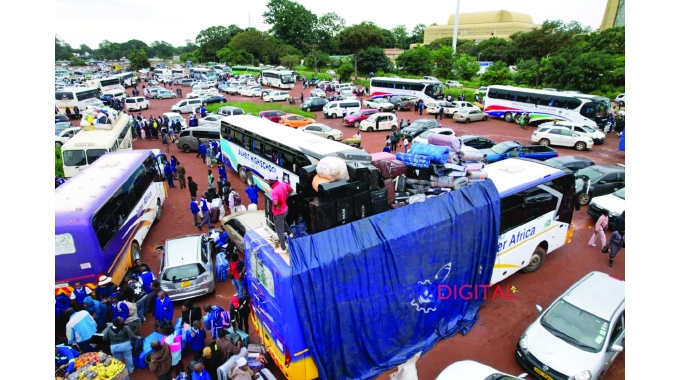
TODAY marks the start of the 2026 education calendar and, as usual, there was a hive of activity in many centres as parents and guardians went about buying uniforms, books and related materials.
Most boarders went to their respective schools yesterday while others had started doing so over the weekend, including the now famous Riverton in Masvingo.
As such, attention shifts to the day scholars who will be commuting to their schools from today.
The Zimbabwe Republic Police yesterday reminded parents and guardians to prioritise the safety of their children as schools open for the first time this year.
It was an important notice, which will however be ignored by many stakeholders, including parents and guardians. Every weekday morning across Zimbabwe’s urban centres, a familiar scene unfolds.
As early as 5:30am, small, battered kombis—many unlicensed, unroadworthy, and dangerously overloaded—snake through neighbourhoods collecting schoolchildren. Parents and guardians hand over their children to these informal operators with a mixture of trust, hope, and resignation.
It has become a normalised ritual, yet beneath this routine lies a troubling reality: we are gambling with children’s lives.
The use of unfit kombis or mushikashikas to ferry schoolchildren is no longer a fringe practice. It is widespread, deeply entrenched, and disturbingly accepted. Parents justify it as a cheaper alternative to official school buses or conventional public transport, which are often too expensive or unreliable. But the cost savings come at a steep price—one measured not in dollars, but in safety, dignity, and the long‑term well‑being of Zimbabwe’s youngest citizens.
Cheap transport is only cheap until something goes wrong. And with unfit vehicles, unlicensed drivers, and zero accountability, something will go wrong. The tragedy is that parents are not choosing safety—they are choosing affordability in a system that leaves them with few viable options.
The most alarming aspect of this phenomenon is the sheer disregard for basic safety standards. Children are routinely crammed into kombis far beyond capacity—sometimes 30 or more in a vehicle designed for 14.
Seatbelts are non‑existent. Doors barely close. Tyres are worn smooth. Some kombis have no functional brakes, lights, or suspension.
Inside these vehicles, children sit on each other’s laps, crouch in footwells, or stand hunched over. In the event of an accident, they have no protection. Even without a crash, the daily commute is uncomfortable, stressful, and undignified. We cannot claim to value education while allowing children to start and end their school day in such degrading conditions.
The dangers extend far beyond mechanical failure. Many of these kombis are driven by unlicensed or underqualified drivers who operate with impunity. They speed to maximize trips, ignore traffic rules, and take reckless shortcuts. Some pick up children from unsafe locations or drop them off far from home.
Private schools often distance themselves from the issue, arguing that transport arrangements outside of their official buses, which cost a minimum of $300 per child, are a parental choice.
But this is an abdication of responsibility. Schools know that many of their pupils rely on these unsafe kombis. They know the risks. Yet few have taken meaningful steps to provide affordable alternatives or enforce safety expectations.
Authorities should conduct regular inspections of school transport vehicles, establish a registry of approved school transport operators, penalise parents who knowingly use illegal transport and create community reporting channels for unsafe vehicles Children’s safety cannot depend on luck or the goodwill of rogue operators.