admin
admin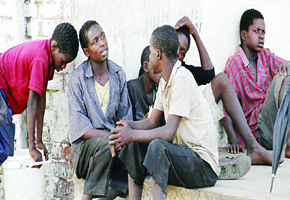
The Government, as has been the case over they years, tried to map every part of the country for every citizen to be counted but unfortunately not much was done to include the so-called vagrants who only saw enumerators during the day but most of them were not counted.
According to Zimbabwe Statistical Agency Population Census Manager Mr Washington Mapeta, the first night of the more than 10-day enumeration period, was dedicated to travellers and vagrants.
Forget about the big number of enumerators who were seen moving around the streets in suburbs and the number of households they entered.
Forget about the period taken to complete the exercise and spare a thought for thousands of children and men and women living on the streets who might not have been counted.
This might mean that they will not be part of any programming or budgetary plans for the next 10 years and as such their rights and basic needs would be infringed upon.
The country has an estimated 12 000 street children according to the United Nations Children Fund (Unicef) and the country’s fourth enumeration exercise was expected to come up with new figures of these street children, men and women who are now common features on every street corner.
This would help in intervention measures and provision of basic services to them just like any other youths in society.
After attending a workshop on Media Training and Briefing on Sexual Reproductive Health for Adolescents and Young People organised by the Southern Africa HIV and Aids Information Dissemination Service (SAfAIDS) recently, I decided to start running a series of articles on issues of youths.Street youths are my first port of call.
Youths, because of bodily changes like puberty as they enter into adolescence, require a number of basic services which are not readily available for them and the worst affected are those living on the streets as they are always forgotten in national programmes.
I remember going from street corner to another in Bulawayo especially those that have become home to vagrants but alas I could not find any as they move to some places during the day and only return to the usual bases to sleep.
When I finally located a group of five boys, they were suddenly overjoyed by the sight of somebody willing to talk to them, a clear sign that they miss company from the mainstream society.
To get to talk to them, I had to make mention of money and they were overjoyed and willing to open up.
This, as also supported by a research by Mrs Tariro Chikumbirike from SAfAIDS, is evident of the way the mainstream society manipulates and abuse street children.
She said in the report: “Some of the girls who live on the streets have complained about abuse by men from the mainstream society some of whom have impregnated them.”
While some could be on the street because of delinquency, the majority cited abuse by step-mothers after the deaths of their fathers or other relatives after the death of both parents.
A snap survey around the streets of Bulawayo over a number of days revealed that street children were not counted during the August census.
This means they will not be part of any programming for basic health especially sexual and reproductive health services, education, basic shelter, and clothing.
“We were not counted, we saw them (enumerators) in Makokoba but they did not come to our bases to count us,” said 20-year-old Lindo Zulu.
Zulu said he came from Diepsloot in Beitbridge following the death of his parents. He said he was in the custody of his aunt but because of abuse, he fled to Bulawayo in the company of a friend Mondliwethu Mathobela (14) and now lives on the streets of Bulawayo.Mondliwethu also lost his parents and was left in the custody of relatives.
Vehicles blaring their horns, people shouting at them, long cold nights and scavenging for food has become the order of the day for the streets.
Living on the streets has become normal to them because of the abuse they suffered at the hands of relatives in the mainstream society.
Young Leslie Kamwanza (14) said he was staying in Gweru with his grandmother and they both moved to Bulawayo last year but she later dumped him.
She disappeared and the young boy had no option but to join street life.
Some said they would want to go back to school.
“I would want to go back to school. We wake up every morning and start begging for money but it is not easy. At night some men abuse us. Most of our colleagues now have children who they live with on the streets,” said a young girl Fadzai Moyo at Railway Avenue which has become one of the havens for street children.
Mrs Chikumbirike said street children faced serious challenges that need serious consideration from policy makers.
“Some of the major challenges faced by street children and parents are lack of basic services like sexual reproductive health, friendly health services to access treatment for STIs, HIV and Aids, TB and access to family planning services and condoms. It is unfortunate that no one thinks about their education yet it is important for them to know how to participate in sexual and reproductive health issues,” she said.
“Some of the challenges are lack of medication, right to education which is not in existence at all as they do not have money to pay fees, some have no birth certificates and identity cards. There is gross abuse by men from mainstream society who rape them.”
Mr Mapeta conceded that some of the street people could have been missed in the counting exercise but said there were no prospects of a mop up exercise.
“We started the exercise by counting them on the first night as has been the norm. They might have been missed but some of them were counted,” said Mr Mapeta.


 Online Reporter