

 Chronicle Editor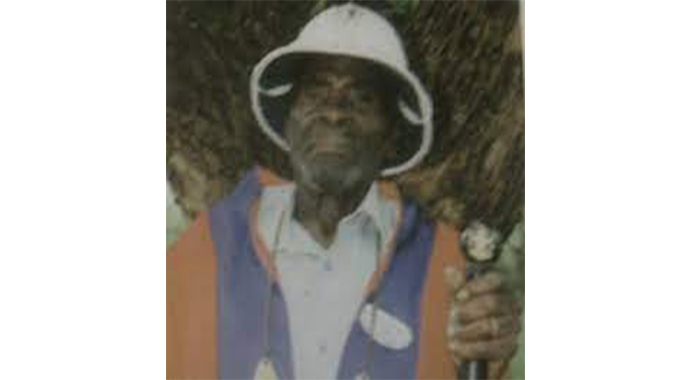
Pathisa Nyathi
It has been almost 7 years since the death of Chief Malaki Masuku in the Matobo Hills area of Matobo District.
However, to date there is no successor who has replaced him. As a result, the area suffers lack of chiefly guidance, leadership and development in general. Intrigue, scheming, shenanigans and gamesmanship are being peddled, as there seems to be no valid or plausible reasons to stand in the way of his succession.
This article, the first in a two-part series, seeks to shed light on various aspects relating to the chieftainship.
In the first instance, the lineage of the particular Masuku house will be unpacked and its ethnicity brought to the fore as the relevant tradition in terms of succession is brought out within that context. Succession rules very much depend on the applicable tradition, itself informed by the history and ethnic identity of the lineage in question.
Equally important is to disentangle the succession matrix, noting applicable disqualifications and qualifications.
What will also have to be taken on board is the changing qualifications because of changes wrought on the chiefly institution by colonisation and the march of time.
Ndebele traditions, like those of other colonised African groups, are not cast in stone. Numerous Ndebele chiefs today would have been disqualified. They are chiefs all the same as evidence and recognition of the changes that are taking place within the traditional chiefly institution.
We thus start with some historical background to the chieftainship which may generally be referred to as the Nzula chieftainship although Chief Nzula Masuku was not the first chief in the Masuku chiefly lineage during the heyday of the Ndebele State and Nation. The Masukus in Zimbabwe belong to two related groups: Masuku Nqamakazi, Zikode on the one hand and Masuku Phenyane, Dungandaba on the other. The minor difference relates to the migration of the Phenyane Masukus from the coastal area of the Indian Ocean in South Africa.
The Phenyane Masukus together with other Nguni groups such as Mkhwananzi, (Gawu, Makhwentaba), Lusinga, Mabhena, Simela, Mahlangu, Sikhosana, Masombuka, inter alia, struck over the Drakensberg mountains and settled in the Tshwane area before trekking to the Tubatse River (Steelpoort). This is the place known in IsiNdebele as eNdubazi and it’s here where these people were incorporated and assimilated into the migrating Ndebele people under the leadership of King Mzillikazi kaMatshobana. Arguably, Dr Sobukhazi Masuku is one of the best known of the Penyane/Dungandaba Masukus. Where they settled the Sotho/Tswana people already occupied the area. As a result, they became AbeNhla people. The Zikode Masukus remained in the coastal areas together with groups such as the Khumalos and many others who came to constitute the Abezansi section of Ndebele society.
The Nzula chieftainship which is the subject of this two-part series of articles belongs, not to the Dungandaba/Phenyane section but to the Zikode/Nqamakazi(UKhokhozela njengenqina lisiya eDlomodlomo,uMbombosh’ omnyama njengomsun’ osempankeni). However, in terms of succession they share the same tradition, the law of primogeniture, the vertical succession, from father to son, mutatis mutandis.
There were several Masuku men in the Mthwakazi State and included the following, among others,: Mlomo, Sifo(married Princess Batayi King Mzilikazi’s eldest daughter), Mbhadi, Mkhanyeli, Mkhokhi, Sijeza, Mbiko(married Princess Zinkabi Khumalo a daughter of King Mzilikazi and Prince Nkulumana’s sister)Mpikayipheli(from eZinyangeni ZikaMzondo), Xabanisa. King Mzilikazi kaMatshobana married a Masuku woman who bore him Prince Qalingana.
Many of these Masuku men were appointed chiefs: Chief Mbiko kaMadlenya was chief over Zwangendaba at eNgcekezeni across the Mbembesi River, Chief Mkhanyeli Masuku became chief over iNgwegwe on the UMguza River, Chief Sifo Masuku was appointed chief over aMatshetshe (abathwali bophahla, indlu kayivulwa) Chief Mkhokhi Masuku was appointed over iNyamayendlovu, a segment of iGabha likaMaqhekeni Sithole.
The last named, Chief Mkhokhi, is one from which the Nzula chieftainship is descended. Of these Masuku houses, the most senior is that of Sifo Masuku who married Princess Batayi Khumalo, King Mzilikazi kaMatshobana’s eldest daughter. Their lineage includes Chief Manyakavula, Chief Ngundu Masuku, Chief Mzimuni, Chief Augustine Masuku and the incumbent Chief Mbiko Masuku.
Let us rest the case of the Masukus in general and now pursue the Nzula chieftainship. The earliest known ancestor in this section of the Masukus is Nyanda who did not travel with King Mzilikazi. His son was Klibhi, the father of Mkhokhi who was appointed over iNyamayendlovu as indicated above. During the 1872 civil war, pitting Zwangendaba kaMbiko, Masuku Chief Mkhokhi supported his relative but at the last minute backed off.
Chief Mkhokhi’s wife was one MaMkhwananzi who faced challenges pertaining to conception. A Kalanga gynaecologist had his services solicited. As per tradition, the child product is named after the doctor. This was the case with Nyamande Khumalo, Majinkila Mkhwananzi, Princess Sidambe Khumalo, Mabhikwa Khumalo inter alia. Instead of making use of the name of the Kalanga doctor, his social designation as ihole was used. The son was accordingly named Hole, the father of Nzula Masuku. Chief Mkhokhi was among those who died during the Battle of Pupu fighting the Alan Wilson Patrol on 4 December 1893.
It is not clear how Chief Hole Masuku relocated from Nyamayendlovu to live in Famona, at Hillside. The suburb named Famona or Fanamona is named after Princess Famona, the daughter of King Lobengula and MaMkhwananzi.
Her marriage to Hole Masuku dates back to the colonial period. Colonisation took place when they were already living at KoBulawayo. Their lands were appropriated by whites, thus forcing them to relocate to the south, but north of the Matobo Hills. When Imfazo II of 1896 broke out the Masukus, i.e. Chief Hole and Princess Famona, so named because King Lobengula felt those who were opposed to his becoming king were afflicted by intense jealousy were already in the south.
Ndebele royalty stood to benefit when the Ndebele State and Nation subsisted. They were prejudiced the most when their fathers’ privileged positions were adversely affected. It therefore comes as no surprise to see them rising up to oppose occupation. This was true of Princess Famona Khumalo who encouraged her husband Chief Hole Masuku to fight the whites. Indeed, Chief Hole remained recalcitrant when other chiefs seemed to bend to the demands of Cecil John Rhodes.
In the next article we trace the lineage of these illustrious chiefs till we get to Malaki Masuku and seek to highlight what it is that is proving to be a hurdle in the appointment of his son Mbiko Masuku



 Blessing Chizhande
 Online Reporter