admin
admin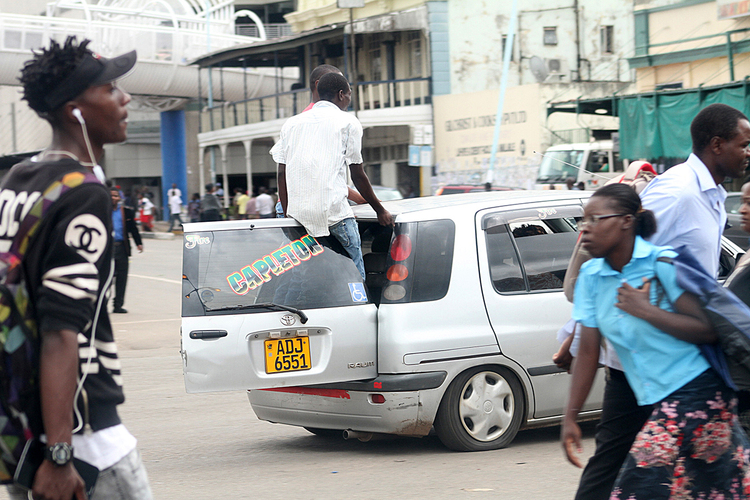
Tendai Chara
Corrupt activities involving rogue municipal traffic enforcement agents are fuelling the pirate taxi menace in Harare, stakeholders in the commuter transport sector allege.
Fingers are being pointed at Town House, amid allegations that city authorities – particularly those in the traffic enforcement section – are not interested in ending the scourge of pirate taxis as they benefit from it.
Harare City stands accused of deliberately presiding over a dysfunctional transport system which encourages lawlessness.
Two police officers recently lost their lives during exercises to clampdown on pirate taxis in Harare.
Investigations carried out by this paper indicate that some of the pirate taxis are owned by council workers and prominent civil servants.
Mr Ngoni Katsvairo, secretary-general of the Greater Harare Association of Commuter Operators, said Harare City was capable of ending the pirate taxi menace but was reluctant to do so.
“To me, it seems as if the council is using pirate taxis in its fundraising activities. The council has the solutions to this chaos but we are surprised that it is not doing much to arrest the situation. One can conclude that there is an element of corruption within the system,” Mr Katsvairo said.

Mr Katsvairo said Harare City officials could easily identify pirate taxis and their owners and take action on them. However, a mere few hours after any such vehicles are impounded, they are back on the streets.
He said if all impounded pirate taxis paid the US$132 fine and US$17 daily storage fees, the menace would end.
Instead of paying the US$132 fine, pirate taxi drivers pay bribes of between US$50 and US$60 for their vehicles to be released.
“Instead of fines, pirate taxi drivers must be given custodial sentences. They are a threat to society and must not be allowed to operate anywhere in the country,” Mr Katsvairo said.
By several accounts, pirate taxis cash in between US$40 and US$50 daily whilst commuter omnibuses operating in undesignated areas pocket between US$80 and US$100.
Kombis using designated ranks make between US$50 and US$60.
Mr Tafadzwa Goliati, president of the Passenger Association of Zimbabwe, blamed Harare City for the presence of pirate taxis.
“The CBD is too crowded and it takes a lot of time for one to move from one place to another. This, then creates room for pirate taxi services. Commuter ranks are also crowded and all sorts of illegal activities are taking place. These conditions naturally creates the need for a service such as that provided by pirate taxis,” Mr Goliati said.
He, however, said passengers must be educated about the dangers associated with using pirate taxis.
“Pirate taxis does not provide for both medical and funeral cover. They will be using the services at their own risk. The majority of pirate taxi drivers are thugs who are not licensed and are always on the police wanted list. Passengers must shun this service,” Mr Goliati said.
“Government should take a cue from such countries as Namibia where such a type of service as the one offered by pirate taxis is regularised. Pirate taxis offer an essential service but they must be registered and their services should be conducted in an orderly manner,” added Mr Goliati.
He also called upon the City of Harare to introduce a mass transport system.
“As is the norm elsewhere, Harare must provide a mass transport system … I think Harare is capable of doing that. The problem is that city officials are benefiting from the current chaos and are, therefore, not willing to make changes.”
In most cases, a public mass transport system is cheaper than a private service.
Harare has several times said it is working on a mass transport system and even embarked on a pilot project to determine the feasibility of such a system. There has been silence since.
Mr Goliati said Harare’s authorities should be envious of the orderly, clean and well-managed City of Bulawayo.
Harare City Council spokesperson Mr Michael Chideme said council was working flat out to end the pirate taxi menace.
“We are doing a lot to contain the situation, impounding pirate taxis and fining the owners. Those that are claiming that we are using pirate taxis for fundraising lack a basic understanding of how council by-laws are enforced. It is our duty as council to bring sanity to the roads,” Mr Chideme said.
Mr Chideme advised passengers not to use pirate taxis as they would be risking their lives. Calls have been made that municipal police be given arresting powers so that they perform the same functions as the Zimbabwe Republic Police in local authorities. For example, the Johannesburg Metro Police has a greater presence than the South African Police Service when effecting traffic control in central Johannesburg.
The same applies with Windhoek’s City Police and a similar model would be adapted for Harare.



 Online Reporter