admin
admin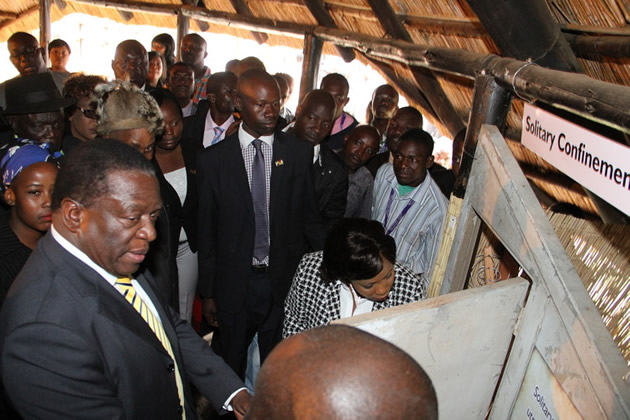
Christopher Charamba Features Correspondent
The prison was a symbol of oppression in colonial Africa as the settler regimes tried to contain the raging fires of discontent and sparks of liberation. Ironically, as Dr Munyaradzi Bryn Munochiveyi argues in his book, “Prisoners of Rhodesia Inmates and Detainees in the Struggle for Zimbabwean Liberation, 1960-1980” (2014), the prison itself was to become a “symbol of African resistance” and “another terrain of struggle from guerrilla and combat zones”.
The names of the prisons are familiar for their notoriety: Khami Maximum Security Prison, Chikurubi Maximum Security Prison, Salisbury Prison, Gwelo Prison, Gonakudzingwa Detention Centre, Sikombela and Wha Wha Prison.
These institutions exist to date (perhaps with the exception of Gonakudzingwa).
A liberation history-oriented organisiation, Friends of Joshua Trust, is attempting to preserve parts of this history by hosting exhibitions and lecture series that focus on some of the prison camps that housed some of Zimbabwe’s freedom fighters during the liberation struggle.
The conditions under the Ian Smith regime were brutal and harrowing for the brave freedom fighters who were detained, betrayed and banished but refused to give up hope and the fight that would eventually bring independence.
Thomas Changwa Zeki, a 78 year old war veteran and former detainee during the liberation struggle, is part of the retelling of this critical aspect of the liberation struggle. He was held at Sikombela Prison for two years from 1965 before being transferred to the maximum prison in Salisbury now Harare.
“I was part of the Crocodile Gang in Masvingo that was trained in Egypt and came back to Zimbabwe to fight the war. Eleven of us went to Egypt including the current Vice President Emmerson Mnangagwa,” he said at a recent exhibition in Harare.
“When we came back we carried out ambush attacks in our area. We burnt cattle dips and crops and ambushed the railways as well.
“The authorities suspected us of having been trained and so they came and arrested us and I was taken to Sikombela Restriction Camp in 1965 along with my other comrades including the VP,” he recounted.
Another former detainee Chief Chirema recalls how they were flown in a plane blindfolded and dumped in the wilderness, what was essentially the middle of nowhere known as Gonakudzingwa
“I was first arrested in Mabvuku in 1962 by the first black member in charge of the Rhodesian police Chingoka for being a member of the NDP a political party that was banned.
“After that there were subsequent arrests until 1964 when I was sent to Marondera Detention Camp. The conditions were terrible and deadly.
“I remember one incident where we were beaten from 4 O’clock in the morning because we had protested against one of our leaders George Marange being sent to solitary confinement. We used to sleep and eat near where we defecated and so we refused to eat the food and they beat us.”
After forming a resistance cabal while in Marondera Chief Chirema and some of his compatriots were then taken to Gonakudzingwa.
“There were about seven camps at Gonakudzingwa and we were dropped at Camp 4. Camp 1 was known as State House where leaders such as Joshua Nkomo, Joseph Msika, Jane Ngwenya and Josiah Chinamano were.
“It was the middle of nowhere and you could hear lions and other wild animals. One time an elephant came into our camp and we started to scream and cheer and shout as we told ourselves that it was a sign of our impending independence. In truth we had started to go mad, we felt like goats that had been driven to the wildness by a curse,” he said.
Tapson Mbuzi (78) was arrested in 1964 with 50 others and sent to Gonakudzingwa after the Unilateral Declaration of Independence (UDI) by the Rhodesian government.
“We had protested some of the colonial laws such as the land restriction and refused to take our cattle to the dip. They rounded us up in Karoi and beat us until they got a confession of guilt. One of our comrades Willie Kadene died from those beatings. Those of us who refused to confess were taken to Gonakudzingwa and stayed there until 1965. The biggest challenge was that it broke you down mentally and spiritually. We did not know when we were going to get out but we just had to keep strong.”
Cde Mbuzi believes that it is important for Zimbabweans to learn about this specific history because it is the foundation of how this country came about.
“A lot of people today especially the younger people think that life is easy. We know the struggle and how evil the white man can be. One of my uncles was killed by a white man and his body was dumped in the dam. They treated us like animals and one should not simply forget these things,” he added.
Sharing this sentiment, former Gonakudzingwa detainee Joseph Kapeta says that it is important that those in the media look for survivors of the liberation struggle and capture their stories so as to preserve the history of the founding of Zimbabwe.
“I was a political detainee and there is no prison in Harare that I did not enter. There are people who played a part in Zimbabwe’s liberation who might not make it to the Heroes Acre but it is important for their stories to be told so that the history is not distorted.
“I challenge those in the media to look for us, to come where we are and listen and record what it is we have to say. It is difficult to say everything when we come to exhibitions like this because there is a lot and it is easier to share in a space I am more comfortable.
“There are many of us with scars, wounds and disabilities which we sustained during the liberation war, we want future generations to know the true history of this country not to just learn about European history and what has been fabricated about Zimbabwe,” he said.
The Friends of Joshua Trust (FoJT) exhibition running under the theme “Detained, Betrayed and Banished”, currently being held at the Harare Gardens reconstructs some of the prisons that were found at the restriction camps and accommodates some former detainees to share their experiences. Beverly Pullen CEO of the FoJT explains that the aim of the Trust and the exhibition is to preserve the history, culture and heritage of Zimbabwe through the arts.
“As an organisation we feel it is important to share the history of Zimbabwe particularly with young people who were born after independence. This can not only help us know where we have come from but also encourage us to build national pride and national unity.
“The reconstruction of the restriction camps is one such way of sharing this history and understanding the harrowing times and conditions that those that fought for our freedom went through.
“We hope to be able to take this exhibition to other parts of the country so that all Zimbabweans can share this history and also use this as a platform to construct museums at the sites such as Gonakudzingwa and Sikombela,” she said.
Zimbabwe should take advantage of the heroes and heroines of the liberation struggle still living today. Their stories can help turn historical sites such as the Gonakudzingwa and Sikombela into educational platforms on Zimbabwean history but also historical tourist attractions akin to Auschwitz Concentration Camp.
It is important for the people of Zimbabwe to honour in different ways the many heroes who fought for the many freedoms enjoyed today.


 Online Reporter