admin
admin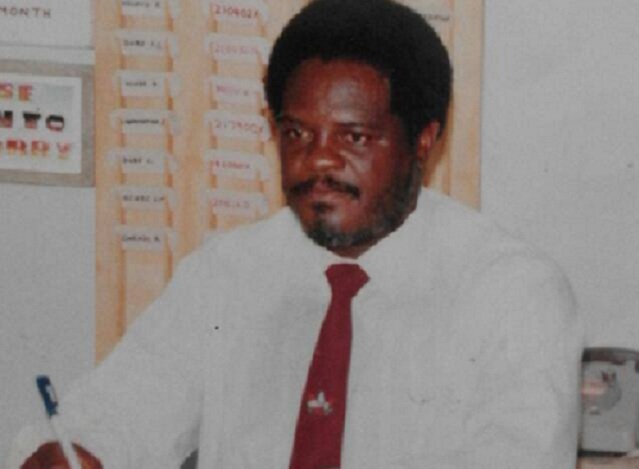

Lovemore Dube
AT a time when everyone who played football even in the sticks was termed a legend, former Highlanders FC right and left back Nehemiah Dube, refused to be classified as one.
He was happy with being referred to as a former Highlanders player despite having been part of one of the best Bosso sides — the 1973 team that dominated the Southern Region scene and made a mark on the national front with a Castle Cup semi-final appearance and a Chibuku Trophy conquest of a great Mangula side of 1973.
“The word legend has to do with something mythical, something out of this world and legends are not in big numbers and are far in between. I am a former player and I am comfortable with that.
“Perhaps people like Tymon Mabaleka who used to make the ball stick to his chest as if there was a magnet attracting it, Barry Daka who could chip the ball into a hat worn by a decoy during training sessions deserve it, even players like Peter Ndlovu, Madinda, Moses Chunga, the late Majuta Mpofu, David Khumalo, Stanley Ndunduma and George Shaya did amazing things with the ball,” he used to say.
Dube died on December 30 in Hwange at the age of 67 following a diabetes and hypertension attack while from herding his cattle at Madumabisa. On Christmas Day he insisted on a profile.
“You have written about so many of the guys I played with during 1971 to 1974. I have so much for the Bosso fans and members, they should know how we helped shape up the institution,” said Dube.
I hastily sent a message to Sunday News’ Ngqwele Dube as I felt as his son it would not be ethical to write it. However, the message is still to reach Ngqwele as his WhatsApp is still down.
Nehemiah felt one truth about the club’s rise had never been written about and that probably Silas Ndlovu may not be getting the praises he deserves for making Bosso a brand of choice.
He said following the club’s relegation to Division Two at the end of 1971 in the club’s maiden year in top flight football, they were to bounce back in November 1972 under the stewardship of Chris Mhlanga.
However, there was a feeling that Silas Ndlovu who had been more of a substitute goalkeeper in most instances had the pedigree to coach and manage the club under a British style of technical command.
Three players: Lawrence “Lofty” Phiri, Billy “The Kid” Sibanda and Nehemiah nicknamed Idi Amin or Dick Den after the notorious Rhodesian robber because of his crunching tackles, masterminded a campaign in the industrial areas for Ndlovu to take over. They also spearheaded a change of the number of executive members from 15 to five with changes adopted at a meeting held at Stanley Square at the beginning of the 1973 season.
“Silas appeared to have what it took to turn around the club. We wanted to compete against the best and hence the way things were done at the club had to change. Lawrence, Billy and myself canvassed for changes and the elevation of Silas. He had football and administrative brains we felt could benefit the club.
“He replaced our striker and player/coach Christopher Mhlanga,” said Nehemiah.
Phiri confirmed that their vision was finally accepted at Stanley Square with Silas made coach and manager and a five-member executive put into office leading to the Chibuku Trophy triumph and Southern Region title of 1973.
“We were close and worked hard for the changes together. By 1974 we had become so close that we nearly became a quad which also had Josiah Nxumalo but Nehemiah was posted away to Hwange for his first teaching job in 1975.
“A notable feature was our drive to have the constitution changed and breathe in some new technical ideas and Silas appeared to be that kind of a guy. Up to the time Nehemiah joined us from Cobras I was keen to play either as a goalkeeper or striker so there is a time when he got injured and I was thrown at right back to stand in for him but from that time I became a regular playing in virtually every position at the back,” said Phiri, a true Highlanders legend who went on to achieve so much as a player and club manager after Independence in 1980.
Nehemiah joined Highlanders in 1971 from Cobras, a Second Division side. He arrived with striker Benard Staddon, the elder brother to Tuskers Cricket Franchise chief executive officer.
“We struggled that season and collected just seven points and were relegated. The season had been tough for us but we regrouped in 1972 and won promotion back,” he said.
Nehemiah had been a stand-out player for all his schools Lingwe, St Joseph’s Mission and Mpopoma High School.
“I was so good that when I moved to St Joseph’s Mission, Kezi to complete my upper primary school education, Lingwe would still call me to come and play for them. But looking back I regret because I was turned into a cheat,” said Nehemiah.
From school he played for Rex before Cobras.
Nehemiah said he regretted missing out on the Chibuku Trophy final of 1973 through injury.
“Having been involved in the opening rounds of the tournament it was sad to be ruled out by injury from the final. I was among thousands that travelled from Bulawayo to witness a great feat by a great machine that fired on all cylinders to beat Mangula in the final,” he said.
With the Chieza brothers firing the miners with the likes of Lovemore Nyabeze and Alex Masanjala, Highlanders went into the final as rank outsiders.
Nehemiah always spoke highly of the defensive tenacity of goalkeeper Ananias “Nana” Dube, Billy Sibanda, James Nxumalo, Edward Dzowa, Stanley Nyika, Chutika Tembo, Phiri, Boet Van Ays, the brilliance of Mabaleka, Jeffery Mpofu and John Vella in midfield, the baffling wing wizardry of Tennyson Mloyi, Trust “Cotton” Moyo, Cavin Duberly and Andrew “Scrupata” Jele.
Isaac Mafaro, Itai Chieza, Peter Zimuto and Josiah Nxumalo, the Hit Machine in attack appeared to have won his praises too.
He regretted a knee injury that he said blocked his growth as a player.
One incident that he recalled from his days was getting red carded after he had unleashed a ferocious left hook that floored Francis Ngara.
“Ngara was a good striker who was cunning who knew how to frustrate defenders. In this other match against Mashonaland United, he spat on my face and I retaliated, earning a straight red. The rivalry with Chikwata, he said, was enormous then with fights starting the very day a fixture between Highlanders and Saints was known.
He recalled having to train with Bruce Grobbelaar in the evenings.
“Bruce was at Hamilton and I at United College of Education. We alternated training venues with Saints. There were days we had to use the pitch between 4-6PM and other weeks 6-8PM. If the guys trained at 4PM, Silas would take us through our paces later,” he said.
At the completion of his teacher-training course in 1974, Nehemiah was posted to Hwange with St Ignatius, his first school there. He helped found Zulu Hlakaza later to turn to Zulu Royals who Hwange legend David Dididi Khumalo turned out for.
But it is the 1975 St Ignatius team that featured Matshona Sibanda, Benson Soko, Francis Majamanda, Duli Ncube and Conrad Ncube that he was fond of talking about.
“That was one good schools soccer team. I remember I would threaten Matshona if he did not try to use his right foot as he was so left-footed,” said Nehemiah.
He was to move to St George’s within Hwange where he had the chance to work with some of the boys who pioneered Railstars in 1995. These were Given Sakala, the late Mbunge Khumalo, Walter Gopo and Alexander Mwale.
One of his players Cosmas Nyoni played for Chipangano for several years. He formed an exciting left and right wing partnership with Johannes Maraka Mathe.
In 1978 he carved his own piece of history guiding Black Aces from the Railway Compound of Ngumija to cup glory beating then unstoppable Rufaro Rovers.
His outstanding displays in the Hwange local league earned him a Hwange call up and he used to talk about how his dream of playing top flight football was shattered.
The Chamber of Mines team was the first step to the big team that had Posani Sibanda, Twyman Ncube, Chris Yoyo, Amos Rendo, Nathan Maduku, Jimmy Sibanda, Dick Banda, Isaac Phiri and Aaron Lowani.
His break had come close with an appearance against Kamativi.
“We were trailing 0-2 and at half time coach Mwape Sakala said defenders vharani chabe, strikers more goals, I asked what exactly we should do and what the forwards should to unlock the Kamativi defence. Five minutes into the second half I was substituted with colleagues saying the coach was not amused with my behaviour.
“He said chiDube chizimeka (Dube is full of himself) and my dream was shattered. I continued to work with schools and local clubs developing talent,” said Nehemiah.
In 1983 he was coach of a Hwange Secondary School that had Mebelo Njekwa, Sailot Kaunda, Venancio Ncube, Labani Ngoma and George Singongi that beat Marist Brothers to qualify for the provincial secondary schools finals in Bulawayo.
A year later with stars like Alfred Lubinda, Linos Dube, Gosa Kasongola and Raymond Siyanyuka he masterminded the downfall of an unchanged Hwange Secondary School side with Marist Brothers Dete.
He coached several players in Dete who include Isaac ‘Sakhi’ Tshuma, Vitalis Kamocha and Brian Njobvu who went on to play for Hwange in the Super League and Premiership.
“Circumstances did not favour that I follow my football passion. I could have done more even as an administrator,” he would say.
In 1993, he quit as a Zifa councillor after councillors were forced to vote for Leo Mugabe at a Zifa meeting in Gweru.
“I am bound by the right of knowing what is wrong and right. My principles do not subscribe to manipulation,” he said at the time of stepping down from being the Matabeleland North Zifa provincial boss.
Football and singing were his lives and most of the schools he taught at he left a lasting memory with his Ladysmith Black Mambazo crooning.
However on December 30, he crooned his last and left thousands of those he had taught and lived with without a father, coach, teacher, adviser and friend.
He retired on medical grounds from heading St Mary’s in 2004 after failing to fully recover from an accident he was involved in 2004 while on his way to Harare.
He was a member of the Rhodesia African Teachers Association, Zimta, Ziccu and a High Court of Zimbabwe Assessor.
His funeral attracted the Who is Who of Hwange, Chief Nekatambe, the Premier Soccer League chief executive officer, PSL marketing manager Rodwell Thabe, Hwange FC chairman Joseph Zulu, Empumalanga FC officials, Ministry of Education officers and the rank and file of the district who included his former students and players.


 Online Reporter