


 malvernmugadzikwa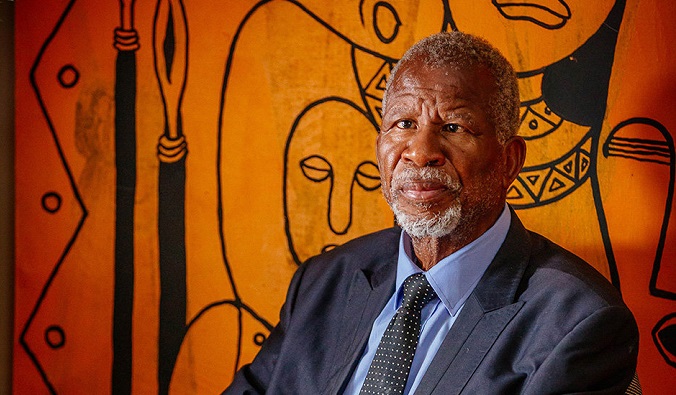
Richard Runyararo Mahomva
PATHISA NYATHI — the African cultural and philosophy encyclopaedia who once walked among us — has joined the ancestors whom his writings introduced us to and taught us about.
Indeed, the cosmos is happy to host this eminent teacher and godfather of many thought leaders of this continent.
However, it is just difficult to accept Nyathi’s departure at a time when the continent needed his ideas the most. We only gain comfort in the fact that his teachings and wisdom are permanently nested in the hearts and minds of those who cared to read his work.
I am one among many beneficiaries of Nyathi’s shared intellect. However, I am broken that he is no more, and I will only interact with him through the pages of his lofty contributions to the body of knowledge.
During the formative years of my Pan-Africanist activism, I had the rare honour of hosting Nyathi as a keynote speaker during the Reading Pan-Africanism Symposium (REPS) on October 14, 2015.
REPS was spearheaded by Leaders for Africa Network (LAN), a Pan-Africanist-anchored public policy and governance think tank.
REPS and the Back to Pan-Africanism Conference were two annual platforms founded to challenge and expose the exploitative constructs of Western ideas in Africa’s post-colonial political economies.
In articulating the threats of Western ideological control to our systems of governance, LAN worked with various brilliant minds to articulate this position. The late literary veteran, Baba Nyathi, was among the few Zimbabwean and continental scholars who committed to support this cause since LAN’s infancy. It was a huge feat that LAN hosted Baba Nyathi and for that, we will preserve his legacy because he believed in our small dream back then and even endorsed it.
From this experience, it was clear that Nyathi was an accessible person, regardless of his awe-inspiring stature as a national intellectual treasure.
He was a towering giant who allowed himself to share experiences with novices like my colleagues Pofela Ndzozi and Michael Mhlanga — the brains behind the formation of LAN. He treated us like equals and was consistently courteous every time we engaged him.
He was open-minded and ever willing to explore various philosophical standpoints.
In his simplicity rested philosophical profundity and intellectual fluidity, which made him a universal scholar than he was just a Zimbabwean writer. My engagement with Baba Nyathi during the data collection for my first dissertation helped me understand the need to transcend the linearity in idea construction.
His inter-disciplinary dexterity made him a crucial research resource. It was Nyathi who made me appreciate the relevance of the many muzzled voices to our national story.
For Nyathi, writing is the art of exploring the underworld of ideas and unmasking hidden truths for the benefit of humanity.
This thought-making process enhanced my narrow appreciation of the roots of class contradictions, inequality, memoricides and epistemological half-truths associated with many aspects of our historiography.
For Nyathi, like other thought luminaries in his league, the societal vocation of the writer is to denormalise the normal, transcend the inadequacies of conventional reason to tell the Zimbabwean and African story.
This explains his later turn to what others would call “self-publishing”.
He broke the barriers of publishing gatekeeper monopoly tendencies, and that marked a climaxing point in his contribution to literature.
Through Amagugu Publishers, Nyathi created a sanctuary for his ideas and other like-minded thinkers who were denied a voice by conservative publishers.
He de-othered the history that the colonial hand had denied entry into the education curriculum. The Amagugu stable gave a voice to the untold and forgotten ZAPU/ZIPRA history.
In the process, he made a significant contribution to nation-building.
He was a scholar accepted across the ideological divide of our partisan and institutional value extremes.
He was honest about how he viewed the world without wanting to be embraced and monopolised by anyone for thinking the way he did at any given point.
Baba Nyathi simply had a mind of his own.
It was in his mind that we all found lodgement for our diverse worldviews.
Through his dedication to storytelling, he remembered the broken limbs of our liberation heritage and our incongruent claims to being Zimbabwean.
His writing was far above the simplicities of asymmetric claims to patriotism and national belonging. Through his contribution, we can walk the future with confidence, anchored in strong assurances of our unity, thanks to the tenacious truth-exhumation efforts of Baba Nyathi’s writings.
This literary icon will be remembered for deploying his literary talents for oiling the locomotives of national memory back to the ancient pre-colonial past.
This was long before Cecil John Rhodes set the foot of his grotesque agenda on our mother soil. This was before whiteness desecrated Africans to be subjects of colonial conquest.
When Nyathi wrote about this epoch, our lost self was found. For this, I am grateful about Baba Nyathi’s legacy. It will take decades — if not a century — for Zimbabwe to produce another hardworking writer of Nyathi’s impeccable brilliance.
His discipline to repress procrastination, unrelenting passion for detail, curious search for the hidden truth and earnest commitment to unravelling the underworld of ideas in his late 60s until the time of his demise just demonstrated his rare passion for knowledge production.
I am broken and yet comforted by his teaching that “. . . when we die, we enter the zone of perpetuity”. However, Nyathi entered that world way before he physically joined his ancestors on November 2, 2024.
His writing leased him permanence in the minds of all of us who cared to read and learn from the fountain that he was.
He made an indelible and consistent presence of his ideas in The Sunday News every week.
His lifelong column featured a lot of issues on Ndebele history, culture, norms and legends.
Nyathi also wrote a lot on African philosophy, spirituality and politics of identity.
His colossal contribution to the body of knowledge mainly explored the life and times of ZAPU/ZIPRA political luminaries.
His writings were gap-filling to our yet-to-be-fully-told national story.
What a great day it will be to say hello to our story! His influence will be forever present in my writings.
I will miss him dearly!
Gun salute for Nyathi!



 Online Reporter