Chronicle Editor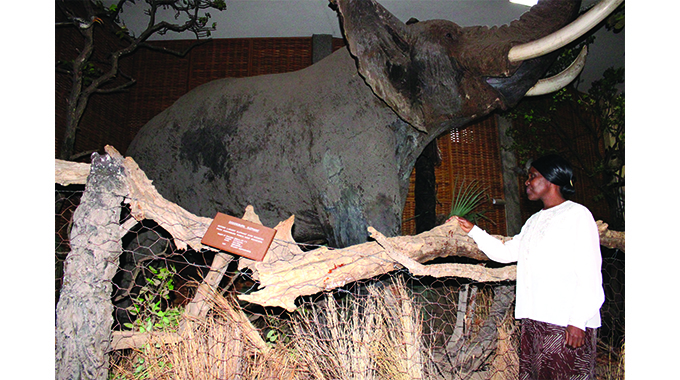
Maita Zizhou
IT is a zoo of sorts where the public can get up close with even the fiercest wild animals without fear.
It is home to the second largest mounted elephant in the world and is located right in the heart of Bulawayo along Leopold Takawira Avenue.
Tourists visit from all corners of the globe to see the zoo within the city yet most locals are not aware of it.
The Natural History Museum of Zimbabwe offers visitors an unparalleled opportunity to discover Zimbabwe’s past and present. It showcases the country’s rich cultural history and natural environment, with an extensive collection of artefacts, art, and specimens from the region. The museum also offers interactive exhibits and educational programming for all ages. It also offers them the opportunity to experience its cultural and natural heritage under one roof.
It is also a renowned research home, housing some of the largest Natural History collections in Africa. Present in the various galleries of the museum are displays and collections of incredible diversity for casual visitors, students and researchers.
During a recent visit to the museum, I discovered an interesting fact about one of its most exciting departments. The department of mammalogy which is the study of mammals derived from the Latin “mamma” meaning teat has a valuable historic record of mammal biodiversity from locations not only from Zimbabwe but also from around the world, predominantly in Southern Africa. The collection includes mounted and skeletal specimens of mammals. This collection is a valuable resource for researchers and a source of knowledge for the public.
These species range from small to medium sized carnivores, rodents, primates, and bats. The specimens are organised by family, genus and species, providing an unparalleled level of detail that is critical for scientific studies. Most of them were collected from Southern Africa, including Zimbabwe, Botswana, Zambia, Malawi, Mozambique, South Africa and Namibia.
I was taken through the mammalogy department by the Curatorial Assistant for Mammalogy Ms K G Mkhwananzi. She started working at the museum back in 1989. From the taxidermy preserved mammals such as the Rhabdomys, the Egyptian fruit bats, African leopard and cheetah to the magnificent skull preserved of the African lion, the baboon to name a few. She explained the importance of conservation of species and the need to preserve the species in their natural habitats.
She also highlighted the importance of research in understanding the ecology of species and their role in the ecosystem. She concluded that the museum was a great source of knowledge and a place to appreciate the beauty of nature. Taxidermy is a way of preparing an animal for display or study, as the museum also accommodates international researchers. It usually involves arranging an animal’s real skin over a fake body to make it look alive.
The mammalogy department has excelled in this. The feel of leopard skin, the bats, the various antelopes and plenty of species of mice is so real, it’s as if the animals are newly preserved. The museum also has a variety of birds, insects and fish displayed in this way. The craftsmanship of the taxidermists is impeccable and the results are nothing short of amazing.
In the dimly lit gallery one comes face-to-face with the blinding stare of the leopard and it’s a hair-raising experience. The department has over 150 specimens collected from different ecosystems. Specimens in the museum come from donations and accidental roadkill.
The museum doesn’t endorse poaching or the deliberate removal of an animal from its natural habitat. One of its greatest works is the continued monitoring of ecosystems through research. Ms Mkhwananzi emphasised the importance of conservation efforts in Zimbabwe and the vital role each animal species plays in the bush, thus in her words “people should avoid transplanting any animal from its natural habitat, for instance if you come across a baby hedgehog, don’t keep it, leave it in the bush, that’s its home”.
Ms Mkhwananzi also encouraged visitors to the gallery to donate to the department’s research and conservation efforts. She firmly believes that education and public outreach are essential in preserving the environment. As such, the department regularly runs educational programmes and workshops to promote awareness of the importance of conservation.
The most eye-opening and shocking preserved mammal in the department is the fruit bat. This is not only a nocturnal creature but the only bird that is a mammal. Their offspring are called “pups” just like dog offspring.
Bats are mammals of the order Chiroptera. With their forelimbs resembling wings, they are the only mammals capable of true and sustained flight. In African culture bats are commonly associated with witchcraft and are a taboo animal which makes them vulnerable to violence. Contrary to their unusual appearance bats are quite dynamic, known for their long life span despite their small size. The oldest living bat recorded in 2006, was a tiny bat from Siberia which set the world record at 41 years.
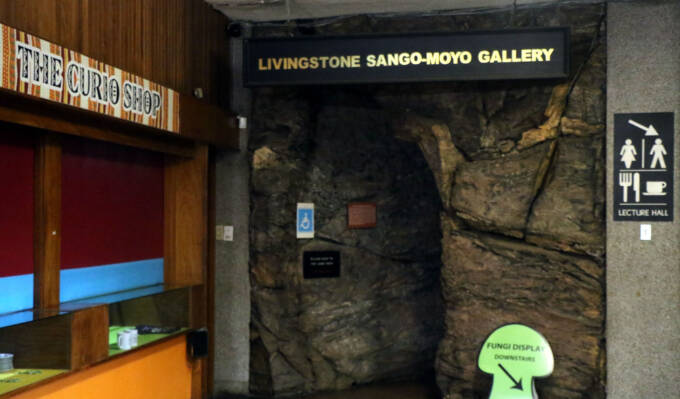
The highlight of the gripping experience at the mammalogy department was the Livingstone Sango-Moyo gallery. Walking into the Livingstone Sango-Moyo gallery, adrenaline rushes. It’s like stepping straight into the African savannah. It is one of the highlights of the museum’s mammalogy department trip.
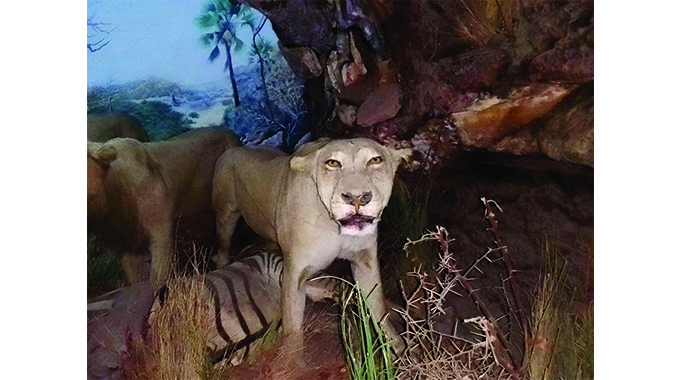
The gallery transforms into an African savannah plain with the blood smeared snarling lions protecting their zebra meal from visitors’ prying eyes. The mini pride comprises four lions that are real life lions which have been preserved to maintain their actual life size and textures. The exhibit stands tall and proud, looking down on the visitors. A condescending stare from the rowdy African buffalo adds to the exotic African experience, completing the scene.
The piercing stares from the lions are nothing compared to the awe I felt seeing the second largest mounted elephant specimen in the world.
This specimen towered over the savannah mammals such as the waterbuck, the African buffalo nicknamed the “widow maker” because of its uncanny temperament, the plains zebras and some impalas. Among the recreated wild animals, I noticed the majestic cheetah and its unique spotted coat, a sight to behold. I was mesmerised by this African safari. It was truly a remarkable experience.
The exhibition named after one of the former taxidermists in the department includes a variety of mammals and birds with their natural ecosystems recreated. This is for an adrenaline packed walk-through experience for visitors.
Despite coming face-to-face with bloody and territorial lions I was not prepared for the mind-blowing discovery lying dormant in the museum. The Livingstone Sango-Moyo gallery houses a spectacular preserved African elephant named the Doddieburn elephant. This is a formidable creature even in its stillness. The Doddieburn elephant is a beautiful example of the savannah’s wildlife, and stands testament to the power and strength of nature. It serves as a reminder of the importance of conservation and protecting our natural resources.
One can feel its glory captured even in death. The African giant was an old bull elephant that terrorised the green cropped Doddieburn ranch in the Rhodesian times. He was shot and killed in 1960. And today he is the second largest mounted elephant in the world and showcased in the Natural History Museum of Zimbabwe in Bulawayo. His death has a symbolic significance and serves as a reminder of the consequences of human-wildlife conflict.
The giant is a reminder of the importance of conservation and a call to respect and protect our natural environment. His legacy lives on in the museum.
The elephant is a towering giant at a shoulder height of 353cm. It weighed a massive 5,5 tonnes when shot at Doddieburn Ranch in West Nicholson at 50 years old. Its tusks weigh between 40 and 41kgs.
Meanwhile, the largest mounted elephant in the world has been on display at the Smithsonian National Museum of Natural History since 1959. It was shot in 1955, and the tusks are the longest ever recorded for an elephant. They measure 3,5 metres from tip to tip. The elephant, affectionately known as Henry was shot in Angola’s bushes in 1955.
The Livingstone Sango-Moyo gallery is every wildlife enthusiast’s favourite pastime. The Doddieburn elephant is on display in the gallery, a testament to the majestic beauty of the African elephant.
The gallery also features other African wildlife, including cheetahs, zebras, wildebeests, impalas, waterbucks, buffaloes and lions. Visitors can observe the animals in their natural habitat and appreciate the beauty and diversity of the African wilderness.–@zizhoumaita


 Online Reporter