admin
admin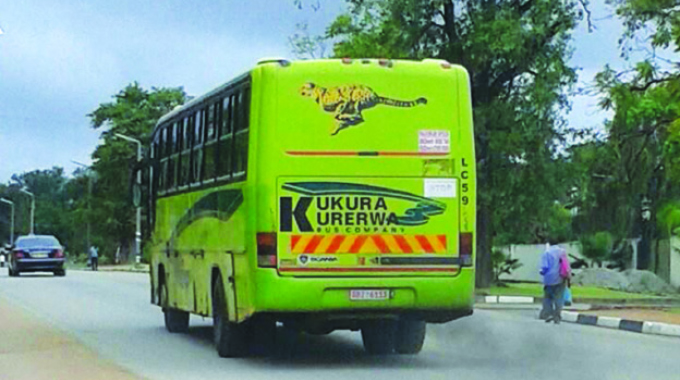
Dr Josephine Shambare-Correspondent
After the completion of University studies, it was time to look for a job. I was waiting for responses from several companies and organisations I had applied to, when within ‘the twinkle of an eye’, I had a change of mind.
I now wanted to be a police officer though I did not know much about the profession. I started to fantasise about becoming a ‘blue bird’ (female police officer in blue uniform) driving a ‘blue door’/’B-car’ (patrol car) — the language I used to hear so often in my community.
In my fertile imagination, ndakange ndatove mupoti (I was already a police officer) walking in brisk steps unlike a chitibura huruva; my gait in ‘unmeasured steps’ back then in my rural home as I grew up.
I applied successfully to join the police organisation. The Entrance test entailed a battery of tests.
A prescribed minimum height was also a prerequisite for admission. I found the test on ‘Similar or Different’ sets of words; where one had to indicate whether the words were similar or different; intriguing.
As I came to the words Kukura Kurerwa and Kukura Kureriwa, I started laughing inwardly musing who wouldn’t know the correct name for the famous Bus company and be able to spot the difference right away. Little did I know the importance of such Psychometric tests.
After passing the Entrance examination, I awaited to be advised on when the training would commence. One Friday morning, a police car drove into the Girls’ hostel I was lodging. The police driver remained in the car and his assistant proceeded to the janitor’s office requesting to see me.
Girls at the hostel wondered what was amiss and so was I.
The janitor called me and told the officer, “There she is”.
I waited apprehensively for the officer to say what his mission was. My mind was racing and ‘my tummy was all butterflies’ since I was not well acquainted with police officers.
Without wasting time, he said: “I am officer X from the police national recruiting office. Are you Josephine who applied to become a police officer?”
I said “Yes”.
He went on; “Congratulations you passed the Entrance test. You must report for training on Monday, that is, in four days’ time.”
He gave me a list of essentials to bring for training and the rest would be provided. I heaved a sigh of relief, at the same time happy that I had been selected. Meanwhile the hostel was awash with the news that I was likely being interviewed for some misdemeanour: “Kwakanaka here vasikana kwaapedza nguva yakadai nemapurisa. Tichanzwa chete” (Girls, is everything alright where she has spent so much time with the police? Soon we will hear”).
However, they soon learnt about my impending police training when I bade them good-bye.
Our squad (group of trainees) consisted of nineteen males and four female recruits — all fellow graduates from different Universities and different disciplines. On the first day of training, we had to be ‘kitted’ with full uniform.
Our instructor waited for us by the dining hall as we were having our lunch so that he would take us to the Ordnance stores a few hundred metres away. After lunch, we formed three neat, straight and parallel single files with seven of us in each.
The instructor shouted ‘double’ (run) and we started jogging at the same pace. Within a few minutes, my squad mate Jethro started throwing up the lunch we had just had.
I started laughing uncontrollably as I trailed about twenty metres behind my squad-mates.
The instructor yelled at me, “Hey you, double. Close the gap. Double. Double”.
Clare who was a fast runner had outpaced all of us such that the instructor had to call for a ‘mark time’ (jogging at the same spot) so that we would proceed at the same pace again. She did not seem tired and easily carried her slim body.
Patrick poked fun at her as to where she got all that energy.
She simply retorted, “Enough of that Patrick”.
We arrived at the Ordnance stores panting but relieved. The short run was our first ‘taste’ of training.
As training progressed, my squad-mates and I bonded very well and formed an admirable team that assisted each other in every respect. Greg was tough and looked the wrestling type but was very pleasant.
Baxter was always full of humour and was an all-rounder in all subjects.
One of the instructors would say, “Baxter — you’re so briiiiiiight, actually exaggerating the word bright.”
Anne had attended College outside the country and used to talk about fascinating experiences there. She was soft-spoken and easy-going.
I admired her self-composure and self-confidence. I was rather plump and had difficulties in physical training.
I was always last during ‘road runs’ and was made to compensate this with extra laps in the athletics field after hours. With time I improved, loved and enjoyed the training which made me healthy and fit.
The first time I got hold of a police radio, I looked at it in fascination.
I said to myself, “So this is the gadget which we used to call ‘chi ovha ovha’ when we saw police communicating in public places back home?”
That’s the time I learnt ‘ovha’ (over) referred to a time when a police officer had finished transmitting his/her message on the radio.
Generally, I was so fascinated with the police language which I found very unique. The training was an exhilarating experience with my squad-mates having diverse characteristics to be remembered for years to come.
Dr Josephine Shambare writes on social issues for entertainment and awareness, in her own capacity. Excerpts are taken from her unpublished autobiography; and PhD thesis:’ The Enigma of Child Sexual Abuse in the Zimbabwean context: Beyond Statistics’. Pseudo-names are used in the article


 Online Reporter