Vusumuzi Dube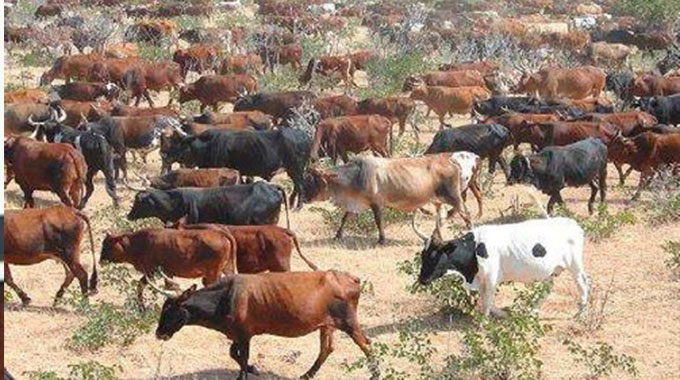
Farming issues with Mhlupheki Dube
NEWS circulating on various media platforms in the past two weeks about Theileriosis (January disease) spreading to Bulilima District, is at best despairing and at worst frightening. In fact, a colleague who is also a livestock farmer in Mangwe District which is adjacent to Bulilima, said he was “terrified’ and he should.
He shares the same level of petrification with me. The disease is inching closer to my animals and that is as discomforting as it as petrifying. I say the confirmation of the presence of January disease in the Figtree area of Bulilima District is despairing because it gives the message that as a country, we are fighting a losing battle against this disease.
Readers will be reminded that January disease as ordinarily been domiciled in the higher rainfall regions of Mashonaland such as Mashonaland East and it has since migrated down south after decimating livestock herds in areas such Chivhu, Hwedza, parts of Rusape, Buhera and Gutu. The disease landed at a farm in Insiza District of Matabeleland South about a year ago. The Government through the department of veterinary services fought the disease through all possible means, including declaring a war against it.
However, earlier this year, the media was awash with reports of the disease having spread its coverage but still within the same district. Now it is being reported in Bulilima District, which is not even sharing boundaries with Insiza. The important question then becomes, “what are we missing in this fight?”
Are we being overrun by this disease as a country, or we are somehow not doing the right things? These questions are not meant to cast aspersions on what the responsible Government department has been doing and continues to do, but to say is it not time to take stock if the approach is working or not?
The livestock community is in panic, turmoil and almost despondent because of this disease and we need to be as iterative as possible in our approaches to try and contain this scourge. The very existence of the livestock industry hangs in a balance because of this disease and therefore everyone concerned should come to party and play ball.
This is a perilous disease which is second only to anthrax in terms of mortality and the rate of spread. It is against this background that the spread of the disease causes despair and puts doubt to the control methods currently in place and the treatment regimes that are proffered.
We call upon the relevant department to review its approaches and perhaps try other methods in addition to the existing ones because as it stands one is forgiven for concluding that current control measures are falling short and failing to contain the spread of this disease. Very soon we may export to the neighbouring countries and bring them the burden of this virulent tickborne disease.
I also call upon private sector players in the livestock industry to play a part in containing this disease before it takes everyone out of business. It may be the windfall season for drug manufacturers, wholesalers and retailers as they cash in from the demise of affected farmers but this is not sustainable as be proverbial goose that lays the golden egg is being wiped out. The private sector can donate resources to the livestock department to contain the disease. Same goes to those who profit from the existence and thriving of the livestock industry such as stockfeed companies, abattoirs and butcheries, the transport sector and so on.
They also should lend a hand in this fight or there will be no buyers of stockfeed, no animals for the abattoirs and butcheries from this region, and there will be no animals to transport. Let’s look at the bigger picture, people and help the department of veterinary services, in farmer education, provision of acaricides, vehicles and fuel to support the fight. Is it not an effective advertising platform in itself if a veterinary drug supply company with its fully branded vehicle is seen supporting farmer training on control of tick-borne diseases? We must do something.
We cannot be collating statistics and producing fancy graphs to present on some air-conditioned workshop venue and earning applause for “research” while livelihoods and lifetime investments are lost every day! Be terrified with us farmers and take action. Uyabonga umntaka MaKhumalo.
n Mhlupheki Dube is a livestock farmer. He writes in his own capacity. Feedback [email protected]/ cell 0772851275



 Online Reporter