Sundaymail Editor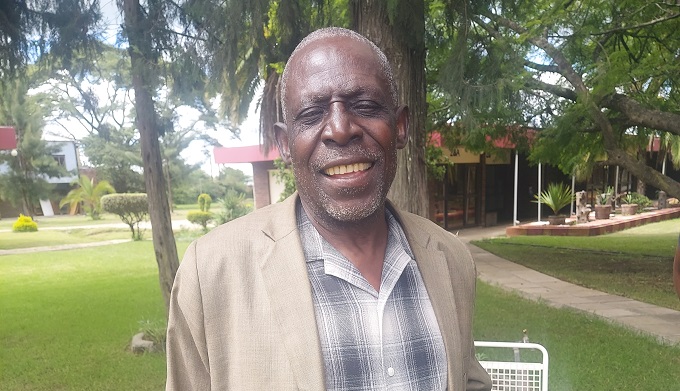
CDE WILFRED BALENI, whose nom de guerre was Cde Mlefu Somfula, joined the liberation struggle at a young age. He shares a similar history with Cde Raymond Takavarasha, whom we interviewed recently. The two call themselves “Siamese Twins” due to their shared background. This week, Cde Baleni recounts to our Society Editor PRINCE MUSHAWEVATO how he got into trouble with the Rhodesian authorities after they discovered he was transporting people across the border to join the liberation struggle.
*****
Q: Could you begin by introducing yourself?
A: My name is Wilfred Baleni, but my liberation struggle name was Mlefu Somfula. I am from Lower Gweru. I was born on January 3, 1954. I come from a family of four children, but unfortunately, two have passed away. I am the only one in our family who joined the struggle. I attended St Patrick’s Primary School in Lower Gweru, and before that, I went to St James Nyamandlovu for primary education. I left school around 1974 when I became fully involved in activism against white minority rule.
Q: How were you introduced to African nationalism?
A: I could probably start by highlighting that my journey in the liberation struggle is almost a carbon copy of my friend Cde Raymond Takavarasha’s. We embarked on this journey together and have remained in touch since. From the mid-1960s up to around 1975, a lot was happening politically, and it was those developments that pushed us to join the struggle. When Zimbabwe African National Union (ZANU) and Zimbabwe African People’s Union (ZAPU) were banned and some of their leaders arrested, the African National Council (ANC) in Zimbabwe was formed. It shaped many people’s political paths during the liberation struggle. The ANC was formed in December 1971 by four individuals: two from the then-banned ZAPU and two from ZANU, which had also been banned by the colonial regime. ZAPU was represented by Cephas Msipa and Josiah Chinamano, while Edson Sithole and Michael Mawema represented ZANU. They came together and decided to form a united front to reject the Pearce Commission proposals, which were set by the British and intended to be implemented in the Rhodesia settlement. Chinamano had been earmarked to be the leader, but he refused, which later led to Abel Muzorewa joining politics as the head of the ANC at Chinamano’s instigation.
Q: You can carry on.
A: After ZANU and ZAPU were banned, we needed a movement that could ‘legally’ continue with the objectives of the struggle, as the colonial regime’s atrocities continued unabated. The local ANC was different from the one in South Africa, which had also been banned. The “C” in the local ANC referred to “Council”, and not “Congress” like in the South African party. It was through the formation of the ANC that many people’s interest, including my own, in local politics was rejuvenated. We began to see hope again in the quest to dismantle colonial rule. Remember, many nationalist leaders, among them Joshua Nkomo, had been arrested and taken to Gonakudzingwa around 1964. Others were put in detention centres like Sikombela and Whawha. They stayed there until around 1974, but we had to ensure the spirit of the struggle remained alive while they were incarcerated.
Q: What were you doing during this time?
A: I was a political activist and the ANC organising secretary for Masvingo province. As I indicated, I worked closely with my friend and fellow comrade, Takavarasha. We are like Siamese twins because our journey in the struggle was the same. When we crossed the border, we were together. I used to recruit people to cross the border and join the struggle around 1976. I got war experience before receiving formal training. When we crossed the border, many assumed we had already been trained. We even got the opportunity to drink beer with Zambian police officials, as they thought we were trained nationalists from Zimbabwe. When we left the country, we did not leave ceremoniously. The head of police in Fort Victoria (now Masvingo) was after us because we were recruiting people to join the struggle under the ANC. We would pass through Gweru, going to Bulawayo, operating in the Sun Yet Sen area up to the border. Some of the people we recruited with were actually killed, including the likes of Dzehama, who was recruiting in Mashonaland East and Manicaland. We could have been killed too had they caught us. Our national chairperson, Munodawafa, was from Masvingo. He used to travel to Lusaka, Zambia, and would brief us on the situation and the need for more fighters. We would transport potential recruits using our 504 station wagon and we were funded by the party (ANC). We often travelled via Kezi so that we could reach the Shashe River, where they would cross into Botswana. The recruits were dropped at certain points, from where they would walk and then cross the river. We repeated the process as often as possible. Munodawafa had told us that after James Chikerema left, the number of recruits had dropped, particularly in Masvingo and Manicaland provinces. So, he wanted more people from those areas to replace those who had left. When Chikerema formed the Front for the Liberation of Zimbabwe (FROLIZI) around 1971, he took some members from ZANU and ZAPU with him.
Q: How did the Rhodesian authorities find out about this operation?
A: What triggered our arrest was the fact that we recruited some sales representatives who worked for Nield Lukan, a furniture shop with branches throughout the country. Little did we know that they had stolen money from the company. So, when the police started looking for them, our names popped up during their investigations, with reports that we were ferrying people to join the struggle. When the police started looking for us, we immediately knew through our informers. We fled, going to Salisbury (now Harare). There, we met Nkomo (Joshua), who was coming from Lusaka, and he advised us to get some money from our colleague Jerera, who was the ANC-Z treasurer.
Q: Can you briefly summarise how Nkomo became the ANC-Z leader and what had happened to Muzorewa?
A: Around 1975, we lost Herbert Chitepo. ZANU became aggressive, believing that ZIPRA and other local political movements were involved in his death. These unfortunate events greatly disrupted the Lusaka Accord, which called for a congress and was the reason why arrested nationalists, including Joshua Nkomo, had been released from prison.
ZANU and the ANC, led by Muzorewa, turned against the Lusaka Accord. Muzorewa disagreed with the other parties within the ANC. This impasse led to a split, with Muzorewa forming the United African National Council (UANC) in 1975. Nkomo then established his own ANC-Zimbabwe (ANC-Z) to distinguish it from Muzorewa’s.
Q: What happened next after you got funds from the ANC-Z treasurer? Did you cross the border?
A: We met another guy — I think his name was Sam — who claimed to have trained in Ghana and had travelled extensively in the struggle, including to places like Gauteng and Dar es Salaam. Unfortunately, he was a spy working for the Rhodesian authorities. He had been released from prison at the same time as the current President (Mnangagwa). We travelled around with him, including one instance where we were involved in a car chase with the Rhodesian police. We escaped, eventually abandoning the car in Mucheke township. We continued our escape on foot. The police, the Special Branch, came and seized the car. We only managed to see the vehicle after independence at the Central Mechanical Equipment Department (CMED), but we did not claim it back. As we escaped towards the highway, we got a lift to Mvuma and then hijacked another lift to Harare. We had already received money to facilitate our escape. When we got to Harare, we met another friend of ours, Bennie, who originally lived here (Gweru) and whose wife was a nurse at Gweru Hospital. Again, we did not know that he was betraying us. He told us that the Rhodesian authorities were after us and encouraged us to travel to Gweru, saying he would follow later. Cde Chinamano later saw us and asked what we were still doing in Harare. He told us that we were not only putting our lives in danger but theirs as well, so we had to leave as soon as possible. He also gave us money for travel.
Q: Why were you delaying crossing the border?
A: We got into the habit of squandering the money in nightclubs — Queens Hotel, to be precise. The money was meant for transport and upkeep after crossing the border.
But later that night, we got into a truck that brought us to Gweru. We started looking for Sam and found him with some ladies we had met in Masvingo before, celebrating his new car.
We went to Midlands Hotel, where black people were allowed, for some drinks.
The following day, he took the ladies back to Masvingo and I went to his house in Shamrock Park, Gweru.
I was sitting at his house with Marble Choga, she saw some vehicles arriving and told me that the cars had been frequenting the house looking for me and Takavarasha. I had nowhere to run except to hide in a chicken pen. I have never seen chickens so disciplined; they did not make any noise. The heavily armed Rhodesian authorities got out of their vehicles and started searching the place. They asked who had been sitting in my now-vacant seat. A child who was present said it belonged to Sekuru Mvuu (hippopotamus) — a nickname I got because of my excessive drinking. When they left, we got our backpacks and immediately went to Bata and bought some beer before we went to see Sam’s wife, looking for her husband. She surprised us by telling us that we were supposed to leave town and that her husband (Sam) wanted us arrested and had been betraying us to the authorities. As we exited the hospital gate, Sam flashed his car lights at us and shouted, “Hi, fellow recruiters, jump in.”
Next week, Cde Wilfred Baleni will recount how they successfully evaded arrest after being surrounded by the Rhodesian police and how they eventually crossed the border into Botswana before being transferred to Zambia.


 Online Reporter