


 tawandamusarurwa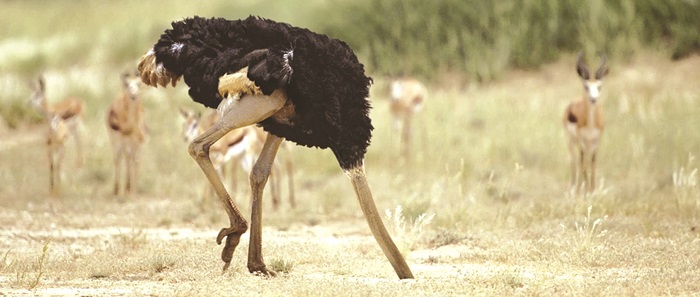
As you think, so you are. As you speak, so you become.
Hunt for Greatness
Milton Kamwendo
Writing in his book “Paradise Lost”, John Milton said of the mind: “The mind is its own place, and in itself can make a heaven of hell, a hell of heaven.”
It is not what happens to you that matters the most but how you think about what happens.
Taking charge of your life and context starts with taking charge of your thoughts.
Eagle thinking
A powerful way to build greater self-awareness is to consider some word pictures or metaphors that reflect thinking patterns. Consider the thinking patterns of an eagle. Eagles love storms. Eagles fly high and see far. They stalk their prey and keep focused. While other birds flock, eagles choose their company.
When it is time for action, eagles move with ferocious speed and unflinching focus. The eagle mindset is a winning one.
Do not waste time playing with turkeys when you are an eagle.
The company you keep matters. The people you listen to matter. Stop passing time in idle and fruitless conversations that are steeped in negativity.
Choose to think like an eagle and rise beyond the tide and turbulence.
It is when things look chaotic and hazy that you need to rise above the pedestrian sewer-line negativity. Vision will elevate your action and refine your path.
Eagle thinking makes a difference and could be an important plan for rescuing the future.
Ostrich thinking
The ostrich is a majestic bird. It cannot fly but it can run. An ostrich can run up to 50 kilometres per hour. This bird has a strange and uncanny habit of burying its head in the sand. It is this quality that makes ostrich thinking risky.
Burying your head in the sand is not positive thinking and neither is it pragmatism. Perhaps, out of this “head-burying” habit, the ostrich does not wish to see, hear or say any evil. Burying your head in the sand is being in denial. It keeps you locked in the past. It keeps you stuck in alternative reality.
Reality is stubborn. It does not change because it has been ignored, downplayed or reframed. Greatness requires you to look at the brutal realities without losing hope of the future. In his book “Leadership is an Art”, Max De Pree wrote: “The first responsibility of a leader is to define reality. The last is to say thank you. In-between the two, the leader must become a servant and a debtor.”
De Pree could easily have said to be great one must turn away from ostrich thinking. Being in denial leaves you frozen in time. Reality does not bear pretence with kindness and false clemency.
Quit thinking and behaving like an ostrich. Thinking like an ostrich is banking pain into the future.
Tortoise thinking
Behold the tortoise. It only makes progress when it sticks its head out of its shell. Shells are precious armour and cover. The temptation is that, at times, it can become a prison and a limitation. Inside one’s shell, you stop seeing obvious changes. To move ahead and make progress, get the shell out of your thinking.
Stop locking yourself in the ever familiar and thinking that the world looks like your village. Operate in the clouds but challenge yourself to be grounded in the soil of reality. Fearing reality leaves you vulnerable to change.
Stick your head out and engage reality. Take a good glance at reality and what is happening now. You will make progress when you get out of your shell.
Two-headed snake
The double-headed snake has been known to exist. In the “Art of War”, Sun Tzu says: “The skilful tactician may be likened to the shuai-jan. Now, the shuai-jan is a snake that is found in the Ch’ang mountains. Strike at its head, and you will be attacked by its tail; strike at its tail, and you will be attacked by its head; strike at its middle, and you will be attacked by head and tail both.”
One head is not strategic enough. In seeing the future and navigating towards greatness, consider working with the metaphor of the two-headed snake.
Use head 1 and head 2 as a mental model. This type of thinking allows you to be resilient. Head 1 is about survival and winning in the current battlefield. It is about confronting the present reality and winning. It is addressing reality as you find it and not as you wish it to be.
Resilience is learnt, strengthened and built through deliberate action.
Head 1 thinking allows you to demonstrate toughness, bounce and grow despite challenges. It is surviving friction and maintaining flow. Head 1 allows you to deploy your resilience strategy. Head 1 thinking is about building adaptive capacity, managing turbulence and surviving stress.
Head 2 allows you to engage in long-term thinking. It allows you to play in the new, different and disrupted normal.
Head 2 requires a different way of thinking. It requires different platforms, mindsets and rules.
Head 2 is about playing in a totally transformed environment and shifted context. Funding and resourcing huge change is a challenging task. It requires identifying clear and impactful journeys to undertake.
The future comes gradually but not in a day. Moving from head 1 to head 2 will require developing new capabilities that you never had. Disruptive change will never accept lack of resources as an excuse for doing nothing.
Bat thinking
The bat is blind. It, however, has sophisticated sensors that enable it to navigate without hitting other objects. This is the tragedy of life. Not all things that move know where they are going. Acting intelligent but moving blindly puts you at risk.
For greatness, choose the right mindset and frame for looking at reality and navigating it.
In any season, there are opportunities but these depend on how you see. Eyes that look are common but eyes that see are rare.
Milton Kamwendo is a leading international transformational and motivational speaker, author and a virtual, hybrid and in-person workshop facilitator. He is a cutting-edge strategy, team-building and organisation development facilitator and consultant. He can be reached at: [email protected] and his website is: www.miltonkamwendo.com



 Online Reporter
 Bongani Ndlovu