Chronicle Editor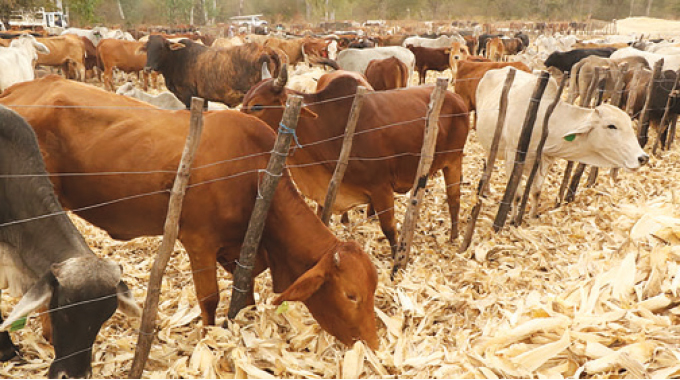
WE are off to a patchy start with regards to the rains. Only a few areas in Matabeleland have received effective rains, with most areas yet to receive a drop.
Climate change has altered the start and even length of the rainy season.
The season now starts late into November and even December and the seasons are now shorter. Late start and early ending. Unless if things change for the better, the current start of the rainy season sends warning shots of another drought.
I am no meteorologist hence I absolve myself of an inaccurate reading of the situation. In fact, I long to be very wrong on this prediction.
It’s a wrong that rights the situation. Having said that, I wish to implore livestock farmers to distil lessons from this just ending drought year and make amends for the upcoming season.
Official figures reported in recent media articles, puts livestock poverty deaths at around 9 000 animals countrywide.
These are reported figures, which means actual figures could be twice or even three times higher than this.
There are more livestock deaths, which go unreported than the reported ones. If the livestock industry is to survive into posterity, we need to have innovative and research informed interventions that will enable livestock farmers to still produce animals, under the prevailing harsh conditions of very limited rains received.
We need innovations in water harvesting and provision for livestock as well as rangelands regeneration. Universities and research stations need to come to part on these aspects.
I submit that we receive enough rains to provide drinking water for our animals till the next season but because of poor water harvesting means, we watch it flow along rivers to the oceans.
What do we need to do, to harvest the water from the rains received so that we can use it latter for our livestock?
What do our universities and research stations recommend? Without a decisive research informed intervention, our animals will continue to perish despite us receiving enough rains to keep them alive of properly conserved.
Another aspect, which needs attention and application of researched interventions, is veld regenerative action.
A lot of our grazing areas have become unproductive over the years for one reason or another. These unproductive rangelands have grossly reduced the carrying capacities of our lands, exacerbated by increase in human settlements and cropping fields.
The unproductive grazing lands need to be recruited back into production by deliberate regenerative action. Which established veld regenerative approaches can be recommended for farmers to adopt and how?
A deliberate action to revitalise and regenerate the unproductive grazing areas needs to be actively driven by government extension arms.
Regenerative farming is a proven method of improving the soil structure and making unproductive soils become productive. We need that if we are to improve livestock nutrition provision by farmers using the cheaper veld option.
Over the years, we have seen a shift from long season crop varieties to early and ultra early maturing varieties, in response to the changing climatic conditions.
However, nothing has been changed concerning natural grasses on the veld.
Doesn’t it follow that if we can no longer grow long season crop varieties, it means even long season grasses are also failing due to shorter seasons? Are there no short season grass varieties that can be promoted as part of regenerative action on the veld?
My view is that research stations need to assist livestock farmers with short season grasses that can be grown in their areas for livestock nutrition.
We need grasses that can grow and reach maturity within the short rainfall season that we are getting now.
While natural selection will take place over years and promote those grasses, which can establish within the amounts of rainfall received, this will take a long time and hence the need for proactive action to promote short season grasses to be produced by farmers for their animals.
This will then be augmented by the legume fodder production, which government has been promoting for years now.
Following this devastating drought, one thing is certain, livestock farmers need to pick up lessons from the drought, adapt and conform to the new normal or livestock production as we know it will perish in a few years to come. Uyabonga umntaka MaKhumalo.
Mhlupheki Dube is a livestock specialist and farmer. He writes in his own capacity. Feedback [email protected] cell 0772851275


 Online Reporter