dyton mupawaenda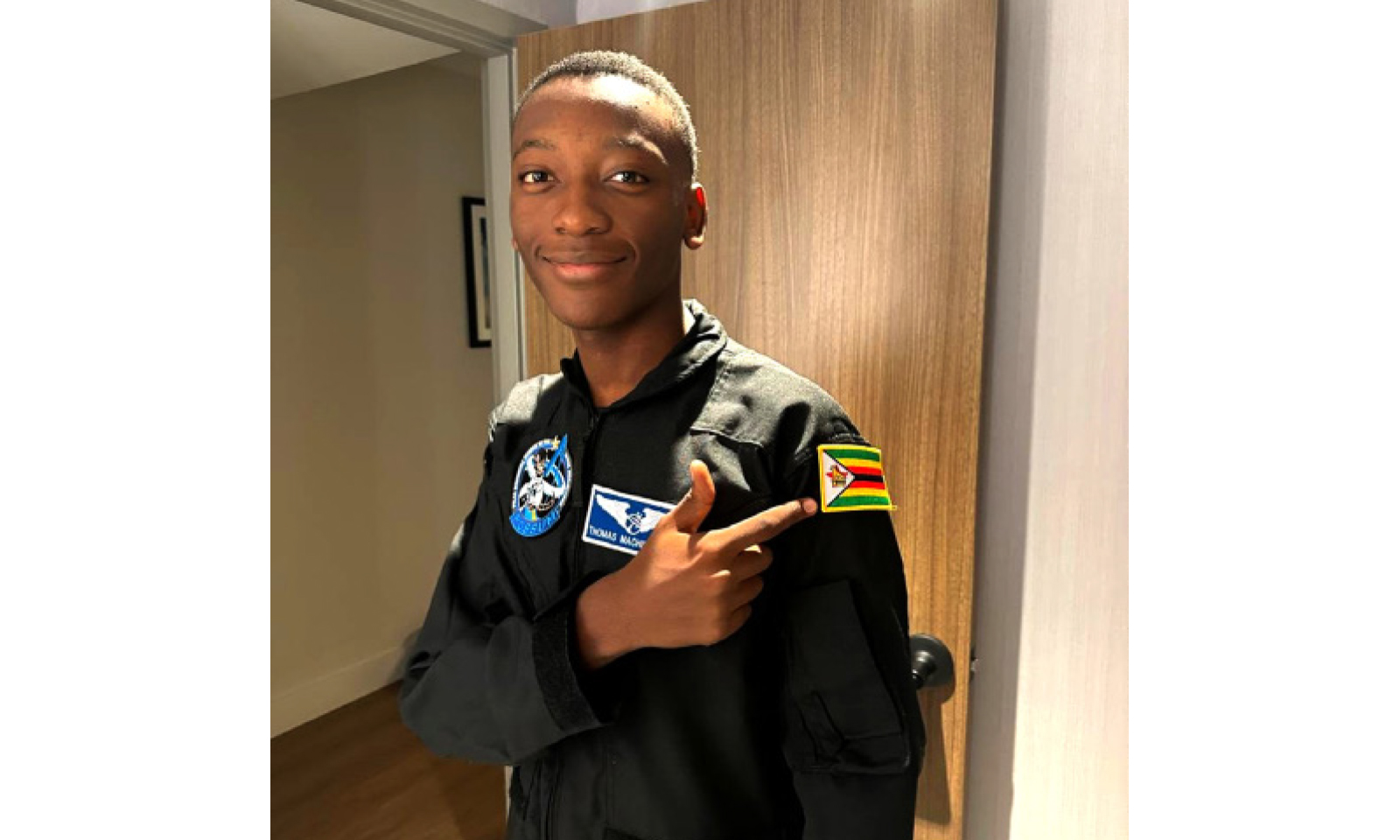
My name is Thomas Machingaidze — a 17-year-old student at St George’s College in Harare, Zimbabwe.
I am an aspiring AI engineer and aerospace enthusiast with a passion for exploring how intelligent systems can shape the future of space travel.
When I am not diving into code or reading about rockets, you will probably find me exploring the ancient world — history is one of my biggest obsessions.
I love bridging the gap between the past and the future, and I am always up for a good conversation about AI, space, or ancient civilisations.
My journey into space exploration really took off from playing Kerbal Space Program, which quickly evolved into sketching spaceplane designs and delving into orbital modeling.
This passion led me to some incredible opportunities, like receiving a scholarship to the U.S. Space and Rocket Center’s Advanced Space Academy. Being immersed in that environment, working with a team to win the Commander’s Cup, and personally receiving the ‘Right Stuff Award’ for leadership and character were truly defining moments.
I also graduated from Project PoSSUM, where I got hands-on experience with suborbital science and research. These experiences have cemented my commitment to aerospace.
Now, my focus is sharpening.
I’m diving deep into the complexities of aerospace engineering, particularly fascinated by the potential of advanced space robotics for in-orbit assembly and maintenance.
The challenges of designing robust propulsion systems, maybe even exploring novel concepts beyond conventional chemical rockets, really excites me — optimising for specific impulse (Isp) and delta-v requirements is a puzzle I love to tackle.
Understanding the intricate dance of rocketry, from launch vehicle dynamics to trajectory optimisation, feels like unlocking the cheat codes to the universe.
It’s this intersection of complex physics, cutting-edge engineering, and audacious ambition that truly fuels my passion.
Honestly, AI just clicks with me.
It’s more than just coding; it’s like this incredible puzzle where you are figuring out how to make computers tackle really tough, meaningful problems.
Taking on that AI-powered eye screening device project for ISEF really brought that home.
Thinking about how machine learning, probably some form of computer vision, could actually help people get access to eye care in underserved areas — that’s the kind of thing that gets me fired up.
Getting deep into Python and the different ML tools, actually training models and seeing them start to work, it’s just a fascinating process.
While my research project involved NLP and tools like GPT APIs, the thrill comes from seeing how these sophisticated algorithms can be applied across different domains.
Whether it’s optimising systems, processing complex data streams, or potentially even integrating intelligence into robotics, the core excitement lies in using ML to build smarter, more capable solutions. It’s this potential for broad, meaningful impact through machine learning that truly drives my passion.
While my head is often in the clouds thinking about space or deep in code exploring AI, I also have this quiet fascination with the sheer depth of human history, especially the ancient world. If I were to really delve into it, I would probably find myself completely lost in the grandeur and complexity of empires like Persia and Babylon. Imagine those massive cities, the incredible feats of engineering like the Hanging Gardens, and the sheer scale of cultures that thrived thousands of years ago.
The Persian Empire, with its intricate network of roads, its powerful rulers like Cyrus the Great, and its synthesis of so many different traditions — it’s just mind-blowing.
And Babylon, a centre of learning, innovation, and architectural wonder… I can easily picture myself spending hours reading about their advancements in mathematics, astronomy, and law. It’s not just about the battles and conquests; it’s about understanding how these civilisations shaped the course of human history and left behind legacies that still resonate today.
The more you learn, the more you realize how much there is to discover, and that’s what makes it so incredibly fascinating.


 Online Reporter