admin
admin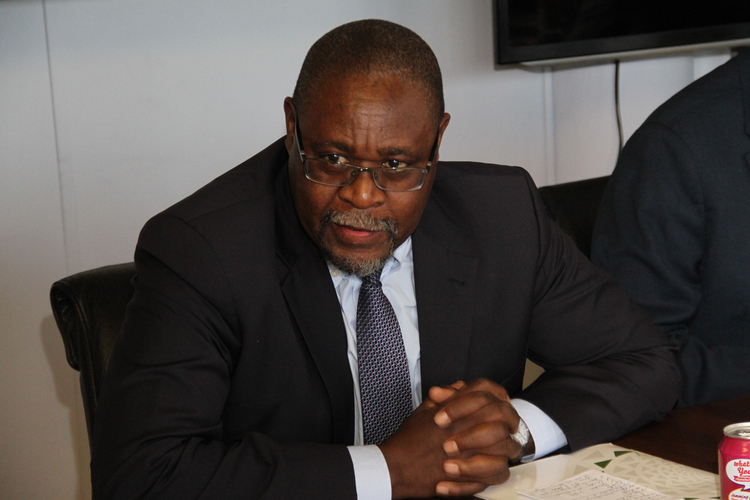

On Thursday, the Washington-based think tank Centre of Global Development together with its co-hosts, the Institute of Economic Affairs (in Accra, Ghana) and the African School of Economics (in Cotonou, Benin), gave candidates for the president of the African Development Bank (AfDB) the opportunity to share their ideas with a much wider audience.
It hosted a live panel with seven of the eight candidates for president of the African Development Bank – Mr Sufia Ahmed of Ethiopia could not make it – that was moderated by Mr Rajesh Mirchandani, CGD Senior director of communications and policy outreach .
For a full broadcast of the interviews, you can see the FULL VIDEO here:
The tenure of the current president of the AfDB expires next month and his successor will be chosen during the Bank’s annual general meeting scheduled between May 25 and May 29, 2015.
However, the next president will be chosen by the bank’s governors, who represent its 80 members: 54 African states and 26 other countries with a stake in the bank.
The seven candidates that are vying for the top post together with Zimbabwean candidate Mr Thomas Sakala are: Mr Sufian Ahmed (Ethiopia finance minister); Mr Birma Boubacar Sidibe (Mali, vice-president of Islamic Development Bank); Mr Samura Kamara (Sierra Leone foreign affairs minister); Mr Jalloul Ayed (Tunisia ex-finance minister); Mr Kodje Bedoumra (Chad finance minister) and Mrs Cristina Duarte (Cape Verde finance and economic planning minister).
Mr Tendai Biti, the former minister of finance, who is now a visiting fellow at CDG, was also in attendance and was given an opportunity to pitch a question to the candidates.
Below are excerpts of the questions and answers made to and by Mr Thomas Sakala compiled by The Sunday Mail Business Editor Darlington Musarurwa.
Q: With the challenges in the years ahead, if you had a stark choice fighting corruption or promoting an atmosphere of creativity, innovation and productivity, where would you put the bank’s money?
A: At the moment, if we look at the Bank’s strategy, one of the pillars that it has is the issue of governance and accountability, and I am sure that if we work on that pillar, we will ensure that we have institutions that do promote good governance, transparency in the affairs of the state.
We will then be able to address even issues of corruption because good governance also includes people participation, institutions that are stronger, institutions that are open to everybody’s involvement and institutions that treat everybody fairly.
So . . . I would say that pillar from the 10-year strategy, which looks at the governance and accountability, would be a key one. And of course there are various instruments that the bank can use effectively in order to effectively promote that on the ground.
Q: As underlined in the Bank’s 10-year strategy, the Bank has an important role to play in domestic resource mobilisation, including on natural resource management, it’s important for all countries, any country, perhaps particularly important for resource-rich countries in fragile situations. What would be your priorities in such circumstances?
A: I think that it’s quite appropriate that such a question is asked from somebody from Norway: It’s a good example of what you can do if you manage your resources very well. I am talking of oil in Norway.
Those who have read my statement will recall that I do write somewhere, and I feel strongly about it, that it is quite painful given how rich Africa is in terms of natural resources, we are where we are. And really the challenge remains how do we convert this natural, inherited resource into . . . long-term prosperity.
And we need practical actions.
The Bank already in the recent past had a number of initiatives. One is the Africa Legal Support Facility, which helps African countries to address some of the challenges of really ensuring that they negotiate fair deals – that is the first step. The other is the Africa National Resources Centre, which again looks at all these issues.
But all these issues are interrelated, the issues of governance. It doesn’t matter whether it is just taxes collected or the way we give concessions for the mining of our minerals, or for the exploitation of natural resources.
I do believe that there are already several instruments and several initiatives; the challenge really is to make sure that we get going and we implement, and we ensure our people that we can help countries build capacity, we can help countries ensure that they manage their resources more accountably.
We can help countries to ensure that there is greater inclusion in the decisions that are being taken in terms of exploiting some of these resources.
And from there we will be able to have greater benefit from our own natural resources. But it’s a crying shame.
Q: What will you do to ensure that the AfDB is not the lender of first and last resort? African governments do have tax pools, they can raise money on the international debt or capital markets and they have central banks. What will you do to ensure that governments pursue their own development agenda?
A: Actually, the world is helping us because we don’t have much choice. The era of easy resources from our partners is gone and I think we have been giving each other a lot of statistics in terms of the financing gap, let’s say, just for infrastructure.
We need to do more on our own and we need to show that we have priority areas by actually putting more of our money in these priority areas.
So, from the perspective of the Bank, yes (we can) help member states build institutions in terms of tax administration, tax management; help member states to counter the issues of illicit financial flows; help our countries — we are just discussing this in terms of natural resource management so that we raise more revenues from this.
But we have no choice. And I would also like to link this to the issue of funding for infrastructure. We talk a lot about infrastructure and the need for more resources.
One of the challenges we face there is that a lot of these projects are on the table, they are identified as priorities and we are putting a little bit money of our own, even to prepare them. Africa needs to mobilise more of its resources and bring these projects to bankability before going to the African Development Bank, before going to the World Bank and before they engage the private sector in the PPPs (public-private partnerships).
This will only happen if we improve our capacity to collect more taxes, to manage resources transparency, stop illicit financial flows and also manage our resources well.
Q: What are your priorities for the institution and why does your candidacy stand up?
A: Whether or not I was a candidate for this, as an African, I always had this vision of an Africa that is determined to transform itself from into an integrated and prosperous continent. And its not original: It has been there for a long time.
When it comes to why I am a candidate, I can only summarise in three words – consolidation, innovation and results; and to understand how I have arrived at this position, you need to start by recognising that the Bank is currently in a good space.
It is strong and it has been doing reasonably well. Very well indeed. And probably I can also say I am proud of being part of the staff and management team that has worked under the leadership of Kaberuka to bring it to where it is …
It’s a shared source of pride. If elected, I intend to quickly and strongly build on the strategy and recent initiatives and reforms. I will also introduce some. I have a number of areas that I would like to introduce some reforms.
I just mentioned how to prioritise funding for the preparation of our infrastructure projects and areas such as gender etcetera. Fundamentally, I believe the bank should continue with the same 10-year strategy and objectives of inclusive growth, and transition to green economies.
And (I) will remain focused on the five priority areas that have already been identified by infrastructure, regional integration etcetera. Personally, I am going to pay more attention on infrastructure, regional integration, private sector development in Africa and also then paying a lot of attention to gender issues, fragility and food security. And I believe my long years involved in various areas will help me do it quickly.


 Online Reporter