Moffat Mungazi
Lovemore Kadzura
Post Reporter
DOCUMENTED challenges plaguing the timber industry have resulted in an acute shortage of timber products on the local market, creating a void that is now being filled by imports from neighbouring countries.
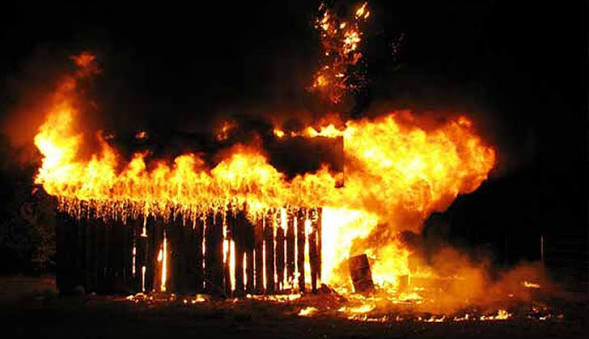
Commercial timber production, which is predominantly based in Manicaland, has suffered significant setbacks over the years, including illegal occupation, widespread fire outbreaks, over-harvesting, and lack of locally available seeds.
This has had a detrimental impact on the area under plantation, resulting in the current acute shortages that are now being augmented through imports.
In an interview, Timber Producers Federation chief executive officer, Mr Darlington Duwa said players in the value chain are importing timber from South Africa to address the shortage on the local market, while the country is exporting limited timber to neighbouring countries.
“We do not have sufficient timber resources, and capacity utilisation at some mills is between 55 percent and 65 percent. Some companies have reduced their rate of cut because there is not enough resource to sustain them in the future. This is what we predicted a long time ago, and it has now come to pass — companies are importing timber.
“The timber is mainly being imported from South Africa. There is ongoing cutting in the estates, but the volumes are now lower because the logs to cut are diminishing. The reason why we are in this situation dates back 20 years ago when we experienced massive fires and reduced areas under plantation.
“There was also some over-cutting by players. Additionally, some areas are no longer accessible for planting trees. Illegal settlers have occupied some land that used to grow commercial timber. We also do not have seeds available locally. Seeds used to be produced by the Forestry Commission research stations. At the moment, the country does not have enough improved seeds for its reforestation programmes. We are exporting timber mainly to Botswana and a small quantity to South Africa. The volumes we are exporting are very low, as what we are producing is not substantial, and it is more lucrative to sell on the local market than to compete with countries like South Africa,” said Mr Duwa.
The timber shortage has far-reaching effects on the local construction industry.
The scarcity of timber has led to a significant increase in prices, making it challenging for contractors and builders to procure the necessary materials.
This, in turn, has resulted in project delays and cost overruns, ultimately affecting the overall affordability of housing and infrastructure development.
Furthermore, the shortage has compelled local contractors to explore alternative, often more expensive, materials, which may compromise on quality.
Zimbabwe’s reliance on timber imports is a short-term solution that undermines the country’s long-term economic and environmental interests.
Instead, efforts should focus on revitalising the local timber industry through sustainable forestry practices, reforestation programmes, and support for local timber producers to ensure self-sufficiency.
The Forestry Commission of Zimbabwe acting director-general for research and training, Mr Mduduzi Thembani said they are striving to meet the seed demands of the industry and have adopted new technology to alleviate the shortage of planting material.
“The Commission continues to prioritise the production and supply of seed for key commercial species, especially pines, which are central to the industry’s planting programmes. Despite constraints, we are meeting a significant portion of the industry’s demand through our ongoing efforts.
“To address current shortfalls in seed availability, the Forestry Commission has recently introduced tissue culture technology as a complementary propagation method. While still in the early stages of implementation, this approach is expected to ease the shortage of planting material — particularly for species currently in limited supply — in the near future. The Commission is optimistic that this innovation will strengthen afforestation and reforestation efforts going forward,” said Mr Thembani
Mr Thembani said Forestry Commission’s primary seed production hubs are the John Meikle Research Station (Stapleford) and Muguzo Research Station in Chimanimani.
He said these stations are responsible for producing source-identified and genetically improved seed for both public and private sector use.
“While Forestry Commission does not directly facilitate the importation of tree seed for the industry, regional sources – particularly from South Africa – remain available to the industry as alternative options for securing planting material. These sources have played an important role in helping timber producers bridge temporary supply gaps for their planting programmes,” said Mr Thembani.


 Online Reporter