Online Reporter
Tariro Mhlanga, [email protected]
Wouldn’t it be strange if we had to pause before every breath and check what was in it? “Right then, what’s on the menu today? A little oxygen, a generous helping of diesel fumes, a pinch of smoke from burning rubbish, and a dusting of road grit.”
That sounds absurd. But across Zimbabwe, that is essentially what our lungs are doing every day — without our permission.
The black puff from a kombi pulling away. The dust cloud trailing a car on an unpaved road. The acrid smell of rubbish burning because refuse trucks haven’t come.
The haze from veld fires that turns a sunset beautiful and dangerous at the same time. We have normalized it. Our lungs have not.
A health crisis we inhale 20 000 times a day
The average person takes about 20 000 breaths a day. We don’t think about it until breathing becomes difficult. Poor air quality is no longer just an “environment” issue.
It is a public health issue, an economic issue, and a quality-of-life issue. Clinics are seeing more children with wheezing, more adults with chronic coughs, more cases of asthma and chest infections that never quite clear.
The encouraging part is this: most of our air pollution is man-made. If human activity created it, human choices can undo it.
What exactly are we breathing?
Some pollutants announce themselves. Smoke. Dust. The sting in your eyes during veld fire season. Others are invisible, and therefore more dangerous because we don’t realise we’re inhaling them.
Look around any town or growth point, and you’ll find the usual suspects: ageing diesel vehicles, open burning of household waste, firewood and charcoal for cooking, brick moulding, quarrying, mining, generators, and dusty roads.
Inside that mix are carbon monoxide, which reduces the blood’s ability to carry oxygen; nitrogen dioxide and sulphur dioxide, which irritate lungs and contribute to acid rain; and carbon dioxide, the main driver of climate change.
The biggest silent threat is particulate matter — microscopic dust, soot and ash that travel deep into the lungs and into the bloodstream. Long-term exposure is linked to respiratory disease, heart disease, stroke, and some cancers.
The danger is not always the smoke you can see. Often it’s what you can’t. And it doesn’t stop with people. Livestock, wildlife and birds breathe the same air.
Dust on crop leaves reduces photosynthesis. Pollutants settle in rivers and dams. The cost is paid by farmers, ecosystems, and eventually by all of us at the market and in our water bills.
Small choices, cleaner skies
It’s tempting to say “the problem is too big.” One household that stops burning plastic won’t clear the air over Beitbridge or Gwanda or Plumtree tomorrow. But cleaner air has never come from one grand gesture. It comes from thousands of small, consistent decisions.
Start at home. Burning plastics and rubber releases toxic chemicals. Separating recyclables, composting garden waste, and using municipal collection instead of lighting a pile reduces both smoke and disease.
On the roads, that thick black smoke is often a cry for maintenance. Regular vehicle servicing cuts emissions and saves fuel. It’s a win for the driver’s pocket and for everyone behind the kombi.
For households that rely on firewood or charcoal, cleaner energy may not be immediately affordable. But better ventilation, cooking outdoors where possible, and using improved cook-stoves can cut indoor smoke exposure dramatically.
That matters most for young children, whose lungs are still developing.
Communities are the first line of defence.
Your neighbour’s bonfire becomes your laundry problem. Your street’s dust becomes your child’s cough. That means communities have power. Clean-up campaigns. Discouraging open burning.
Pressing councils for regular waste collection. Planting indigenous trees along streets and in school yards.
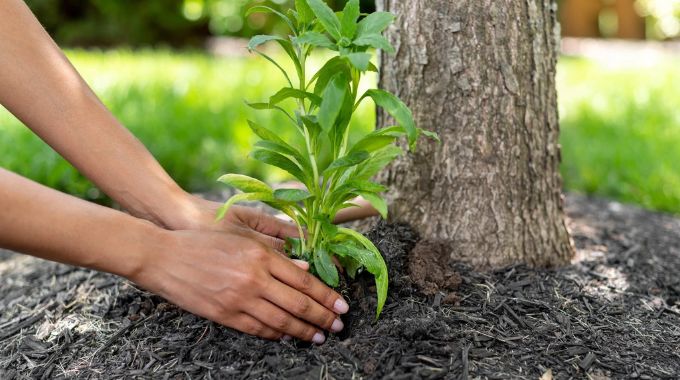
Trees deserve their own paragraph.
They trap dust, absorb pollutants, provide shade and cool neighbourhoods.
Every tree planted today is a down payment on cleaner air tomorrow. In a country of hot seasons and dusty winds, urban greening is not a decoration. It is infrastructure.
We cannot fix what we do not measure.
Here is the hard truth: air pollution is largely invisible. You can see smoke, but you cannot see carbon monoxide or PM2.5 particles.
Imagine opening your phone and seeing not just “32°C and sunny” but also an Air Quality Index: “Moderate. Children and asthmatics are advised to limit outdoor activity.” Many countries already do this.
Zimbabwe has an opportunity to expand affordable air quality monitoring — in schools, near factories, along busy transport corridors, and in growing towns.
This is not about collecting numbers for their own sake. Environmental monitoring is the systematic measurement and interpretation of what is happening in our air, water and soil. Reliable data lets councils, industry, researchers and communities make decisions based on evidence, not assumptions.
It tells us where the problem is worst, whether interventions are working, and who is being affected most.
Institutions must lead, and be held to account.
Government and local authorities carry a heavy responsibility. Waste management cannot be erratic. A road full of potholes is not just an inconvenience; it is a dust factory. Urban planning must include green spaces, pedestrian areas, and efficient public transport to get older vehicles off the road.
Industry too. Compliance with minimum standards is not enough. Companies should invest in cleaner technologies, proper emission controls, and transparent monitoring.
Prevention is always cheaper than clean-up — in money, in health costs, and in reputational damage. When emissions are measured and reported openly, regulators can enforce standards and communities can trust that commitments mean something.
A shared burden, a shared right
Clean air will not be delivered by the government alone. Nor by NGOs alone. Nor by one conscientious household. It will come when every driver services their vehicle. When every council grades its roads.
When every school plants trees. When every company reports emissions honestly. When every citizen refuses to burn waste and speaks up for a healthier environment.
This is not about guilt. It is about agency. The air does not ask for your ID before it enters your lungs. It treats all of us the same.
The real question
“To breathe or not to breathe” was never the question. Biology decided that for us. The real question is: what kind of air will we choose to breathe, and what will we leave for the children coming after us?
Do we want a generation that grows up thinking a hazy sky is normal? Or do we want children who can run, play, and take a deep breath without paying for it later in a clinic? Zimbabwe has faced many challenges and met them with resilience and ingenuity. Air pollution feels diffuse, but it is solvable. It starts with awareness, continues with data, and is won with everyday discipline.
So the next time you smell smoke, see dust, or watch a vehicle belch black, don’t just sigh and move on. Ask: what can I do differently today? Because every breath matters.
And we all have a stake in making sure the next 20 000 are cleaner than the last.