Online Reporter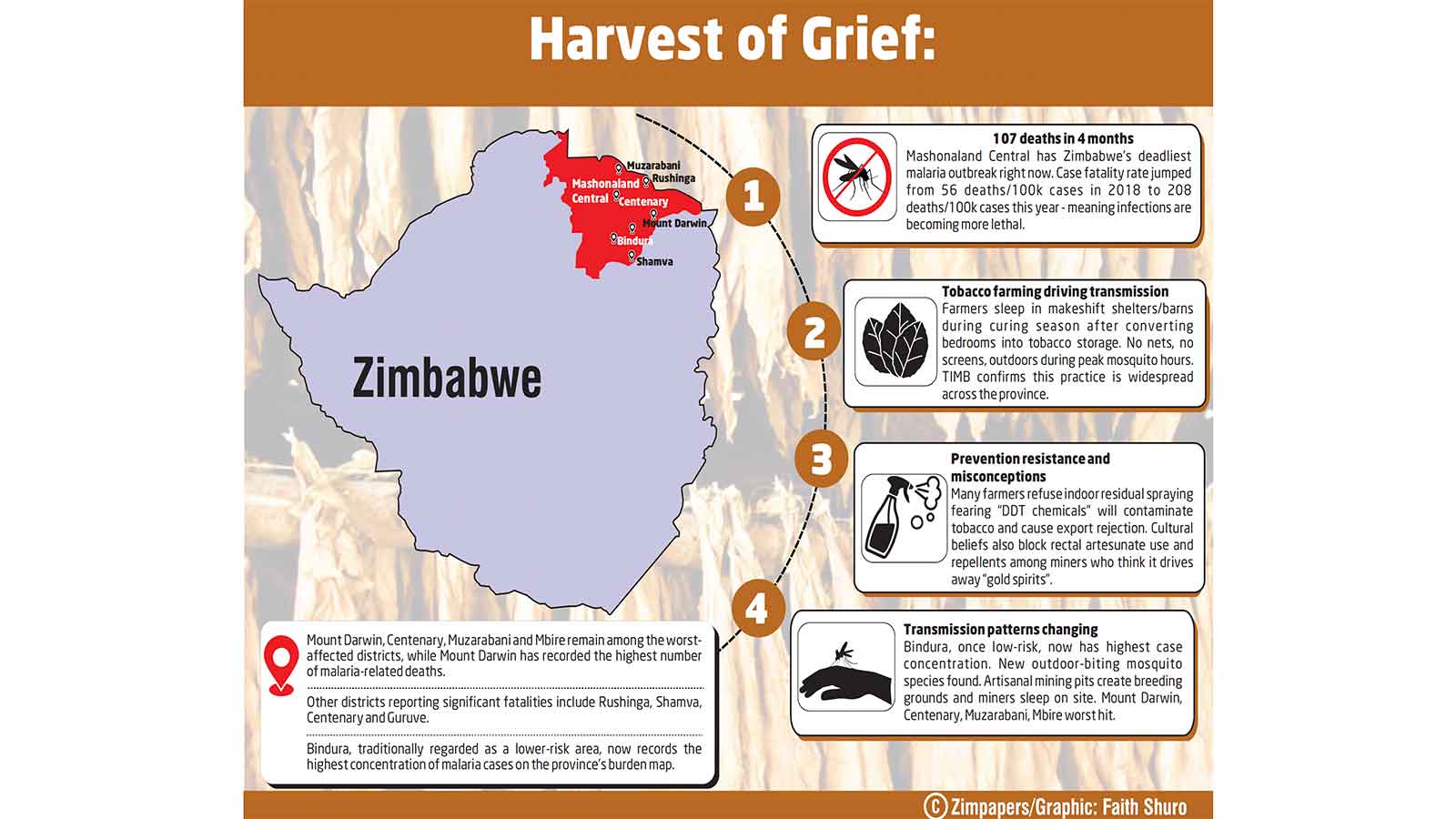
Mashonaland Central Bureau
AS darkness falls across the tobacco-growing areas of Mashonaland Central province, thousands of farmers begin another night guarding and curing their crop.
For many, the tobacco harvest has become so valuable that bedrooms are emptied and converted into storage facilities for cured tobacco bales.
Families then relocate to makeshift shelters, tobacco barns and temporary structures where they sleep with little protection from mosquitoes.
What appears to be a practical farming decision is increasingly becoming a public health crisis.
Health officials say the practice is exposing tobacco farmers and their families to malaria-carrying mosquitoes at a time when Mashonaland Central is grappling with its deadliest malaria outbreak in years.
The province recorded 51 250 malaria cases and 107 deaths during the first four months of the year, giving it the highest malaria burden in Zimbabwe and raising the alarm among health authorities who fear fatalities could continue to rise.
Provincial medical director Dr Clemence Tshuma said changing economic activities, particularly tobacco farming and artisanal mining, are altering traditional malaria transmission patterns and exposing more people to infection.
“People are sleeping outside during tobacco curing and mining activities, exposing themselves to mosquito bites,” said Dr Tshuma.
While malaria has long been associated with rural communities living near rivers and wetlands, health officials say increasing numbers of infections are now being linked to occupational activities that keep people outdoors during peak mosquito-biting hours.
Tobacco farming has emerged as one of the major contributors.
During the curing and grading season, many farmers convert bedrooms into storage areas for cured tobacco to protect the crop’s quality and maximise returns.
As a result, families often move into temporary accommodation that lacks mosquito screens, treated nets or other protective measures.
Tobacco Industry and Marketing Board (TIMB) provincial manager Mr Brighton Nyagombe said the practice has become common among growers across the province.
“Some farmers move from bedrooms into makeshift structures during curing and sleep in conditions that expose them to mosquito bites,” he said.
The situation is being compounded by persistent misconceptions surrounding indoor residual spraying, one of the country’s most effective malaria prevention tools.
According to Mr Nyagombe, some farmers continue to resist spraying their homes because they fear the chemicals could contaminate tobacco and result in their crop being rejected on international markets.
“Farmers still fear that if their homes are sprayed, their tobacco will be rejected on the international market because of old perceptions linked to DDT,” he said.
The concerns stem from historical use of Dichlorodiphenyltrichloroethane (DDT), an insecticide that was widely used globally to control mosquitoes before concerns emerged over its environmental impact.
DDT was banned or heavily restricted in many countries because it lingers in the environment for long periods and was also found to harm bird populations and ecosystems.
Health officials, however, emphasise that the insecticides currently used in Zimbabwe’s indoor residual spraying programme are modern products that differ significantly from DDT and are approved for public health use.
Despite extensive prevention efforts, malaria deaths continue to rise across the province.
Although current infections remain below the 90 334 cases recorded during the province’s worst outbreak in 2020, the disease is becoming increasingly lethal.
The province’s malaria case fatality rate has risen sharply from 56 deaths per 100 000 malaria cases in 2018 to 208 deaths per 100 000 cases this year, indicating that a growing proportion of infected people are dying from severe complications.
Health officials say delayed treatment is a major factor behind the increase in deaths.
Many patients initially seek help from faith healers, self-medicate or use unlicensed medicines before presenting themselves at health facilities.
By the time they arrive at clinics and hospitals, some are already suffering from life-threatening complications such as cerebral malaria, jaundice and kidney failure.
“Even before 2026 is over, the figures are already higher than previous years,” said Dr Tshuma.
The burden of the disease is not evenly distributed across the province.
Mount Darwin, Centenary, Muzarabani and Mbire remain among the worst-affected districts. Mount Darwin has recorded the highest number of malaria-related deaths.
Other districts reporting significant fatalities include Rushinga, Shamva, Centenary and Guruve.
Bindura, traditionally regarded as a lower-risk area, now records the highest concentration of malaria cases on the province’s burden map.
The changing geography of malaria transmission has become another source of concern.
Vulnerable
Studies conducted in Bindura by an Africa University entomology team identified mosquito species that bite predominantly outdoors, reducing the effectiveness of interventions focused primarily on indoor mosquito control.
The findings suggest that while indoor spraying remains highly effective, it may not be sufficient on its own as more people spend evenings and nights outdoors.
Communal farmers and schoolchildren have emerged as some of the most affected groups.
“Communal farmers and students have been identified as the most affected groups, with artisanal miners and gold panners also carrying a heavy burden due to prolonged outdoor exposure and unsafe environmental conditions,” said Dr Tshuma.
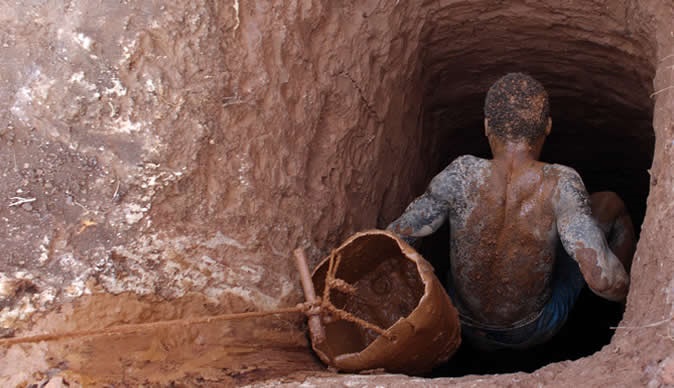
Artisanal mining operations along the Great Dyke have become another significant driver of transmission.
Abandoned mining pits often collect stagnant water during the rainy season, creating ideal breeding grounds for mosquitoes.
Many miners also spend nights at mining sites, increasing their exposure to bites.
Health officials say some miners resist preventive measures because of beliefs that mosquito repellents or certain medicines may drive away gold-bearing spirits or diminish their luck.
Cultural beliefs have also complicated efforts to promote the use of rectal artesunate, a life-saving pre-referral treatment administered to severe malaria patients before they can be transferred to hospital.
According to health authorities, misconceptions surrounding the treatment have led some families to reject it despite its proven effectiveness in reducing deaths.
Cross-border movement is adding another layer of complexity to malaria control efforts.
The province continues to record imported malaria cases linked to travel between Zimbabwe and neighbouring Mozambique and Zambia, both of which have malaria-endemic regions.
In response to the growing threat, Mashonaland Central has intensified malaria control measures.
Indoor residual spraying has achieved coverage rates of between 90 and 100 percent in targeted areas, while health teams continue to distribute insecticide-treated mosquito nets, conduct larviciding programmes and monitor insecticide effectiveness.
“We sprayed indoors in villages and homes so that the chemical remains active for some time to kill mosquitoes,” said Dr Tshuma.
Public awareness campaigns are also being conducted through radio programmes, community meetings and outreach initiatives aimed at encouraging early treatment-seeking behaviour and greater acceptance of prevention measures.
Yet health officials acknowledge that Government interventions alone will not be enough to reverse the trend.
Dr Tshuma called for stronger collaboration among health authorities, traditional leaders, farmers, miners, employers and communities to address the behavioural and environmental factors driving transmission.
“We cannot fight malaria alone. We need communities, stakeholders and employers to work together so that people seek treatment early and use preventive measures,” he said.
Health authorities fear that without greater vigilance and community participation, the province’s malaria burden could continue to grow, placing thousands more lives at risk.