Online Reporter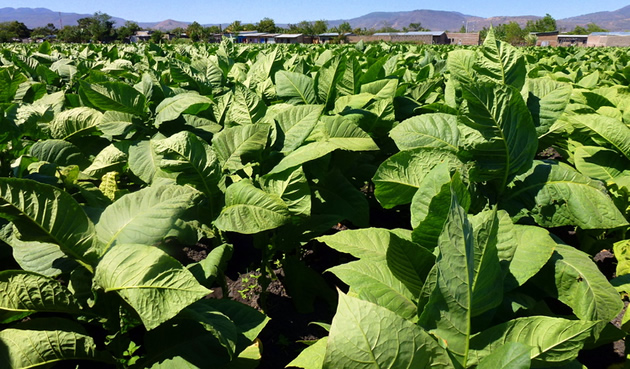
Sifelani Tsiko
Fact Check Editor
For more than a century, tobacco has been a key source of revenue in both pre-and post independence Zimbabwe and over the past few years, production has expanded beyond the traditional northern and eastern growing regions.
Historically, tobacco growing in Zimbabwe was concentrated largely in the north (Karoi, Hurungwe, Mhangura), central (Harare, Beatrice, Mvurwi), and eastern (Marondera, Rusape, Headlands) regions. Through various Government-led initiatives, tobacco growing is now making a sizeable footprint in areas like Matabeleland South, Midlands, Matabeleland North, Gokwe North, and Gokwe South. There is promising growth and successful tobacco cultivation in places like Marula, Mangwe District, and others.
In this report, we look at why tobacco continues to be the main livelihood option for millions of smallholder farmers, an important source of income and rural employment and how its production has expanded to previously non-growing regions like Matabeleland.
When was tobacco introduced commercially in Zimbabwe?
Tobacco production existed in pre-colonial Zimbabwe with local communities producing it for own consumption and trade with other regions. Tobacco started being grown commercially before 1900 as the colonial administration sought to hedge against over reliance on tobacco from north America. In the colonial times, tobacco growing largely benefited a small white minority while in the post independence era, earnings have filtered to the majority of smallholder farmers.
Historically, which were the main tobacco growing areas before expansion to the Midlands and Matabeleland provinces?
The core tobacco growing regions in Zimbabwe for decades included the north (Karoi, Hurungwe, Mhangura), central (Harare, Beatrice, Mvurwi), and eastern (Marondera, Rusape, Headlands) regions.
Which are the key areas of recent expansion?
Tobacco cultivation expanded from around 2010 to include areas like Matabeleland South, Midlands, Matabeleland North, Gokwe North and Gokwe South. In the period after 2010, cultivation was less successful until the Second Republic aggressively pushed for its expansion in these areas.
What are the main factors for the expansion of tobacco cultivation into new regions?
Agriculture experts say this expansion is driven by factors like climate change, increased grower bases, and Government initiatives like devolution.
Zimbabwe is rolling out a National Accelerated Irrigation Rehabilitation and Development Program to exploit irrigation potential in every district as part of the drought-proofing strategy. The target is to increase the area under irrigation to 350 000 hectares by 2025. According to the United Nation’s Food and Agriculture Organization (FAO), Zimbabwe has an estimated irrigation potential of 365 624 hectares from available internal renewable water resources excluding water from the Zambezi and Limpopo border rivers.
“For the second consecutive season, tobacco is being successfully grown in Marula, Mangwe District, Matabeleland South, an important step in expanding the crop beyond its traditional strongholds in Manicaland and the Mashonaland provinces.
“This regional expansion is more than a geographical shift, it represents the Tobacco Industry and Marketing Board’s (TIMB) commitment to inclusive growth, sustainability, and national economic balance. Aligned with the Tobacco Value Chain Transformation Plan and the Second Republic’s devolution agenda under the National Development Strategy 1. This development is unlocking new economic potential in this non-traditional region, leaving no one and no place behind,” said TIMB in a report in April.
What is the current status of tobacco growing in Matabeleland South?
Matabeleland South has made tremendous strides in tobacco production with 122 small-scale farmers currently growing 84 hectares of Natural Cured Virginia (NCV) tobacco under contract farming.
The farmers were contracted by Atlas Agri Private Limited. Atlas Agri which has contracted farmers to produce the NCV tobacco has also established a sales floor, which has been inspected and approved by TIMB and will facilitate marketing this season.
What is the significance of this expansion?
“We are witnessing history in the making. This expansion not only empowers rural communities with income and employment, but also aligns with our goals of sustainability and innovation in the tobacco value chain,” said TIMB acting chief executive Mr Emmanuel Matsvaire.
More details on this pilot project
This initiative began as a pilot project during the 2023/24 season, with 17 growers on 10 hectares, and they produced 9 000 kilogrammes of tobacco.
Atlas Agri (Private) Limited is targeting to increase production in the 2025/26 season.
“With proper infrastructure, training, and support, Matabeleland South has the potential to become a force to be reckoned with in Zimbabwe’s tobacco industry,” said Mr Matsvaire.
“By tapping into underutilised land and human resources in Matabeleland South, Zimbabwe is laying the groundwork for long-term growth, innovation, and inclusive prosperity.”
How much does tobacco earn for Zimbabwe?
Tobacco is the second major foreign currency earner for the country after gold. The country has been growing tobacco for more than a century, it is Africa’s top producer and the 6th in the world. Most of the country’s tobacco is exported raw mainly to South Africa, China, Middle East and other countries. On average it earns the country more than US$1 billion a year.
Decentralisation of tobacco farming
Decentralisation and Government initiatives like devolution and contract farming models are encouraging tobacco cultivation in areas that were previously not considered ideal, according to TIMB. This expansion is also driven by factors like climate change, investment and a focus on sustainable practices.