Chronicle Editor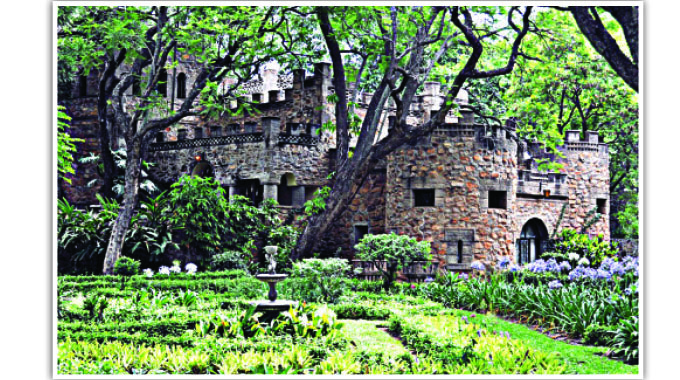
Sikhumbuzo Moyo
It’s the Zimbabwe International Trade Fair (ZITF) week, the country’s premier trade show that brings together businesses, budding, small, medium and big corporates from within and outside the country together.
The host city, Bulawayo, is the focal point with the week set to see an influx of visitors all coming to do business or with the hope of clinching mega business deals.
Besides business deals at the Zimbabwe International Exhibition Centre (ZIEC), the venue for the trade showcase, the ZITF brings life to a host of other sectors too in Bulawayo and its surroundings.
As the old adage goes, all work and no play makes Jack a dull boy, visitors to the city may want to while up some time after a busy day’s work or even take a quick dash and visit some of the city’s great tourist attractions.
Bulawayo has over 20 historical sites that will certainly be an eye catcher to the visitor. Within its surroundings, the city is home to two of the country’s five United Nations Educational, Scientific and Cultural Organisation (Unesco) world heritage sites, Khami Ruins and the Matobo National Park.
Situated 22km west of Bulawayo, Khami Ruins consist of a series of terraces and passages supported by massive granite walls, some overlooking Khami Dam.
Building in stone began in this area over 500 years ago. A small museum displays relics found at the site.
One of Zimbabwe’s major tourist attractions, the Matobo National Park contains amazing rock formations and cave paintings. It is a game park with many varieties of animals and a prolific amount of birdlife, containing the world’s largest concentration of black eagles.
Animals include sable, impala, white rhino, wildebeest and leopard. Imperialist, Cecil John Rhodes’ grave amongst others can also be seen on the hill, “Malindidzimu” or “View of the World”
Situated along Matopos Road, 10km from the city centre, Tshabalala Game Sanctuary contains a wide selection of animals including giraffe, kudu, zebra, and impala and many species of wild birds. It is operated by ZimParks and cycling through the park is permitted.
Situated just off the main Gwanda Road, 23km east of Bulawayo is Chipangali Wildlife Orphanage and Research Centre.
It provides a home for orphaned, sick and abandoned wild animals. It has an educational centre with a large collection of birds.
All these places are just on the periphery of the City of Kings and Queens, however within this great city, one is never short of areas of interest.
For nature and bird lovers in a picturesque environment, Hillside Dams is the place to visit.
This historical area includes many important sites namely, rock paintings, one of King Lobhengula Khumalo’s villages, the first water reservoirs for Bulawayo and many other sites of national significance. The broken granite kopjes, intact indigenous vegetation and the birdlife make this a popular recreation venue.
A stone’s throw from the City Hall along Leopold Takawira Avenue, is the Museum of Natural History. This museum contains superb and unique displays with exhibits illustrating the history, mineral wealth and wildlife of Zimbabwe, including the second largest mounted elephant in the world.
For pottery and sculpture lovers, Mzilikazi Art and Craft Centre and Bulawayo Home industries Centre, Mzilikazi Square, off the Old Falls Road from Masotsha Ndlovu Avenue are the places to visit.
A pottery and sculpture centre with drawing and painting studios, batiks and embroidery work are made and sold there.
Driving along Prospect Avenue, off Josiah Chinamano Road, one finds the Railway Museum with many obsolete steam locomotives, rolling stock and station buildings with a variety of other exhibits dating to the earliest days of railway history.
The Nesbitt Castle, which is located in the leafy suburb of Hillside in Bulawayo, is one of the most famous and yet mystical attractions in the city.
Nesbitt Castle was built in the first half of the 19th century by Theodore Garde, the son of an early missionary. It was originally named the Holdengarde Castle.
Born in 1877 in the Eastern Cape of South Africa, Theodore was sent to Durham University, England to study theology. His stay in Durham, with its castle and medieval history, sparked a lifelong enthusiasm for antique artefacts and the Middle Ages. After returning to South Africa, he changed his name to Holdengarde, went on a trip to Zimbabwe and founded a company for construction engineering and hardware.
At weekends, he, his wife and a small group of workers built the turrets and towers, twisting passageways and crenulations that were to become Nesbitt Castle.
In true adherence to the Middle Ages, Holdengarde refused running water and electricity to be installed on the castle although his wife had electricity installed in his absence. Running water, flush toilets and a telephone, however, were not added until after his death in 1948.
For the football loving visitor to the city, Thabiso Youth Centre located in the heart of Bulawayo’s oldest suburb, Makokoba, may be worth paying a visit for it is here that Africa’s first footballer to play in the English Premier League, Peter Ndlovu, honed his skills under the eyes of the legendary juniors’ coach Ali Baba Dube.



 Online Reporter