

 Online Reporter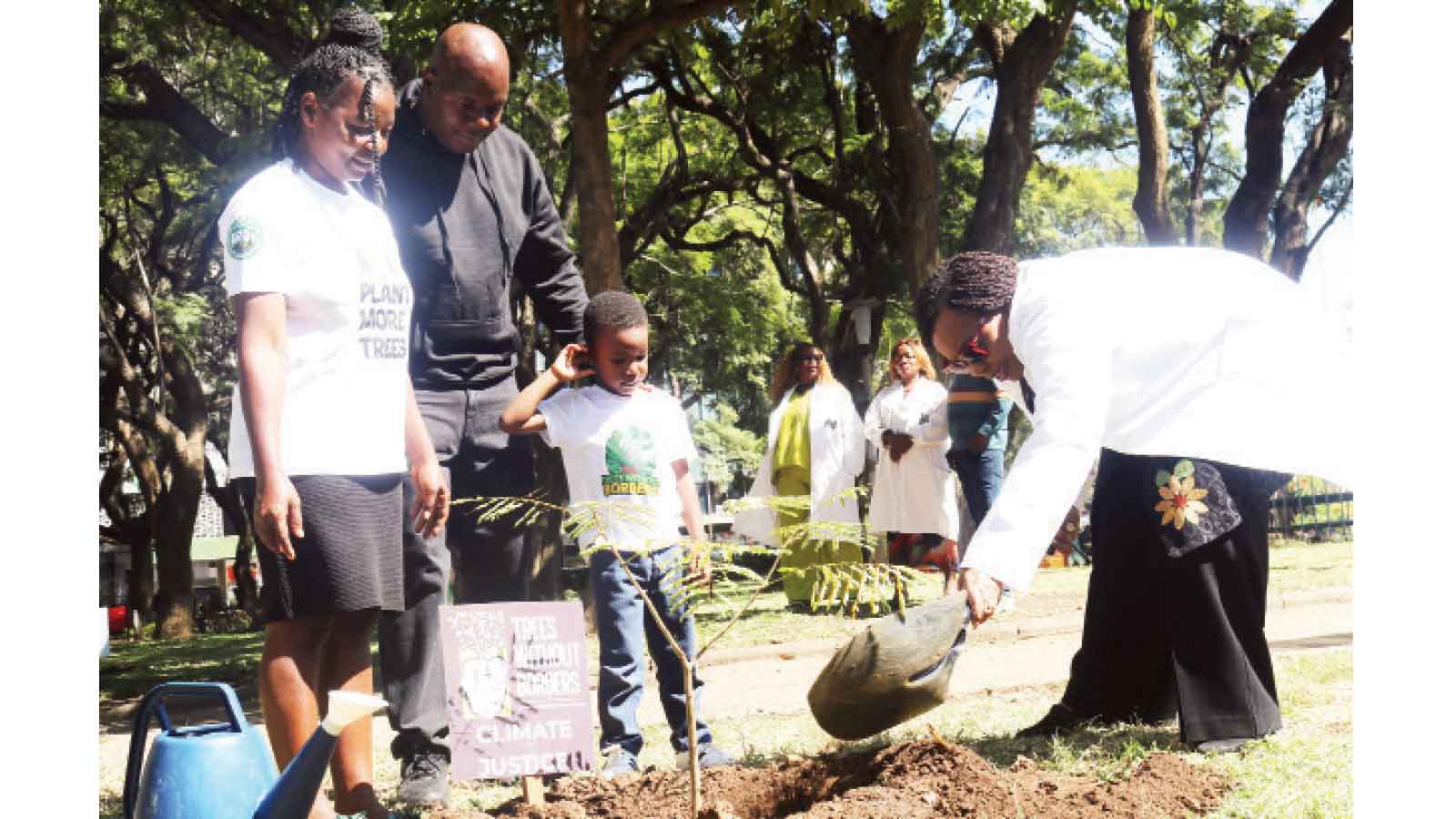
Obey Musiwa-Herald Reporter
WOMEN Affairs, Community, Small and Medium Enterprises Development Minister Senator Monica Mutsvangwa planted a tree at Africa Unity Square in Harare yesterday to symbolise Government’s partnership with Trees Without Borders.
The tree is a flamboyant, whose botanical name is Delonix regia, similar to those already growing in the north of the square. The campaign, led by youth environmental group Forest Lovers, seeks to tackle deforestation while linking reforestation to women’s empowerment and rural livelihoods. The minister said environmental conservation was inseparable from women’s empowerment and small enterprise development.
“Planting this tree says clearly that environmental conservation is not separate from women’s empowerment or small enterprise development.
“When trees disappear, it is rural women who walk farther for firewood and water, whose gardens fail, and whose small businesses collapse,” she said, emphasising that restoring trees restores dignity and income.
She emphasised that the partnership anchored future programmes connecting community nurseries and SME financing to national reforestation goals.
“The symbolic tree is intended to anchor future programmes that tie community nurseries, conservation training, and income‑generating projects for women directly to national reforestation goals.
“Climate resilience starts in the village, with women who manage the land every day,” she said. “When they have the tools, the trees, and the markets, we all become more resilient.”
By rooting the initiative in women‑led enterprises, the Ministry and Forest Lovers wanted to show that restoring forests was also about restoring dignity, income, and opportunity.
In this regard, the founder of Forest Lovers, Mr Bob Mavende, highlighted that climate change disproportionately burdens rural women, making reforestation urgent.
“Longer dry spells, erratic rains, and degraded land mean women spend more hours fetching water and firewood, while crop failures cut the income they rely on. When forests go, so do medicinal plants, fruit, beekeeping sites, and shade for crops. It’s a chain reaction that traps households in poverty,” he said.
Trees Without Borders combined planting with livelihood programmes, ensuring women were owners and managers of the tree nurseries.
“We plan to build nurseries that serve as both climate resilience hubs and business centres. Women will be trained in nursery management, conservation agriculture, and climate‑smart practices,” said Mr Mavende.
He said the involvement of children like four‑year‑old ambassador Maitaishe Mawoyo symbolises generational continuity in conservation.
“Kids like Maitaishe remind us that this is about the next 20 years, not just today. If children grow up planting and protecting trees, we change the culture around deforestation.”


