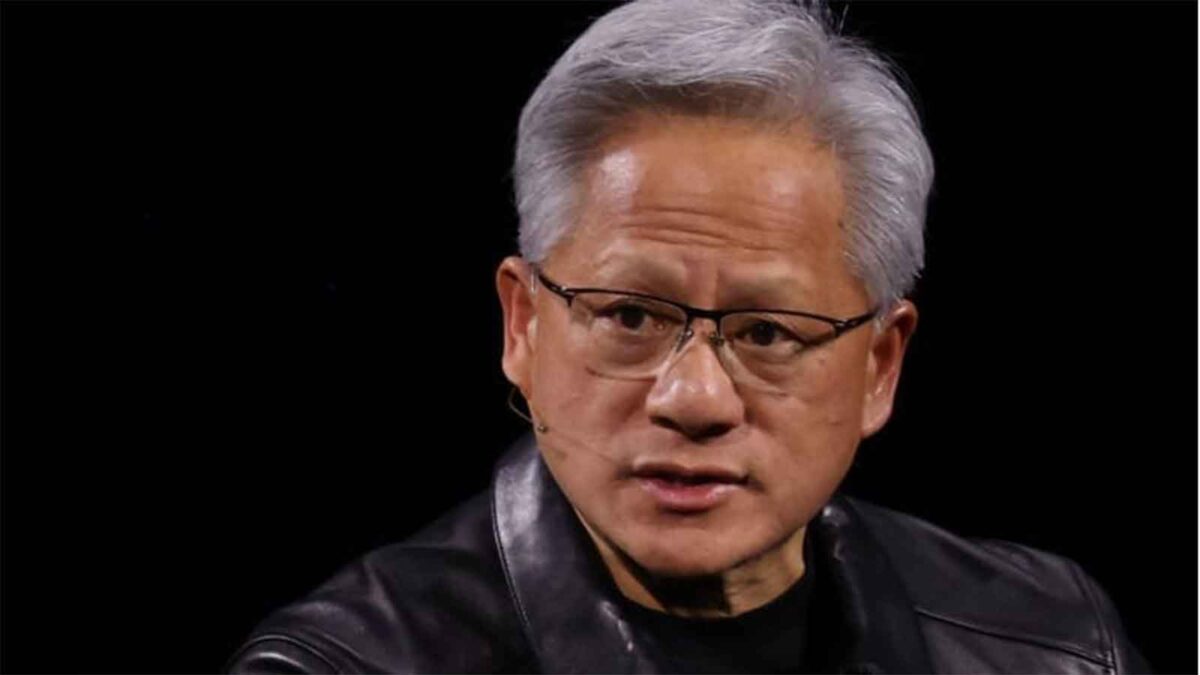
US President Donald Trump has described the resignation of Nvidia co-founder Jensen Huang as a “horrible thing”, as the chipmaker faces mounting scrutiny over allegations surrounding the former chief executive’s personal relationships and possible links to Chinese intelligence.
Nvidia announced on Thursday that Huang was stepping down after 33 years at the helm of the company he co-founded and helped transform into a US$4 trillion technology giant at the centre of the global artificial intelligence (AI) boom.
The company named chief financial officer Colette Kress as interim chief executive while beginning the search for a permanent replacement. Both internal and external candidates will be considered.
In announcing the leadership change, Nvidia board chair Harvey Jones said the board had full confidence in Kress and the existing management team, adding that the company’s operations, customer commitments and product development plans would continue without interruption.
Huang’s departure follows revelations about alleged extramarital relationships, including one with Singapore-based businesswoman Alice Huang, who has been suspected by US intelligence officials of having links to Chinese intelligence.
The allegations have raised concerns about potential national security implications, particularly given Nvidia’s position as a leading supplier of advanced chips used in AI development.
Huang, 63, apologised publicly on Sunday for being unfaithful to his wife but did not provide details about the alleged relationships.
The New York Times subsequently reported that he had a separate relationship with Kimberly Powell, Nvidia’s vice-president of healthcare. Reuters also reported that Huang had an intimate relationship with a second company employee.
Trump, who had developed a close working relationship with Huang, expressed sympathy over his departure during an interview with conservative commentator Hugh Hewitt.
“What a horrible thing that is! That’s so sad to see that happen,” Trump said, while discussing Huang’s exit.
The president had reportedly called Huang on Tuesday and encouraged him to fight to retain his position, according to The New York Times.
Huang’s departure has also drawn attention to Washington’s technology policy towards China, particularly restrictions on the export of advanced American semiconductor technology.
Senate Banking Committee chairman Tim Scott has requested Huang and US Commerce Secretary Howard Lutnick to testify publicly before the committee on December 3 and December 10, respectively.
Scott said recent reports had raised serious concerns about national security and the protection of sensitive US technology.
Lutnick is facing questions over allegations that he delayed efforts to tighten restrictions on companies involved in transferring advanced Nvidia chips to China.
Meanwhile, the controversy is having wider implications for the semiconductor industry and China’s access to advanced computing technology.
CNBC reported that traders involved in China’s underground Nvidia chip market had temporarily suspended operations amid expectations of tighter US scrutiny.
The uncertainty also weighed on Chinese technology stocks, with Alibaba shares falling about seven percent in Hong Kong trading following reports linking the company to Megaspeed, the Singapore-based technology firm associated with Alice Huang.
Alibaba had not commented on the reports.
Nvidia shares fell 4,3 percent on Thursday, although the stock recovered some of its losses towards the close of trading.
The company’s leadership crisis comes at a critical time for the global AI industry, which has relied heavily on Nvidia’s graphics processing units (GPUs) to power advanced computing systems, data centres and large language models.
Huang’s departure has therefore raised questions about the company’s leadership succession, its future direction and the potential implications for America’s competitiveness in the global AI race.
Semiconductor analyst CJ Muse of Cantor Fitzgerald described Huang’s exit as a major loss for both Nvidia and the United States, arguing that his leadership had been central to America’s position in the AI industry.
However, Nvidia’s board has expressed confidence that the existing leadership team can maintain the company’s operations and technology development programme as it searches for a permanent chief executive. – CNBC/Business Reporter